

Author(s) :
Nouhalia Kanouni1, Samia Khalfi1, Kaoutar Soussy1, Wissal Hasani1, Fatima Zahra Farhane1, Zenab Alami1, Touria Bouhafa1
1Department of Radiotherapy, Hassan II University Hospital, Fez, Morocco
Corresponding author: Nouhalia Kanouni, Email: nouhaila.kanouni@usmba.ac.ma
Publication History: Received - 28 September 2025, Revised - , Accepted - 30 August 2026, Published Online - 30 September 2026.
Copyright: © 2026 The author(s). Published by Casa Cărții de Știință.
User License: Creative Commons Attribution – NonCommercial (CC BY-NC)
 Share
Share
Highlights
- Pediatric brainstem gliomas are rare, heterogeneous tumors that carry a poor prognosis despite treatment.
- In the pre-molecular era, diagnosis relies mainly on clinical and MRI findings, with biopsy reserved for selected cases.
- Radiotherapy remains the standard treatment, relieving symptoms and modestly extending survival, though it is not curative.
- Long-term survival in some children suggests biologically favorable subgroups, underscoring the value of molecular characterization.
Abstract
Background: Pediatric brainstem gliomas are rare tumors, accounting for approximately 10 % of all pediatric brain tumors, and are associated with a poor prognosis. The aim of this work was to report the outcomes of children treated for brainstem gliomas in our department.
Patients and Methods: We retrospectively reviewed the medical records of patients younger than 14 years who were treated for brainstem glioma between October 2016 and December 2021 in the Department of Radiotherapy at Hassan II University Hospital, Fez.
Results: Our series included nine patients (five girls and four boys) with a median age of 8 years (range 2–14 years). The clinical presentation was heterogeneous: motor deficits or gait disturbance occurred in six patients, and signs of raised intracranial pressure in four. Diagnosis was based on MRI findings in all patients; only one child underwent stereotactic biopsy, and none underwent tumor resection. All patients received radiotherapy. At the last follow-up, four children were alive and five had died.
Conclusion: Although radiotherapy for pediatric brainstem gliomas is not curative, it remained the standard treatment in the pre-molecular era preceding the 2021 WHO classification, with the aim of relieving clinical symptoms and improving life expectancy.
1. Introduction
Pediatric brainstem gliomas constitute a heterogeneous group of tumors, most of which are diffuse and predominantly involve the pons (≈ 80 %). Collectively, they account for approximately 10–20 % of all pediatric brain tumors (1, 2).
Current recommendations from the SIOP/SIOPE advocate for a specialized multidisciplinary evaluation of pediatric brainstem gliomas, integrating clinical data, high-quality magnetic resonance imaging (MRI), and, whenever feasible, histo-molecular characterization in accordance with the 2021 WHO classification. While the diagnosis of typical diffuse intrinsic pontine gliomas may still rely on clinico-radiological criteria, biopsy is now increasingly considered in atypical or non-pontine cases, or when molecular profiling may inform prognostic stratification, eligibility for clinical trials, or access to targeted therapies. Initial staging may include spinal MRI, whereas cerebrospinal fluid cytology is reserved for selected situations.
From a therapeutic perspective, management depends on whether the tumor is focal or diffuse, as well as on its resectability and biological profile. Focal gliomas may be managed with maximal safe resection, observation, or additional therapy depending on their course. In contrast, for diffuse pontine or midline gliomas, focal radiotherapy remains the standard initial treatment, typically delivered at a dose of 54 Gy in conventional fractions, with hypofractionated regimens considered in selected cases. To date, no systemic therapy has demonstrated a meaningful survival benefit outside clinical trials; therefore, enrollment in prospective studies is recommended whenever feasible.
Before publication of the 5th edition of the World Health Organization (WHO) Classification of Tumors of the Central Nervous System SNC (2021), which incorporates molecular criteria (3), diagnosis relied primarily on clinico-radiological correlation based on magnetic resonance imaging (MRI) (4), while stereotactic biopsy was considered only in carefully selected situations (5).
In this pre-molecular context, standard management was based mainly on radiotherapy (4, 6), the only treatment shown to provide tumor control and symptomatic benefit. However, the clinical expression of pediatric brainstem gliomas is far from uniform: age at diagnosis, tumor location, growth kinetics, and response to irradiation vary widely, making prognosis difficult to establish. This retrospective study describes the experience of the Radiotherapy Department of Hassan II University Hospital in Fez in the management of pediatric brainstem gliomas.
The aim is to highlight their occurrence and to describe their clinical, radiological, and therapeutic characteristics before the molecular classification era.
2. Patients and Methods
We conducted a retrospective descriptive study in the Radiotherapy Department of Hassan II University Hospital, Fez, covering the period from January 2016 to December 2021.
The study included pediatric patients aged 14 years or younger with a diagnosis of brainstem glioma who were managed in the Radiotherapy Department. Exclusion criteria were age greater than 14 years, central nervous system tumors located outside the brainstem, incomplete medical records, and absence of radiotherapy treatment in our department.
Collected data included demographic characteristics (age, sex), circumstances of presentation and diagnostic delay, clinical features, and paraclinical findings (imaging and histology when available). Radiotherapy management details were recorded, including the technique used (intensity-modulated radiotherapy [IMRT] or 3-dimensional conformal radiotherapy), prescribed doses, and fractionation schedules.
Information was obtained from the department’s electronic database and archived medical records, and the analysis was descriptive.
3. Results
This retrospective study included nine pediatric patients managed for brainstem glioma. Age at diagnosis ranged from 2 to 14 years, with a median age of 8 years and the cohort consisted of five girls and four boys. One patient had a genetic predisposition syndrome consistent with neurofibromatosis type 1.
The median interval between symptom onset and diagnosis was 2 months (range, 1–12 months). Initial manifestations were dominated by motor deficits or gait disturbance, observed in six patients (67 %). Oculomotor involvement, such as strabismus or nystagmus, was present in four patients (44 %), while signs of intracranial hypertension were noted in four patients (44 %). An atypical presentation characterized by behavioral changes, including hyperactivity and episodes of anger, was recorded in one patient.
All patients underwent brain MRI for diagnostic purposes. Imaging revealed a predominantly pontine location in 6 cases (67 %), a bulbomedullary extension in 2 cases (22 %), and a mesencephalothalamic lesion in 1 case (11 %). Hydrocephalus was observed in 3 patients (33 %), 2 of whom required a ventriculoperitoneal shunt. A stereotactic biopsy was performed in 1 patient, confirming a high-grade glioma; in the remaining patients, the diagnosis was based on typical MRI features. No tumor resection was performed in this cohort.
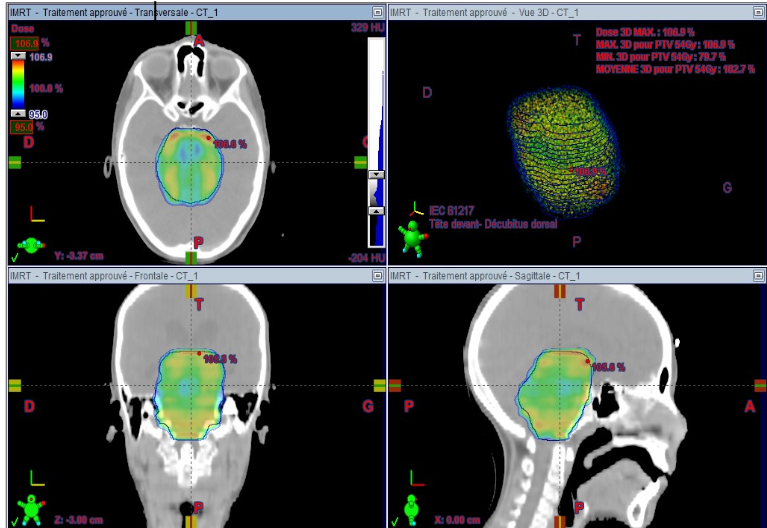
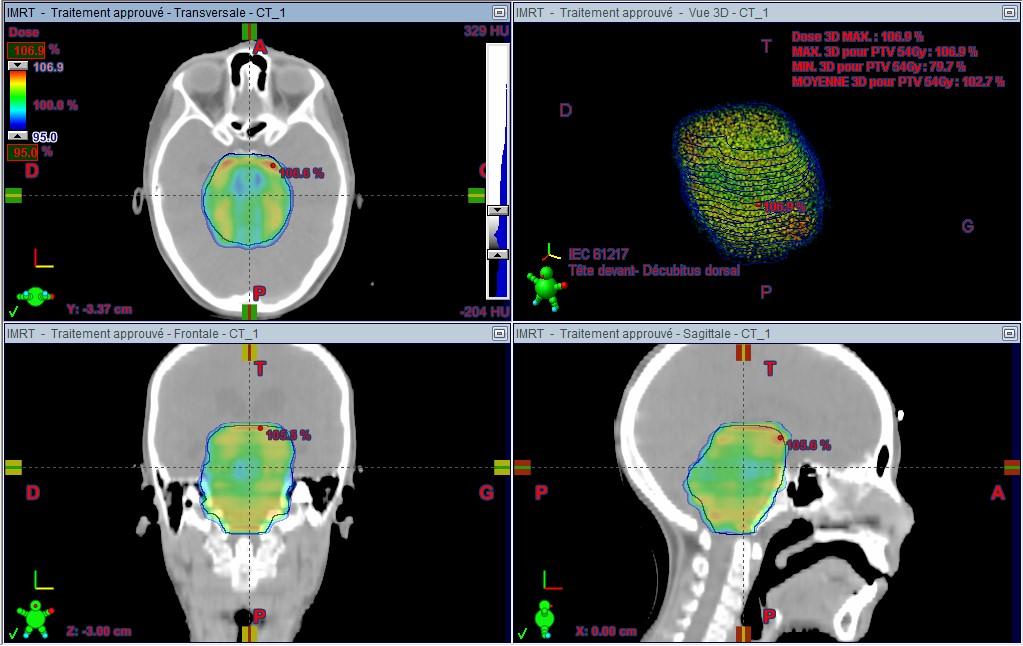
All nine patients received radiotherapy. Intensity-modulated radiotherapy (IMRT) was used in 5 patients and three-dimensional conformal radiotherapy (3D-CRT) in 4 patients (see Figure). The prescribed dose ranged from 39 Gy to 54 Gy according to clinical and tumor characteristics. Five patients received a standard regimen of 54 Gy in 30 fractions of 1.8 Gy, one patient received 50 Gy in 28 fractions, and three patients were treated with a hypofractionated schedule of 39 Gy in 13 fractions of 3 Gy adapted to clinical and dosimetric constraints. No treatment interruptions were reported.
During radiotherapy, four patients experienced headaches and nausea that were refractory to standard symptomatic treatment (analgesics and antiemetics), necessitating the initiation of corticosteroid therapy with subsequent tapering.
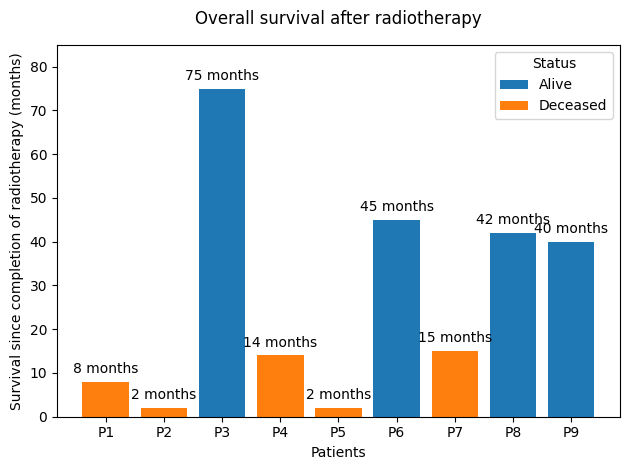
Among the nine patients in the cohort, four (44%) were alive and remained under active follow-up, with stable disease on imaging after a median follow-up of 43.5 months. Five patients (56%) died after completing radiotherapy, with a median survival of 8 months (range, 2–15 months) (Figure 3). Mild cervical kyphosis was observed in one surviving patient and was considered a late adverse effect of radiotherapy.
4. Discussion
In this retrospective single-center series, pediatric brainstem gliomas accounted for a subset of central nervous system tumors managed in our department between 2016 and 2021. The cohort had a median age of 8 years and comprised five girls and four boys. Clinical presentation was heterogeneous, with motor deficits, gait disturbance, oculomotor involvement, and signs of intracranial hypertension being the most common manifestations. Radiotherapy was delivered to all patients, mainly using conventional fractionation, with hypofractionated schedules used in selected cases.
Overall outcomes remained poor, with a median survival of 8 months among patients who died. However, four patients were alive with stable disease at the last follow-up, suggesting the presence of a biologically and radiologically heterogeneous subgroup.
In our series, the median age at diagnosis was 8 years (range, 2–14 years), which falls within the range of 6-9 years reported in most studies (7,8). The cohort comprised five girls and four boys, consistent with previous reports indicating no significant sex predominance (8). One patient had neurofibromatosis type 1, consistent with the known association between this condition and brainstem gliomas, which are typically low-grade and have a more indolent in course (7,9).
The literature classically describes a median symptomatic interval of approximately 1 month and the triad of long-tract signs, ataxia, and sixth-nerve palsy, the latter often being the initial manifestation (10,11). Large series report cranial nerve palsies in approximately 82 % of patients, pyramidal signs in 51 %, and cerebellar signs in 62 % and the need for cerebrospinal fluid diversion in 22 % (10,11). Our observations are consistent with these findings: a median delay of 2 months, motor deficits or gait disturbance in 67 %, oculomotor involvement in 44 %, and intracranial hypertension in 44 %, with one child presenting an atypical behavioral syndrome.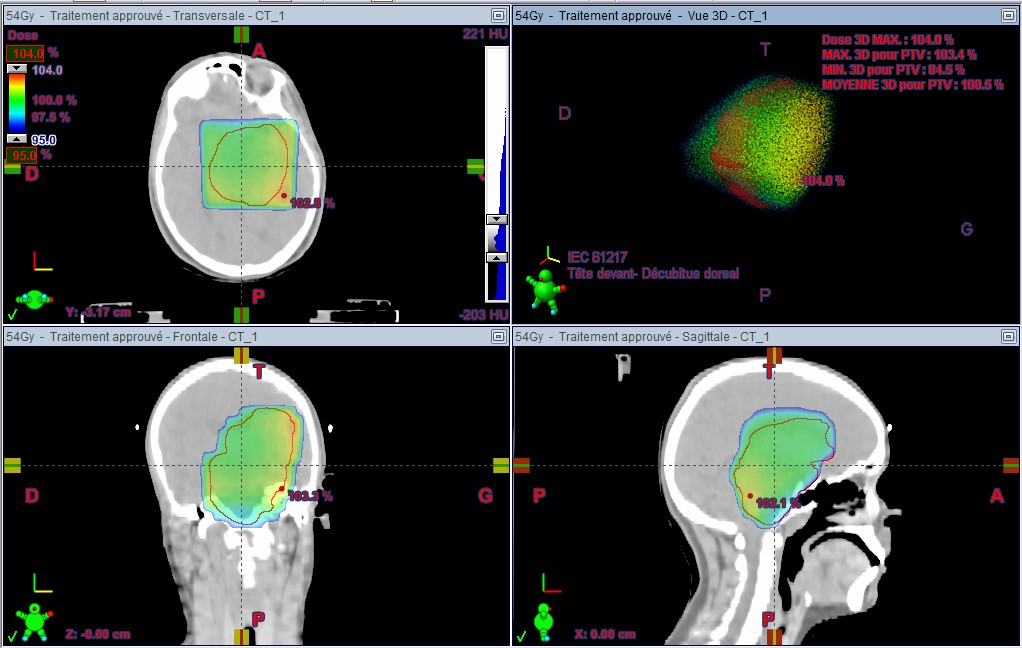
Our cohort was assembled before widespread molecular profiling and prior to the 2021 WHO classification of CNS tumors (12). Diagnosis therefore relied on the clinico-radiological criteria of diffuse intrinsic pontine glioma (DIPG) with typical MRI features: diffuse pontine enlargement, T2/FLAIR hyperintensity (T1 hypointensity), poorly defined margins, absent or faint enhancement, and possible extension to the midbrain or medulla (13). The limited use of biopsy (one patient among nine) did not allow systematic distinction between an H3K27-altered diffuse midline glioma (grade 4) and a low-grade brainstem glioma. The presence of low-grade disease in the series underscores this heterogeneity and calls for caution when comparing outcomes in the molecular era. Today, whenever feasible, molecular characterization is discussed in multidisciplinary tumor boards to guide treatment stratification and potential clinical-trial enrollment (14).
Radiotherapy was delivered to all patients in accordance with prevailing standards. Most received conventional fractionation (54 Gy/30 fractions or 50 Gy/28 fractions), consistent with current clinical recommendations (14). Three patients were treated with hypofractionation (39 Gy/13 fractions), an option supported by randomized trials and systematic reviews showing comparable overall survival (OS) and progression-free survival (PFS) to conventional schedules; a 2022 trial confirmed non-inferiority for OS (18 months), while a 2014 trial found similar OS and PFS without significant advantage (15,16). The use of IMRT and 3D-CRT reflects a pursuit of conformity and normal-tissue sparing; to date, no OS or PFS benefit has been demonstrated for a specific technique in DIPG (14).
Our data show a median survival of 8 months, reflecting the poor prognosis classically reported for pediatric brainstem gliomas, while remaining consistent with the large historical series that describe a median survival of approximately 8–11 months with radiotherapy alone [17]. The fact that 44 % of our patients remain alive with stable disease at last follow-up may be explained by the presence of subgroups with a more favorable prognosis in our cohort probably focal forms, lower-grade tumors, or non-pontine locations, all of which are associated with longer median survival [8].
This study has several limitations, including its retrospective design, single-center setting, small sample size, and limited histo-molecular documentation, reflecting the pre-molecular period in which the cohort was treated. These factors restrict the precision of prognostic interpretation and limit direct comparison with contemporary molecularly defined cohorts. Nevertheless, the study provides real-world data from an underrepresented geographic setting. Reporting treatment outcomes from diverse regions, even through small case series, is important for rare pediatric tumors, as it contributes to a broader understanding of clinical presentation, treatment practices, access to radiotherapy, and survival patterns across different healthcare contexts.
5. Conclusion
This retrospective study illustrates the management of pediatric brainstem gliomas in the era preceding the 2021 WHO classification. By documenting the clinical characteristics and therapeutic outcomes of that period, this work provides a valuable benchmark for assessing the impact of subsequent advances, particularly molecular markers and the development of targeted therapies. These findings also underscore the importance of future studies aimed at improving the prognosis of children with brainstem gliomas.
Abbreviations
WHO: World Health Organization
SNC: Central Nervous System
IMRT: intensity-modulated radiotherapy
3CRT: 3-dimensional conformal radiotherapy
DIPG: diffuse intrinsic pontine glioma
OS: overall survival
PFS: progression-free survival
Statements
Conflicts of Interest: The authors declare no conflicts of interest.
Ethical Approval and Consent to Participate: This retrospective study was conducted in accordance with ethical standards and institutional requirements. Ethical approval was obtained from the appropriate ethics committee. Given the retrospective nature of the study and the use of anonymized data, the requirement for individual informed consent was waived by the ethics committee.
Consent for Publication: No identifiable patient information or images are included in this manuscript. Therefore, specific consent for publication was not required.
Availability of Supporting Data: The data supporting the findings of this study are available from the corresponding author upon reasonable request.
Competing Interests: The authors declare no competing interests.
Funding: This research received no specific grant from any funding agency in the public, commercial, or not-for-profit sectors.
Authors’ Contributions: NK contributed to study conception, data collection, data analysis, manuscript drafting, and final approval. SKH, WH, ZA, FZF contributed to technical support and manuscript review. contributed to data collection, manuscript review, and critical revisions. TB supervised the study and provided critical feedback. All authors read and approved the final manuscript.
Acknowledgements: We thank the patients for cooperation and consent and the medical and radiotherapy teams involved in the care of the patients included in this study.
References
- Alaqeel, A. M., & Sabbagh, A. J. (2014). Pediatric brainstem tumors: Classifications, investigations, and growth patterns. Neurosciences (Riyadh), 19(2), 93–99.
- Patil, N., Kelly, M. E., Yeboa, D. N., Buerki, R. A., Cioffi, G., Balaji, S., Ostrom, Q. T., Kruchko, C., & Barnholtz-Sloan, J. S. (2021). Epidemiology of brainstem high-grade gliomas in children and adolescents in the United States, 2000–2017. Neuro-Oncology, 23(6), 990–998.
- Louis, D. N., Perry, A., Wesseling, P., Brat, D. J., Cree, I. A., Figarella-Branger, D., … Ellison, D. W. (2021). The 2021 WHO classification of tumors of the central nervous system: A summary. Neuro-Oncology, 23(8), 1231–1251.
- Jansen, M. H., Veldhuijzen van Zanten, S. E. M., Sanchez Aliaga, E., Heymans, M. W., Warmuth-Metz, M., Hargrave, D., … Kaspers, G. J. L. (2012). Diffuse intrinsic pontine gliomas: A systematic update on clinical trials and biology. Cancer Treatment Reviews, 38(1), 27–35.
- Puget, S., Beccaria, K., Blauwblomme, T., Roujeau, T., James, S., Grill, J., Zerah, M., Varlet, P., & Sainte-Rose, C. (2015). Biopsy in a series of 130 pediatric diffuse intrinsic Pontine gliomas. Child’s Nervous System, 31(10), 1773–1780.
- Packer, R. J., Allen, J. C., & Goldwein, J. (1993). Pediatric brain stem gliomas: Radiographic, clinical, and therapeutic aspects. Child’s Nervous System, 9(1), 1–12.
- Mahdi, J., Shah, A. C., Sato, A., Morris, S. M., McKinstry, R. C., Listernick, R., Packer, R. J., Fisher, M. J., & Gutmann, D. H. (2017). A multi-institutional study of brainstem gliomas in children with neurofibromatosis type 1. Neurology, 88(16), 1584–1589. https://doi.org/10.1212/WNL.0000000000003881
- Bankole, N. D. A., Dokponou, Y. C. H., Sayore, M. C., Boutarbouch, M., Rifi, L., & El Ouahabi, A. (2022). Childhood brainstem gliomas: A non-aggressive management. Interdisciplinary Neurosurgery: Advanced Techniques and Case Management, 28, 101488. https://doi.org/10.1016/j.inat.2022.101488
- Costa, A. D. A., & Gutmann, D. H. (2020). Brain tumors in neurofibromatosis type 1. Neuro-Oncology Advances, 2(Suppl 1), i85–i97. https://doi.org/10.1093/noajnl/vdz040
- Vitanza, N. A., & Monje, M. (2019). Diffuse intrinsic pontine glioma: From diagnosis to next-generation clinical trials. Current Treatment Options in Neurology, 21(8), 37. https://doi.org/10.1007/s11940-019-0577-y.
- Hoffman, L. M., Veldhuijzen van Zanten, S. E. M., Colditz, N., Baugh, J., Chaney, B., Hoffmann, M., Lane, A., Fuller, C., Miles, L., Hawkins, C., Bartels, U., Bouffet, E., Goldman, S., Leary, S., Foreman, N. K., Packer, R., Warren, K. E., Broniscer, A., Kieran, M. W., … Fouladi, M. (2018). Clinical, radiologic, pathologic, and molecular characteristics of long-term survivors of diffuse intrinsic pontine glioma (DIPG): A collaborative report from the International and European Society for Pediatric Oncology DIPG registries. Journal of Clinical Oncology, 36(19), 1963–1972. https://doi.org/10.1200/JCO.2017.75.9308.
- Park, Y. W., Vollmuth, P., Foltyn-Dumitru, M., Sahm, F., Ahn, S. S., Chang, J. H., & Kim, S. H. (2023). The 2021 WHO classification for gliomas and implications on imaging diagnosis: Part 2—Summary of imaging findings on pediatric-type diffuse high-grade gliomas, pediatric-type diffuse low-grade gliomas, and circumscribed astrocytic gliomas. Journal of Magnetic Resonance Imaging, 58(3), 690–708.
- Leach, J. L., Roebker, J., Schafer, A., Baugh, J., Chaney, B., Fuller, C., Fouladi, M., Lane, A., Doughman, R., Drissi, R., DeWire-Schottmiller, M., Ziegler, D. S., Minturn, J. E., Hansford, J. R., Wang, S. S., Monje-Deisseroth, M., Fisher, P. G., Gottardo, N. G., Dholaria, H., … Jones, B. V. (2020). MR imaging features of diffuse intrinsic pontine glioma and relationship to overall survival: Report from the International DIPG Registry. Neuro-Oncology, 22(11), 1647–1657. https://doi.org/10.1093/neuonc/noaa140
- Kim, H. J., & Suh, C.-O. (2023). Radiotherapy for diffuse intrinsic pontine glioma: Insufficient but indispensable. Brain Tumor Research and Treatment, 11(2), 79–85. https://doi.org/10.14791/btrt.2022.0041.
- Zaghloul, M. S., Eldebawy, E., Ahmed, S., Mousa, A. G., Amin, A., Refaat, A., Zaky, I., Elkhateeb, N., & Sabry, M. (2014). Hypofractionated conformal radiotherapy for pediatric diffuse intrinsic pontine glioma (DIPG): A randomized controlled trial. Radiotherapy and Oncology, 111(1), 35–40. https://doi.org/10.1016/j.radonc.2014.01.013.
- Zaghloul, M. S., Nasr, A., Tolba, M., Refaat, A., Youssef, A., Mosaab, A., Enayet, A., Arafa, O., Maher, E., & Eldebawy, E. (2022). Hypofractionated radiation therapy for diffuse intrinsic pontine glioma: A noninferiority randomized study including 253 children. International Journal of Radiation Oncology • Biology • Physics, 113(2), 360–368. https://doi.org/10.1016/j.ijrobp.2022.01.054.
- González, O. E., Pérez-Báez, L., Aragón-Valera, P., & Restrepo, T. (2017). State of the art: Pediatric brain stem gliomas. Revista Colombiana de Cancerología, 21(4), 181–191. https://doi.org/10.1016/j.rccan.2016.08.002.