

Author(s) :
Maria Diana Bejan1, Ioana Dinu1, Monica Miron1
1Department of Oncology, Fundeni Clinical Institute, Bucharest, Romania
Corresponding author: Maria Diana Bejan, Email: bejandiana2@gmail.com
Publication History: Received - 2 November 2025, Revised - 22 May 2026, Accepted - 30 June 2026, Published Online - 30 September 2026.
Copyright: © 2026 The author(s). Published by Casa Cărții de Știință.
User License: Creative Commons Attribution – NonCommercial (CC BY-NC)
 Share
Highlights
- Multimodal management combining sequential tyrosine kinase inhibitors and surgery can achieve prolonged survival in metastatic GIST.
- Acquired resistance, often driven by secondary KIT mutations, remains the main limitation once multiple lines of targeted therapy fail.
- Molecular profiling helps explain treatment failure and guide later-line choices, underscoring the value of early genotyping.
- Limited access to newer agents restricts options after resistance, highlighting the need for equitable drug availability and clinical trials.
Abstract
Background: Gastrointestinal stromal tumors (GISTs) are the most common mesenchymal tumors of the gastrointestinal tract. Tyrosine kinase inhibitors (TKIs) have markedly improved outcomes in metastatic GIST, but acquired resistance and disease recurrence remain major challenges. We report a case of a 56-year-old male with metastatic jejunal GIST who underwent multiple surgical debulking procedures and sequential TKI therapies over nearly five years.
Summary: The patient presented in August 2018 to the emergency department with abdominal pain, vomiting, and melena. A CT scan of the abdomen and pelvis revealed an abscessed mesenteric tumor. Emergency surgery confirmed a high-grade jejunal GIST with peritoneal metastases. Post-operative imaging revealed hepatic and peritoneal metastases. First-line imatinib 400 mg daily was initiated with subsequent escalation to 800 mg daily at hepatic progression. On further progression, second-line sunitinib achieved prolonged radiological disease stabilization. Cytoreductive surgery was subsequently undertaken during radiological disease control, followed by third-line regorafenib. Following multi-line progression and in the context of limited access to standard later-line TKIs, metastatic-tissue molecular profiling was performed late in the disease course to define an acquired resistance mechanism. Next-Generation Sequencing (NGS) identified a secondary KIT exon 17 mutation consistent with resistance to imatinib and sunitinib and supported subsequent off-label cabozantinib. The patient underwent further palliative debulking procedures and received one cycle of Gemcitabine/Oxaliplatin without clinical benefit and died in June 2023 after 58 months of overall survival (OS).
Conclusion: This case illustrates the prolonged disease control that can be achieved in metastatic GIST through multimodal management combining TKIs and surgery, as well as the limitations once multi-line TKI resistance develops. It highlights the importance of molecularly targeted therapy, the debated role of debulking surgery in advanced GIST, and the need for novel treatments or clinical trials after standard options are exhausted.
1. Introduction
Gastrointestinal stromal tumors (GISTs) are the most common mesenchymal neoplasms of the gastrointestinal tract, most often arising in the stomach, followed by the small intestine. Jejunal GISTs represent 20-35% of cases and are often aggressive at presentation, with higher rates of rupture and metastasis than gastric primaries. The introduction of TKIs has markedly prolonged survival in metastatic GIST, but resistance remains the dominant determinant of long-term outcomes. Prior to TKIs, metastatic GIST was managed with surgery and conventional chemotherapy, but outcomes were poor (median survival approximately 1-2 years) due to chemotherapy resistance(1,2). With TKIs, median OS in advanced GIST has extended to 4-5 years or longer in many patients(1).
Current clinical practice guidelines recommend baseline molecular profiling (KIT and PDGFRA) as part of routine diagnostic evaluation in advanced GIST because genotype predicts primary TKI sensitivity, informs dose selection, and provides a framework for sequencing through subsequent lines(3,4,5). Acquired resistance is most frequently mediated by secondary KIT mutations, typically emerging under TKI selection pressure, with clinically relevant clustering in the ATP-binding pocket (exons 13 and 14) and activation loop (exons 17 and 18)(4,6).
The role of cytoreductive surgery in metastatic disease remains debated. Surgery remains the only curative treatment for localized disease and can be used in metastatic GIST as a cytoreductive strategy. Resection of residual disease in patients responding to TKIs, or removal of isolated progression sites, may prolong disease control and potentially improve survival(2). Retrospective series have reported that combining TKI therapy with debulking surgery can extend median OS to approximately 55-68 months in selected patients, compared with around 40 months with medical therapy alone(1). However, the greatest benefit is observed when complete macroscopic resection (R0/R1) is achieved; incomplete (R2) debulking provides less clear benefit and may not significantly extend survival, especially in multifocal resistant disease(1,2). Patient selection and timing of surgery (e.g., during stable disease on TKI vs. after progression) remain areas of debate.
The case underscores the challenges of managing recurrent GIST with acquired TKI resistance and discusses the outcomes in the context of current literature.
2. Case Presentation
A 56-year-old man with no comorbidities presented in August 2018 with severe abdominal pain, vomiting, and melena. CT imaging revealed an abscessed mesenteric tumor with pneumoperitoneum. Emergency laparotomy found a perforated jejunal mass and peritoneal nodules. Segmental enterectomy was performed. Histopathology report showed a high-grade (mitotic index 4/10 HPF) jejunal GIST pT3pN0 with peritoneal metastases and immunohistochemistry staining positive for CD117 and CD34.
Two months post-surgery, MRI scan of the abdomen and pelvis showed hepatic and peritoneal metastases. Imatinib 400 mg/day was initiated as first-line systemic therapy. Initial stability was achieved, but dose escalation to 800 mg/day was required after seven months for hepatic progression. Stable disease persisted for fourteen months, representing the best overall response.
By late 2019, further progression prompted a switch to Sunitinib 50 mg/day on a 4 weeks-on, 2 weeks-off cycle. Sunitinib induced radiological stability for approximately one year. A two-month treatment interruption for leg-ulcer surgery led to rapid disease progression (Fig. 1), which reversed on drug resumption. Given stable disease but high tumor load, a multidisciplinary team recommended cytoreductive surgery.
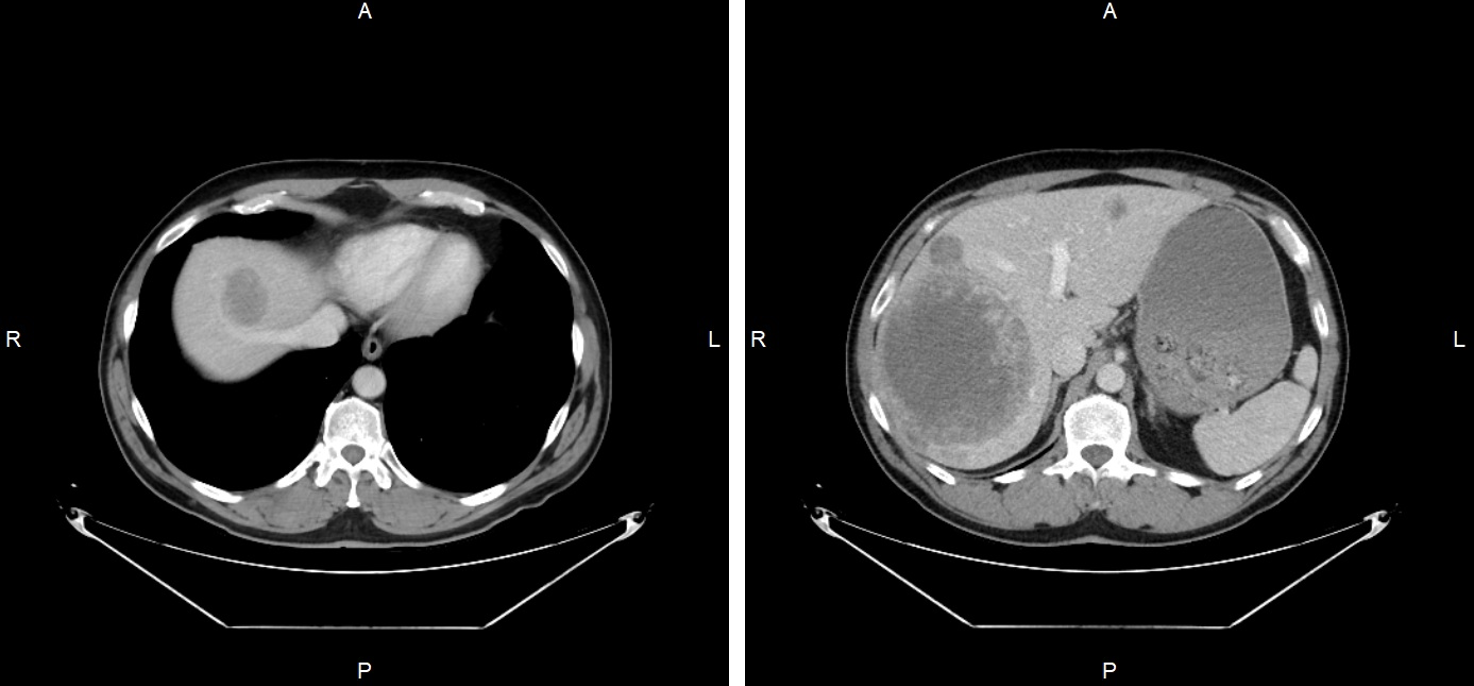
Fig 1. Contrast-enhanced CT scan of the abdomen showing liver metastases (largest metastasis: 15 cm).
In May 2021, partial peritoneal metastasectomy, radiofrequency ablation of hepatic lesions from segments III and IV, and right portal vein embolization were performed. Post-operatively, Regorafenib 160 mg daily on a 3 weeks-on, 1 week-off schedule was started. After seven months, CT imaging demonstrated hepatic progression.
By early 2022, the patient had exhausted the three standard TKIs (Imatinib, Sunitinib, Regorafenib) known to improve survival in GIST. At that time, Ripretinib, a switch-control TKI approved as fourth-line treatment, was not available or affordable (it was not reimbursed in our region). Salvage options were therefore explored. In January 2022, the patient was re-challenged with imatinib 400 mg daily, reasoning that reintroduction of the original TKI might suppress any Imatinib-sensitive clones or slow disease (there are occasional reports of modest disease control with Imatinib rechallenge after failure of other TKIs). Unfortunately, the disease progression continued with enlarging hepatic lesions and peritoneal masses within four months (Fig. 2).
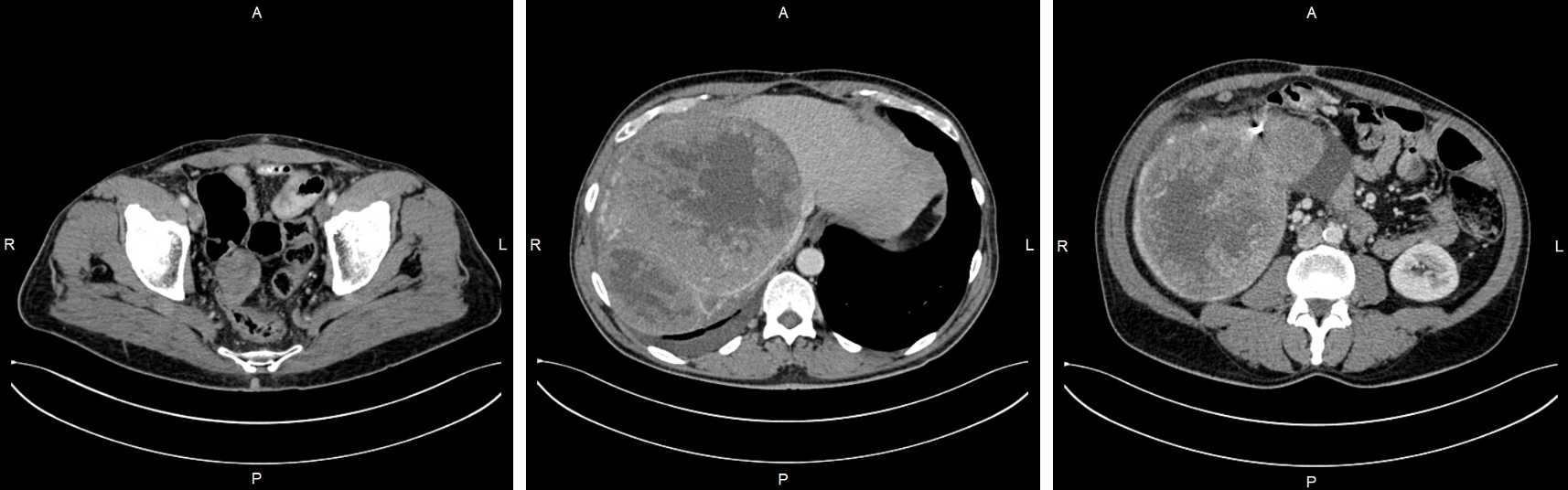
Fig 2. Contrast-enhanced CT scan of the abdomen and pelvis showing liver peritoneal metastases.
FoundationOne CDx on peritoneal tissue identified a secondary KIT exon 17 mutation associated with resistance to imatinib and sunitinib, explaining the failure of imatinib rechallenge. Cabozantinib 60 mg/day was then introduced as an off-label fourth-line TKI, achieving brief stability. After three months on cabozantinib, radiologic progression recurred with new liver lesions. The patient’s condition slowly declined with intermittent abdominal pain and fatigue.
In July 2022, a second debulking surgery was performed with palliative intent. Intraoperative ultrasound-guided right hepatectomy and partial resection of peritoneal metastases were undertaken to alleviate potential mass effect and reduce tumor burden. However, macroscopic disease remained in the liver and peritoneum.
In August 2022, given the lack of available TKI options, another Imatinib rechallenge was attempted, this time at 800 mg daily with the rationale of targeting a broader spectrum of KIT mutants at a higher dose and potentially exploiting any cytoreduction achieved surgically. The patient continued on Imatinib 800 mg for several months with close monitoring, but imaging in late 2022 showed progression in both liver and peritoneum.
In December 2022, a third surgery was undertaken for symptom control but with multiple complications (colonic ischemia, stercoral peritonitis), necessitating other emergency surgical interventions.
In March 2023, systemic chemotherapy was attempted as a last resort. Onconomics chemosensitivity testing suggested marginal sensitivity to Gemcitabine/Oxaliplatin, but one cycle produced no benefit.
The patient’s performance status rapidly deteriorated. He was hospitalized for Klebsiella pneumoniae pneumonia and was subsequently transitioned to hospice care. The patient died in June 2023, nearly 58 months after his initial diagnosis.
3. Discussion
This case illustrates the complex management and clinical course of advanced GIST with acquired resistance to multiple lines of therapy. Over nearly five years, our patient received four different TKIs (imatinib, sunitinib, regorafenib, cabozantinib), two imatinib rechallenges, one cycle of chemotherapy, and three debulking surgeries for recurrent disease. His OS of 58 months aligns with the upper range of reported median OS for metastatic GIST in the TKI era(1), reflecting both benefits and limitations of current therapies.
Imatinib remains the cornerstone of advanced GIST, achieving disease control in approximately 80% of patients, with a median OS approaching five years(7,8). Resistance typically emerges through secondary KIT or PDGFRA mutations, most often in exons 13, 14, or 17(8). The exon 17 mutation detected here explains the lack of durable response to both Imatinib and Sunitinib. Sequential administration of Sunitinib and Regorafenib provided additional months of control, consistent with pivotal trials showing median progression-free survival (PFS) of 6-8 months reported in trials for second-line sunitinib(9) and 4-5 months respectively in the GRID trial(10).
Our patient experienced extended disease stabilization of approximately 15 months on sunitinib, longer than the median PFS of 6-8 months reported in trials(9), suggesting persistence of TKI-sensitive clones. At the point of Regorafenib progression, the standard next-line drug Ripretinib was not available. Ripretinib, a switch-control TKI, has been shown to inhibit a broad range of KIT/PDGFRA mutants and to significantly improve PFS (6.3 months on Ripretinib vs 1.0 month on placebo) and median OS in the INVICTUS phase III trial(11). Available real-world cohorts indicate that ripretinib effectiveness and tolerability in routine care are broadly concordant with registrational trial outcomes, including expanded-access experience in the UK and large prospective registry data in China(12,13,14).
Lacking access to ripretinib, we attempted alternative strategies. Imatinib rechallenge was tried based on anecdotal reports suggesting potential stabilization by targeting residual imatinib-sensitive clones. In our patient, this was unsuccessful, likely because the dominant clones were already Imatinib-resistant. Cabozantinib was subsequently administered.
Cabozantinib, a multikinase inhibitor, had shown activity in a phase II trial for advanced GIST after imatinib and sunitinib (the CaboGIST study reported a 12-week progression-free rate of 60% and disease control of 82% with median PFS of 6 months)(15). Our patient’s brief stabilization on cabozantinib (for 3 months) suggests a transient slowing of disease, but ultimately resistance prevailed quickly. It is possible that cabozantinib’s targeting of MET/VEGFR pathways provided only temporary benefit in a tumor primarily driven by KIT mutations.
Late metastatic-tissue molecular profiling was clinically rational at the point of multi-line progression because secondary KIT mutations are a dominant mechanism of acquired resistance in advanced GIST and can differentially influence sensitivity to subsequent TKIs. After failure of multiple TKIs, we also tried cytotoxic chemotherapy as a last resort. As expected, GIST is refractory to traditional chemotherapy such as doxorubicin or Gemcitabine-based regimens(2). Consistently, our patient’s disease did not respond to Gemcitabine/Oxaliplatin. We administered it largely due to the lack of other options and hopes for any temporary tumor shrinkage, but no objective benefit was seen. This underscores that novel therapies or clinical trial enrollment would be preferable in this refractory setting. Unfortunately, no trial was available locally for which the patient was eligible.
Our case involved four surgeries in total, one at diagnosis and three during the metastatic course. The benefit of debulking surgery in metastatic GIST is not definitively established by prospective trials, but retrospective studies provide insight. Palliative surgery after TKI therapy can prolong survival in selected patients, especially those with responsive or localized disease(1,16). In a series of advanced GIST patients, those who underwent surgery had longer median OS (54.8 vs 40.4 months) than those on medical therapy alone(1). Importantly, patients who had surgery while their disease was well-controlled (stable or responding to TKI) fared better than those operated during active progression(1,2).
Complete macroscopic resection of all disease (R0/R1) is associated with the greatest benefit (median PFS up to 74 months in one series)(1), whereas incomplete R2 resection provides less advantage. Current expert opinion suggests individualized surgical decision-making in metastatic GIST. Guidelines support cytoreductive surgery only in highly selected patients, typically during objective response or durable stable disease on TKI or for limited focal progression with continued peri-operative TKI exposure.
Surgery is not routinely recommended in diffuse multifocal progression where complete macroscopic resection is not achievable(3,4,5). Meta-analyses and systematic reviews report improved PFS and OS associations with surgery following TKI therapy versus TKI therapy alone; however, these findings are limited by retrospective design, selection bias, and confounding by indication and should therefore be interpreted as hypothesis-generating rather than definitive evidence of causality(17,18).
Surgery may be considered in patients with limited progression or good response to TKI (to consolidate the response), but performing surgery in the setting of multifocal TKI-resistant progression (especially if R0 resection is unachievable) should be approached cautiously; it is best reserved for symptom relief.
4. Conclusion
This case shows that selected patients with metastatic GIST can achieve long-term survival with individualized multimodal management, including sequential TKIs, molecular profiling, and carefully selected surgery. Early molecular characterization and availability of effective later-line targeted therapies remain important to optimize outcomes after resistance develops.
Abbreviations
CD – cluster of differentiation
CT – computed tomography
GIST – gastrointestinal stromal tumor
MRI – magnetic resonance imaging
OS – overall survival
PFS – progression-free survival
R0/R1/R2 – complete/microscopic/macroscopic residual resection
TKI – tyrosine kinase inhibitor
Statements
Consent for publication: As the corresponding author, I confirm that the manuscript has been read and approved for submission by all named authors.
Patient consent: Patient consent could not be obtained because the patient is deceased and no identifiable next of kin were available. The case has been fully anonymized and every effort has been made to protect patient confidentiality.
Conflict of interest: None declared.
Funding: No external funding.
References
- Qiu HB, Zhou ZG, Feng XY, et al. Advanced gastrointestinal stromal tumor patients benefit from palliative surgery after tyrosine kinase inhibitors therapy. Medicine (Baltimore). 2018;97(2):e9097
- Witt RG, Lyu HG, Keung EZ. The past, present, and future: the evolving role and challenges of surgery in the multimodal management of gastrointestinal stromal tumors. Gastrointestinal Stromal Tumor. 2023;6: (May 15, 2023).
- Casali PG, Blay JY, Abecassis N, et al.; ESMO-EURACAN-GENTURIS. Gastrointestinal stromal tumors: ESMO-EURACAN-GENTURIS Clinical Practice Guidelines for diagnosis, treatment and follow-up. Annals of Oncology. 2022;33(1):20-33. DOI 10.1016/j.annonc.2021.09.005.
- Serrano C, Martín-Broto J, Asencio-Pascual JM, et al. 2023 GEIS Guidelines for gastrointestinal stromal tumors. Therapeutic Advances in Medical Oncology. 2023;15. DOI 10.1177/17588359231192388.
- Gastrointestinal stromal tumor (GIST): British Sarcoma Group clinical practice guidelines. British Journal of Cancer. 2024 (online). DOI 10.1038/s41416-024-02672-0.
- Heinrich MC, Jones RL, George S, et al. Ripretinib versus sunitinib in gastrointestinal stromal tumor: ctDNA biomarker analysis of the phase 3 INTRIGUE trial. Nature Medicine. 2024;30:498-506. DOI 10.1038/s41591-023-02734-5.
- Demetri GD, von Mehren M, Blanke CD, Van den Abbeele AD, Eisenberg B, Roberts PJ, Heinrich MC, Tuveson DA, Singer S, Janicek M, Fletcher JA, Silverman SG, Silberman SL, Capdeville R, Kiese B, Peng B, Dimitrijevic S, Druker BJ, Corless C, Fletcher CD, Joensuu H. Efficacy and safety of imatinib mesylate in advanced gastrointestinal stromal tumors. N Engl J Med. 2002 Aug 15;347(7):472-80. DOI: 10.1056/NEJMoa020461. PMID: 12181401.
- Debiec-Rychter M, Sciot R, Le Cesne A, Schlemmer M, Hohenberger P, van Oosterom AT, Blay JY, Leyvraz S, Stul M, Casali PG, Zalcberg J, Verweij J, Van Glabbeke M, Hagemeijer A, Judson I; EORTC Soft Tissue and Bone Sarcoma Group; Italian Sarcoma Group; Australasian Gastrointestinal Trials Group. KIT mutations and dose selection for imatinib in patients with advanced gastrointestinal stromal tumors. Eur J Cancer. 2006 May;42(8):1093-103. DOI: 10.1016/j.ejca.2006.01.030. Epub 2006 Apr 18. PMID: 16624552.
- Demetri GD, van Oosterom AT, Garrett CR, et al. Efficacy and safety of sunitinib in patients with advanced gastrointestinal stromal tumor after failure of imatinib: a randomized controlled trial. Lancet 2006; 368: 1329-38.
- Demetri GD, Reichardt P, Kang YK, et al. Efficacy and safety of regorafenib for advanced gastrointestinal stromal tumors after failure of imatinib and sunitinib (GRID): an international, multicenter, randomized, placebo-controlled, phase 3 trial. Lancet. 2013;381(9863):295-302.
- Blay JY, Serrano C, Heinrich MC, et al. Ripretinib in advanced gastrointestinal stromal tumors (INVICTUS): a double-blind, randomized, placebo-controlled, phase 3 trial. Lancet. 2020;395(10225):234-241.
- Lim SY, Ferro-López L, Barquin E, et al. Efficacy and Safety of Ripretinib in Advanced Gastrointestinal Stromal Tumors within an Expanded Access Program: A Cohort Study. Cancers (Basel). 2024;16(5):985. DOI 10.3390/cancers16050985.
- Zhang X, Zhang P, Qiu H, et al. Large-Scale, Multicenter, Prospective Registry Study of Ripretinib in Advanced GIST: A Real-World Study from China. Advances in Therapy. 2023;40(9):3817-3829. DOI: 10.1007/s12325-023-02576-0.
- Zhang C, et al. Efficacy and safety of ripretinib in Chinese patients with advanced gastrointestinal stromal tumors: a real-world, multicenter, observational study. Frontiers in Oncology. 2023. DOI 10.3389/fonc.2023.1180795.
- Schöffski P, Mir O, Kasper B, Papai Z, Blay JY, Italiano A, Benson C, Kopeckova K, Ali N, Dileo P, LeCesne A, Menge F, Cousin S, Wardelmann E, Wozniak A, Marreaud S, Litiere S, Zaffaroni F, Nzokirantevye A, Vanden Bempt I, Gelderblom H. Activity and safety of the multi-target tyrosine kinase inhibitor cabozantinib in patients with metastatic gastrointestinal stromal tumour after treatment with imatinib and sunitinib: European Organisation for Research and Treatment of Cancer phase II trial 1317 ‘CaboGIST’. Eur J Cancer. 2020 Jul;134:62-74. DOI: 10.1016/j.ejca.2020.04.021. Epub 2020 May 26. PMID: 32470848.
- Raut CP, Posner M, Desai J, Morgan JA, George S, Zahrieh D, Fletcher CD, Demetri GD, Bertagnolli MM. Surgical management of advanced gastrointestinal stromal tumors after treatment with targeted systemic therapy using kinase inhibitors. J Clin Oncol. 2006 May 20;24(15):2325-31. DOI: 10.1200/JCO.2005.05.3439. PMID: 16710031.
- Guo Y, et al. The Role of Surgical Resection Following Tyrosine Kinase Inhibitors Treatment in Patients with Advanced Gastrointestinal Stromal Tumors: A Systematic Review and Meta-analysis. Journal of Cancer. 2019;10:5785-5792.
- Rahimi-Ardabily A, Murdande S, Dong M, et al. Liver resection for metastatic GIST tumor improves survival in the era of tyrosine kinase inhibitors: a systematic review and meta-analysis. Langenbeck’s Archives of Surgery. 2023. DOI: 10.1007/s00423-023-03052-7.