


Author(s) :
Monica Emilia Chirilă1, Philip Poortmans2
1MVision AI, Helsinki, Finland
2Department of Radiation Oncology, Iridium Netwerk, University of Antwerp, Faculty of Medicine and Health Sciences, Wilrijk-Antwerp, Belgium
Corresponding author: Monica Emilia Chirilă, Email: monica.emilia.chirila@gmail.com
Publication History: Received - , Revised - , Accepted - , Published Online - 1 April 2023.
Copyright: © The author(s). Published by Casa Cărții de Știință.
User License: Creative Commons Attribution – NonCommercial (CC BY-NC)

 PDF
PDF
 Share
Share
Highlights
• Breast cancer care is accelerating toward deeper subspecialization, where excellence depends on focus, multidisciplinary teamwork, and continuously updated evidence.
• De-escalation is moving from concept to practice: less axillary surgery, more tailored radiotherapy volumes, and more selective use of boost based on individualized recurrence risk.
• Pragmatic clinical trials and high-quality real-world data capture are essential to answer today’s questions without waiting decades for long-term endpoints.
• Preoperative radiotherapy and FLASH-RT represent emerging frontiers with potential to improve the therapeutic ratio and unlock new combinations, including immunotherapy synergy.
Abstract
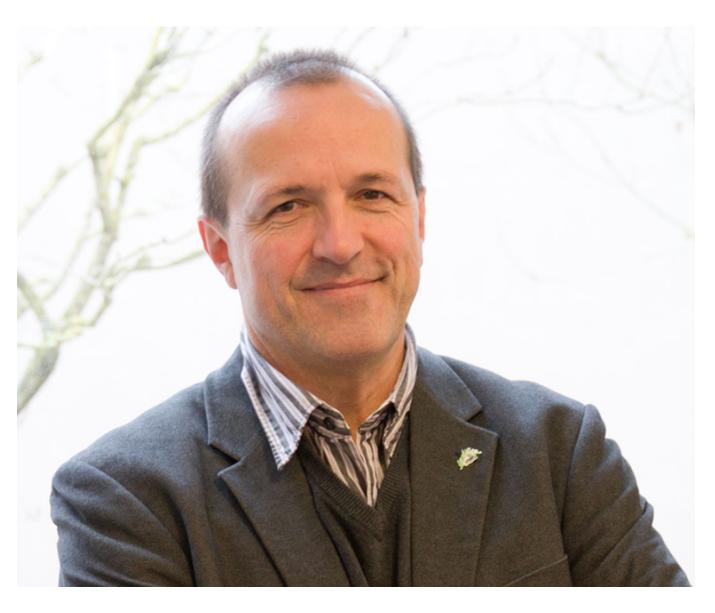
Professor Philip Poortmans is a breast cancer specialist, with radiation therapy as a tool, with an extensive experience and recognized expertise. He practiced medicine in Belgium, the Netherlands and France, and is currently active at Iridium Netwerk and University of Antwerp, Belgium. His Ph.D. thesis was focused on quality assurance in clinical trials in breast cancer and his current research focus is on FLASH-RT and different aspects of breast cancer treatment. Professor Poortmans is involved in multiple guidelines for breast cancer, serve on the editorial board of about 10 journals and published over 400 scientific articles and book chapters, co-editing 3 books. He is involved in teaching, being the course director of the of European Society for Radiation Oncology (ESTRO) Breast Courses and a faculty member of European Society for Medical Oncology (ESMO), European Society of Surgical Oncology (ESSO) and European School of Oncology (ESO). He was the president of ESTRO and of the European CanCer Organisation (ECCO) and he was granted honorary membership of multiple scientific societies. For all his activities and contributions, he received several awards, including the Jens Overgaard and Breur Awards from ESTRO and the St.Gallen Breast Cancer Award.
During this interview, he kindly shared with us his opinion on some breast cancer related hot topics.
MC: Professor Poortmans, you recently participated in the St Gallen Breast Cancer Conference. As one of the most well-known and experienced radiation oncologists in breast cancer, what are the strongest echoes from this meeting, from your point of view?
PP: Thank you for the introduction, but I would like to add small notes. I like to introduce myself as a breast cancer specialist with radiation therapy as a tool. The future will be to know a lot about a few topics, including specific indications and particular issues, i.e., to specialize. We cannot offer quality treatments when we are not focused, and we see this in everything. In healthcare, it is most important because it has a direct implication on the quality of the care that we deliver. According to the Pareto principle (1), 20% of the efforts give 80% of the results. However, to get from 80% to 100%, you need to invest 80% of the efforts, an impossible endeavour to cover the entire field, so we need to stay focused. Of course, it is possible that efforts can be spread over research, clinics, and education, but this is done best when focusing on one item only. While it may be possible to some extent to focus on two or three items at the same time, in the end, we might have to speak with “The Highlander” that “There can be only one!”. Indeed, there will be only one topic that you want to be involved in at a very high level from the clinical point of view, and this stays true for research and innovation as well. Moreover, there are of course multidisciplinary and interdisciplinary aspects within our field as well.
Keeping in mind the need to focus and specialize, let’s get back to the St. Gallen meeting. It was an excellent meeting. Multidisciplinary approaches increased a lot over the last editions and we radiation oncologists are fully involved, with an excellent contribution to the programme, with high-level contributions of colleagues such as Icro Meattini from Florence, Orit Kaidar Person from Tel Aviv, Lori Pierce as ASCO President and radiation oncologist in Wisconsin, Charlotte Coles from Cambridge, as well as others who joined with individual presentations or were part of the concluding consensus panel. What is so special about St. Gallen? It is not a typical meeting that focuses on education and presenting new scientific results. St. Gallen is about identifying the gaps in our knowledge and evidence, striving to build a real consensus based on a blend of available evidence and expert opinion in the field of breast oncology. It addresses topics where there is not enough new evidence yet or that are we not sure about because sticking to evidence that dates from 20 or 25 years ago and hampering the introduction of new developments is not an option. This spans the breast oncology spectrum from diagnostics to surgical, radiation and medical oncology treatments, addressing topics like aftercare and quality of life. Also, the potential role of complementary procedures like acupuncture is discussed and voted on. It is not the meeting that you would attend when you are not focused (or specialized) in the field of breast cancer. It is, of course, interesting to be there and to see it from a young professional’s perspective, but it would not be among the first meetings to go to as a young oncologist. It is more for those who want to embrace the field of breast oncology and want to set the next step for the future.
MC: Which of the recent St. Gallen recommendations do you consider more likely to impact clinical practice shortly?
PP: A couple of the changes are broadening indications for new drugs, that’s for sure, as is always the case in this type of meeting. Unfortunately, we did not yet reach an agreement on the use of tumourinfiltrating lymphocytes (TILs). As for myself, I see a big future for using TILs as an indicator for tailoring therapy next to, of course, having a prognostic value. We will go for further de-escalation of axillary surgery. Data from the SOUND trial (2) was presented by Oreste Gentilini. In this low-risk early-stage breast cancer population sentinel lymph node biopsy did not add to treatment decision-making nor outcomes, so it means that in the low-risk population who has no direct implication from an unexpected positive lymph node, there is a future for not doing even sentinel lymph node biopsy, so only lumpectomy followed by radiation therapy to the breast and systemic therapy, in this case, endocrine therapy based on receptor status. So, this part will be a little bit challenging for us radiation oncologists since we are tailoring more and more our radiation therapy to volumes. We just don’t know to which amount the incidental dose to the lower part of the axilla contributes to the good results of the SOUND study. There was a nice debate between Monica Morrow, the very well-known Memorial Sloan Kettering breast cancer surgeon, and Orit Kaidar-Person, on the management of the axilla in patients who received preoperative systemic therapy and still have residual disease found at sentinel node biopsy. The gold standard is still axillary lymph node dissection because we don’t have more evidence, but thanks to the great presentation of Orit, the debate significantly influenced the vote from 21% in favour of radiation therapy to 30%. So, I think this approach will be gradually introduced even before the results of the Alliance and other trials are published. The big thing there is that the evidence will likely only be presented years from now and we’re doing way too many axillary lymph node dissections meanwhile. Some countries, already anticipate this and the RAPCHEM prospective cohort study (3) from the Netherlands, which uses tailored axillary management based on the initial clinical stage, tumour response and risk factors, suggests that decreasing the treatment intensity based on those factors can be done safely.
I see another main development towards more broadening indications for breast-conserving therapy. Of course, there is no contemporary prospective comparative trial comparing mastectomy to breastconserving therapy. Albeit the pioneering trials date from the 70s and 80s, more and more data supports breast-conserving therapy as the first choice, in terms of both oncological outcomes and (cardiac) toxicity. Now we agreed that if there are two tumours in two different quadrants and a double lumpectomy can be done while maintaining acceptable cosmetic outcomes, breast-conserving surgery followed by radiation therapy can be an option. We had a vote about the boost, one of the items I focus on a lot. I think that we should decrease the indication for delivering a boost after breast-conserving therapy to only the patients who need it. Yes, the boost reduces risks of local recurrence by nearly half and if your risk is 20%, you’ll have a benefit of up to 10%, but if your risk is 2%, the benefit is only 1%, while in both circumstances you increase the risk for moderate to severe fibrosis from 15 to 30% according to the “boost no boost” study (4). If you look at more recent data, fibrosis risks even got rather worse after the introduction of computer tomography-based planning as this leads to unintentionally enlarging the boost volumes. We had a vote on whether we can omit the boost if we obtain a pathological complete remission (pCR) after primary systemic therapy. I support this already for years, not giving a boost if there is a pCR because your target volume is already treated by systemic therapy. The voting didn’t show strong support overall, but there is sufficient support at least in the early stages (I and II), which is the majority of cases. It was remarkable to note that this was among the votes where there was the highest percentage of abstentions because of not being qualified to give an opinion. This is good. It would be a little bit weird if people with absolutely no experience in this would comment on statements like that. So, St. Gallen will help again by small steps in decreasing the delivery of a boost in certain circumstances.
MC: Since you mentioned the refining of treatment decisions according to an increasing number of factors that we have to take into account, are there any tools, like nomograms, or other risk prediction tools that clinicians could use?
PP: There are a few items. I like nomograms, but nomograms should be validated for the population that you are treating and should be updated. There is a very nice nomogram about the risk of recurrences after lumpectomy, but it is an extremely simplified tool because it is based on the results of two or three trials. The risk for recurrences is then artificially reduced by 70% if you offer radiotherapy. First, 70% is not valid anymore-the percentage it’s higher. Secondly, it doesn’t take boost into account. And thirdly, it doesn’t consider tumour biology. So that’s a nomogram that I know is still used in some circumstances, but which is not valid anymore. The “boost no boost” nomogram suffers from the same issue because, since the 90s, when the trial was run, the risk of local recurrences dropped by a factor of 5-it is an interesting nomogram, but not valid anymore. We need to consider a multitude of factors indeed: patient- , tumour-, or treatment-related. We should be aware of them and use them in the right context. There’s a caveat-you cannot just have a layperson looking at a nomogram and then predict outcomes after breast conservation, mastectomy, chemotherapy, or endocrine therapy. You need to have a lot of knowledge to use these nomograms. I am more in favour of using guidelines and protocols. Nomograms can support you in the framework of informed consent and shared decision-making rather than in daily use.
MC: Since guidelines and recommendations rely on randomised clinical trials, it would be preferable to have more of them. You have extensive experience in quality assurance in clinical trials. What should we take into consideration if we want to contribute to finding the answers to current questions?
PP: I’m hugely in favour of participating as much as possible in clinical trials. Of course, they need to be of high quality, they need to ask the right questions, and they need to consider the right circumstances. We should avoid duplicating too much, or running niche clinical trials that are valid only for a very small percentage of our patients, but subsequently applied for all of them. I, therefore, think that pragmatic trials can bring valid information. The big challenge in breast cancer is that for breast cancer we are not so interested in results at one, two, or three years but rather in the long run-we want to learn the results at 10 and 15 years, and even longer. It means that if you have a good idea now, the oncological outcomes will be known and validated somewhere in 2035 at the earliest, or rather around 2040. It’s a challenge, therefore we need to look for smart trials that could maybe allow us to jump to conclusions faster. Here’s an example: we for sure need trials about combining breast reconstruction and radiotherapy. We also need trials about moving radiotherapy in the preoperative setting, and these trials can give us some clues about side effects. Because of side effects (e.g., for fibrosis), we already know that three years is an excellent evaluation point. In the “boost no boost” study, the difference in fibrosis and the cosmetic outcome was already set at three years. It increased a little bit further up to five years, with no differences afterwards, hence the three years-endpoint is a good option for cosmesis and fibrosis. Then, of course, we need to invest in real-life data and how to record it. Some countries are great at it and record almost every possible information (including the follow-up) because all of it is valuable. However, most countries have only basic records about indications and staging, treatment parameters and very little about outcomes and that’s a real pity.
MC: What would be the best choice for doctors who do not have experience with clinical trials? Should they start a clinical trial from scratch, or enrol patients in a multicentric clinical trial? Or maybe starting by prospectively collecting quality data and only afterwards designing their trial?
PP: I would go for a combination. First, you should make good use of patient electronic records and learn to collect data well and then secondly try to join ongoing trials. This way you learn how a trial works, and its advantages but also about the pitfalls, and only then go for designing a clinical trial yourself. For example, in Antwerp, we have Roberto Salgado, one of the most famous people on TILs, who helped us set up a nice phase 2 trial examining the value of TILs in certain circumstances. This can be done because we are a big centre, we have a lot of patients, and TILs are routinely reported. So, if you have specific knowledge and information, you can do more.
MC: You previously mentioned preoperative radiotherapy. How do you think our practice might change in the future regarding treatment sequence?
PP: I’ve been in Radiation Oncology for long enough to have witnessed the transition to preoperative radiotherapy in areas such as rectal, oesophageal, gastric cancers or sarcomas. For me, moving breast radiotherapy in the preoperative setting is a logical step – albeit not for all breast cancer patients. I’m rather surprised to notice that surgeons are not as supportive of preoperative radiotherapy in breast cancer as they were in the cases I mentioned before when they immediately embraced it. This makes no sense. If we are worried about wound healing, we have the skin-sparing effects of modern radiation therapy, especially as the skin itself is not part of the target volume except for stages ≥ T4b. So, I would encourage designing preoperative radiotherapy trials.
MC: Do you see this shift in treatment sequence to be more suitable for early or advanced breast cancer?
PP: Like in many presentations given on the topic, I would mention first the very early stage where there is an indication for radiation therapy. It’s the group of patients that currently often does not receive radiation therapy in some countries. I would offer preoperative radiotherapy to very small volumes, subsequently do a lumpectomy and that’s it. After surgery, the clinical target volume is much more complicated to define. If you look at the results of the published PAPBI study (5) the cosmetic outcomes were excellent. Then you have patients with tumours that are a little bit too big but are not good candidates for primary systemic therapy. A proposed approach would be to irradiate and then wait long enough for a tumour reduction that allows for breast-conserving surgery (followed by further adjuvant treatment where needed). Among the high-risk patients, we recognise two groups. One is loco-regionally very advanced and there we’ll probably transition to chemoradiation for downsizing and facilitating surgery afterwards. The other group is progressing on primary systemic therapy, but where you can still employ radiotherapy to obtain a good remission and bring them to surgery. And then, finally, there is the combination with immunotherapy. Radiation therapy can enhance the immune reaction, turning a cold tumour into a warm tumour. This is being investigated now by the Neo-CheckRay trial (5), of which we are part. The regimen is 3×8 Gy to the primary tumour without any margins while completely avoiding lymphatic drainage, with a combination of chemotherapy and immunomodulators. So, there are a lot of options. There will be patients who will not benefit from preoperative radiation therapy, similar to those with oesophageal, rectal cancers, or sarcomas. But if there is an indication, we can offer radiotherapy preoperatively, because it most likely cannot be more detrimental than in the postoperative setting.
MC: Speaking of changes, what is your opinion about FLASH?
PP: I think that FLASH radiotherapy will offer some advantages because if you maintain or increase the effects of the radiotherapy on the tumour while diminishing the effect on the normal tissues, you naturally increase the therapeutic ratio. What we need to learn, as part of the radiobiological, physics and clinical challenges, is what’s more important: sparing normal tissues by using the FLASH effect or getting your dose very conformal with a lot of different beams to treat the right volume. Of course, technology will improve and, in the future, we’ll be able to deliver more conformal FLASH radiation therapy. This is when it gets even more exciting. In my opinion, we should focus especially on the big challenges that we currently face, such as high-grade brain tumours and pancreatic cancers, where FLASH might truly make a difference. Last but not least, let’s explore the immune effects of FLASH since it looks like these might differ from the effects seen with conventional radiation therapy-this might be another exciting development.
MC: Apart from the clinical, organisational, and research activities, you are involved in many educational activities. What would be the most important things you want to convey to those who listen to you or those you are mentoring?
PP: What I always try to convey is to love your job – when you do, you will invest in it and become good at it. The way I try to present and work is to make Radiation Oncology attractive since it is a marvellous and incredibly important speciality.
Also, I go back to what I said in the beginning, that you cannot do everything at the same level. It is thus important to rely on some basic principles, like the Pareto principle: with 20%, you get 80% of the results. That’s good, and if you don’t have other means, it is already largely sufficient. It is much better to treat 80% of the patients decently than to deliver the full 100% to a few patients only, thereby completely neglecting the others. Next would be to choose your topics, for you cannot do everything. Also, don’t forget that we are medical doctors. We’re not technologists, we’re not technicians. We are part of a big interdisciplinary team alongside medical physicists, radiation therapists (RTTs), radiobiologists, and others. Define who does what. I personally like the Dutch model, where the radiation oncologists’ main task is being with the patients and being involved in clinical aspects. Target volume contouring will gradually transition from a task we do ourselves to something that we will just supervise. Similarly for treatment planning, I know radiation oncologists who are doing a lot of treatment planning, which is good, provided you focus on one single topic. For example, I optimise treatment plans myself sometimes for the boost treatment planning because I try to focus as much as possible on personalizing irradiated volumes based on risk factors. But I avoid overdoing it. We have trained RTTs, medical physicists and dosimetrists for this task. Share the tasks and make sure that you’re working in a fully integrated team where there is a lot of trust in each other.
Also, dare to ask. I receive every week a couple of questions about clinical cases from all over the world. There are a lot of people out there who can give good advice to your patients. But don’t do it blindly for it should be a dialogue. Because otherwise you’ll find yourself in an 80’s story: an ophthalmologist sent a patient with an eye melanoma to a radiation oncologist with a note “Please give 2000 rads to the melanoma”. The radiation oncologist delivered a single session external beam with Cobalt-60 to the eye, prescribed at a depth of 3 cm. Of course, the patient got brain necrosis, but ‘luckily’ for him it was in the temporal lobe-there was damage, but the patient could continue to function. We’re not technicians, we must think for ourselves.
Finally, don’t forget about the interaction with our patients. I speak with the patients like I am speaking with you. I don’t have other words or another way of addressing them; but obviously I do it at a level they can fully understand me. I bring them to a position where they are fully informed and aware of the diagnosis, treatment options, and the possible outcomes of the treatment – both beneficial and in terms of side effects.
Always think and discuss. Be open, be transparent, be clear, and be honest.
Abbreviations:
ESTRO – European Society for Radiotherapy and Oncology
ESMO – European Society for Medical Oncology
ESSO – European Society of Surgical Oncology
ESO – European School of Oncology
ECCO – European CanCer Organisation
EORTC – European Organisation for Research and Treatment of Cancer
pCR – pathological complete response
TILs – tumour infiltrating lymphocytes
Statements:
The authors have no conflict of interest.
References:
- https://en.wikipedia.org/wiki/Pareto_principle
- https://clinicaltrials.gov/ct2/show/NCT02167490
- Boersma LJ, Verloop J, Voogd AC, et al. Radiotherapy after primary CHEMotherapy (RAPCHEM): Practice variation in a Dutch registration study (BOOG 2010-03). Radiother Oncol. 2020;145:201-208. doi:10.1016/j. radonc.2020.01.018
- Bartelink H, Maingon P, Poortmans P, et al. Whole-breast irradiation with or without a boost for patients treated with breast-conserving surgery for early breast cancer: 20-year follow-up of a randomised phase 3 trial [published correction appears in Lancet Oncol. 2015 Jan;16(1):e6]. Lancet Oncol. 2015;16(1):47-56. doi:10.1016/S1470- 2045(14)71156-8
- Bosma SCJ, Leij F, Vreeswijk S, et al. Five-Year Results of the Preoperative Accelerated Partial Breast Irradiation (PAPBI) Trial. Int J Radiat Oncol Biol Phys. 2020;106(5):958-967. doi:10.1016/j.ijrobp.2019.12.037
- https://clinicaltrials.gov/ct2/show/NCT03875573