


Author(s) :
Muatasim Noorelahi
Department of Radiation Oncology, Ministry of Interior’s Medical Cities, Riyadh, Saudi Arabia
Corresponding author: Muatasim Noorelahi, Email: motasimelahi@aol.com
Publication History: Received - May 22, 2025, Revised - June 18, 2025, Accepted - July 5, 2025, Published Online - July 31, 2025.
Copyright: © 2025 The author(s). Published by Casa Cărții de Știință.
User License: Creative Commons Attribution – NonCommercial (CC BY-NC)

 PDF
PDF
 Share
Share
Highlights
- PBM uses red to near-infrared light, which is absorbed by a key enzyme in the mitochondria, leading to increased ATP production and a reduction in inflammation.
- Wavelength determines how deep the light penetrates. Red light (630–670 nm) is used for superficial issues like tingling, while near-infrared light (780–850 nm) reaches deeper nerves to address pain and proprioception.
- Clinical studies show that tailored wavelengths and doses can effectively target and alleviate a range of CIPN symptoms, including numbness, tingling, and allodynia.
Abstract
Chemotherapy-induced peripheral neuropathy (CIPN) is a widespread and often disabling effect of neurotoxic cancer therapies. Patients frequently experience sensory abnormalities such as numbness, tingling, heightened sensitivity to mechanical or cold stimuli (allodynia), and disrupted proprioception. These symptoms can persist long after treatment, significantly impairing daily function and quality of life. Photobiomodulation (PBM), which uses specific wavelengths of low-level red or near-infrared light, has recently emerged as a viable non-pharmacologic option for reducing these sensory disruptions.
Evidence from both laboratory and clinical research shows that PBM can enhance mitochondrial activity, facilitate axonal repair, and suppress oxidative stress and inflammatory responses within nervous tissue. In particular, PBM administered in the 780–850 nm wavelength range with fluences between 3 and 48 J/cm² has demonstrated the ability to relieve allodynia mediated by transient receptor potential (TRP) channels and restore proprioceptive function via nerve regeneration. Clinical implementation is hampered by inconsistencies in reported treatment parameters such as wavelength, dosage, and session frequency, making it challenging to replicate findings or compare studies. Furthermore, many existing PBM protocols do not tailor treatments to specific sensory symptoms or differentiate by chemotherapy type.
This review consolidates current mechanistic and clinical data, evaluates PBM’s effects across various CIPN symptom categories, and highlights the need for standardization and patient-specific protocol development. Future progress should include the integration of biomarkers for response prediction, the use of quantitative sensory testing (QST), and rigorous long-term safety assessments. Adopting an approach that matches PBM parameters to sensory symptom patterns and underlying chemotherapeutic mechanisms may significantly enhance its therapeutic impact in treating CIPN.
1. Introduction
Chemotherapy-induced peripheral neuropathy (CIPN) is a common, dose-limiting side effect of many frontline chemotherapeutic agents, with an estimated incidence ranging from 30% to 90% depending on drug type, cumulative dose, and assessment timing (1). Sensory dysfunction—including numbness, tingling, cold and mechanical allodynia, and impaired proprioception—is the hallmark of CIPN and persists for months or years post-treatment, significantly affecting the quality of life and functional capacity of cancer survivors (2). The mechanistic underpinnings of CIPN are multifactorial and agent-specific (3). Platinum-based agents, such as oxaliplatin and cisplatin, accumulate in the dorsal root ganglia and induce DNA adducts, mitochondrial dysfunction, and oxidative stress, preferentially affecting large myelinated fibers responsible for touch and proprioception (3). Conversely, taxanes and vinca alkaloids primarily impair small unmyelinated and thinly myelinated fibers, disrupting microtubule function, and promoting inflammatory responses, which predominantly result in painful dysesthesias and thermal hyperalgesia (4,5).
Currently, pharmacological treatments for CIPN offer limited efficacy (6). Duloxetine remains the only guideline-recommended drug for painful neuropathy, with only modest benefits (6). As such, there is increasing interest in non-pharmacological approaches such as exercise therapy, acupuncture, and most recently, photobiomodulation (PBM) (7). PBM involves the application of low-intensity red or near-infrared light, which activates cytochrome c oxidase in mitochondria, enhancing ATP production and modulating cellular stress responses (8). These effects probably promote nerve repair, reduce neuroinflammation, and improve sensory function (9). In vitro, PBM has increased GAP-43 and synapsin I expression—markers of axonal regeneration and synaptic plasticity—while in vivo animal studies reveal reduced cold allodynia and improved nerve conduction velocities following PBM (9).
Argenta et al. demonstrated that PBM therapy using 800–970 nm wavelengths reduced modified Total Neuropathy Scores (mTNS) by over 50% in treated patients compared to sham controls (10). Similarly, the NEUROLASER trial showed that twice-weekly PBM during taxane-based chemotherapy helped preserve sensory function and quality of life, suggesting a preventive role for PBM (11). Laser acupuncture, a variation using focused light at acupuncture points, also demonstrated improved cold pain thresholds and touch-detection sensitivity in oxaliplatin-treated patients (12).
Despite these promising results, significant barriers to PBM clinical translation remain (13). Chief among them is the lack of standardized treatment protocols (14). Clinical studies employ a wide range of wavelengths (630–970 nm), fluences (0.5–48 J/cm²), and treatment schedules (daily to weekly), often without symptom-specific rationale (13). Moreover, outcome assessments vary, with inconsistent use of validated measures such as the mTNS, FACT/GOG-Ntx, or quantitative sensory testing (15). There is also a paucity of stratified analyses based on the type of chemotherapy, neuropathy severity, or patient comorbidities (15).
This review aims to systematically evaluate PBM’s efficacy for specific CIPN sensory symptoms, including numbness, tingling, and allodynia. It also explores the mechanistic basis of PBM effects and the challenges associated with optimizing treatment protocols. By integrating evidence from basic science, clinical trials, and guideline reviews, we propose a framework for the symptom- and mechanism-driven application of PBM, highlighting the need for personalized approaches that align with the underlying pathology of the neuropathy. The ultimate goal is to support the development of standardized, evidence-based PBM protocols that can be broadly implemented to mitigate the burden of CIPN and improve patient outcomes.
2. Review of Literature
2.1. PBM Parameters and Mechanisms
Photobiomodulation (PBM) is a form of therapy that utilizes red to near-infrared light in the 630–970 nm range to target peripheral nerve tissues (14). This therapy mainly revolves around the absorption of photons by mitochondrial cytochrome c oxidase, an enzyme that plays a crucial role in the electron transport chain (16). When it becomes activated, it causes a surge in ATP synthesis, changes calcium signaling within the cell, and controls reactive oxygen species (ROS) generation (15). These molecular events decrease apoptotic and inflammatory responses, particularly against neuropathic CIPN pathology (14,15).
Specifically, in CIPN, PBM acts against mitochondrial aberrancies arising from neurotoxic chemotherapeutics (14,17). PBM restores mitochondrial membrane potential, downregulates caspase-mediated apoptosis, and stimulates neuritogenic pathways for axon growth and repair (17). Especially, neurotrophic pathways are reactivated, such as Brain-derived neurotrophic factor (BDNF) and neuronal growth factor (NGF), which help maintain axonal integrity (17). Preclinical studies show that PBM mitigates axonal loss and supports the functional restoration of axons when damaged by chemotherapy (18).
2.2. Role of Wavelength
Tissue penetration depths achieved by photobiomodulation mainly depend on the wavelength parameters of the light used (16). Red light (usually 630–670 nm) is absorbed through superficial tissues, and therefore, it serves primarily to target small sensory fibers associated with tingling, mild numbness at the surface level (19). On the other side, near-infrared light (780–850 nm) will penetrate deeper and will target deep nerve structures responsible for pain hypersensitivity and proprioception (19).
In animal model experiments, PBM at 670 nm is linked to enhanced expression of GAP-43, which is involved in axonal sprouting (20). Wavelengths in the 780-850 nm range exhibit suppressive effects on cold-sensitive Transient Receptor Potential (TRP) channels like Transient Receptor Potential Melastatin 8 (TRPM8) and Transient Receptor Potential Ankyrin 1 (TRPA1), which are central to cold and mechanical allodynia, respectively (21). These wavelength-specific actions clarify the necessity of matching PBM parameters to specific symptom targets (20,21).
2.3. Symptom-Specific Effects of PBM
The symptoms are detailed below and also summarized in Table 1.
Table 1: Photobiomodulation parameters and their effect on specific chemotherapy-induced peripheral neuropathy symptoms
| Study | CIPN symptom | Targeted PBM wavelength | Optimal fluence | Mechanism of action |
| Santamarina et al. (2025) | Numbness | 630–670 nm (red light) | 3–12 J/cm² | Stimulates axonal regeneration, restores proprioception |
| Hsieh et al. (2016) | Tingling | 630–670 nm (red light) | 0.5–6 J/cm² | Enhances small-fiber function, reduces inflammation |
| Hsieh et al. (2016) | Cold allodynia | 780–850 nm (near-infrared) | 12–48 J/cm² | Reduces TRP channel-mediated pain, neuroinflammation |
| Lodewijckx et al. (2020) | Mechanical allodynia | 780–850 nm (near-infrared) | 24–48 J/cm² | Modulates TRP channels, reduces central sensitization |
| Teng et al. (2022) | Proprioceptive deficits | 630–850 nm (both) | 6–12 J/cm² | Enhances axonal conduction and central neural pathways |
PBM – Photobiomodulation, CIPN – Chemotherapy-induced peripheral neuropathy, TRP – transient receptor potential.
2.3.1 Numbness
CIPN-associated numbness is mainly due to damage to large myelinated fibers, probing sensory discrimination, and proprioceptive feedback (22). Many works reported that PBM within 630-850 nm wavelengths can ameliorate numbness by stimulating axonal regrowth and signal conduction restoration (22). More recently, Santamarina et al. found PBM treatment directed toward spinal reflex centers resulted in striking improvements in proprioceptive balance scores (23).
2.3.2. Tingling
Tingling sensations are largely due to dysfunction in small fiber pathways and often represent an early CIPN symptom (22,24). It seems that PBM reduces tingling by supporting synaptic stability and inhibiting pro-inflammatory cytokines within the affected nerves (18,22). Clinical evidence by Hsieh et al. suggests that repair of superficial sensory fibers implicated in tingling can be effectively stimulated by shorter wavelengths (630-670 nm) acting on superficial nerve endings (13).
2.3.3. Allodynia
Cold and mechanical allodynia come into being when damaged small fibers become hypersensitized with overactivation by TRP channels (11). PBM between 780 and 850 nm was shown to cause desensitization by Lodewijckx et al. (14). Clinical research by Hsieh et al. concluded that 780 nm PBM at 48 J/cm² significantly reduced the severity of pain (12). The beneficial effects had been shown in both pulsed and continuous light formats (12).
2.3.4. Proprioceptive Impairment
The proprioceptive impairment arises when there is demyelination or loss of large fiber carrying spatial positioning information (25). PBM expedites conduction in spinal pathways through enhanced speed and precision of nerve signal transmission (25). As far as studies of Teng et al. are concerned, there were significant improvements in proprioceptive function with effects lasting for 12 weeks after the treatment (26). These results give further proof of the potential of PBM in addressing large fiber dysfunction-related sensorimotor deficits (24,25). Teng et al. showed statistically significant improvements in proprioceptive function in a Phase II trial, with effects lasting up to 12 weeks post-treatment as measured by balance test scores and gait parameters (26).
2.4. Dosimetry Considerations
The administered dose of light is the most critical factor in determining the clinical effectiveness of PBM, usually related in terms of fluence (J/cm²) (16). Treatment protocols vary considerably across studies: low-dose treatments at approximately 0.5–3 J/cm² tend to be anti-inflammatory, while higher doses (greater than 12 J/cm²) would favor axonal regeneration and tissue repair (27).
For example, Argenta et al. implemented a protocol with variations in pulsed and continuous waveforms having power outputs ranging from 6 to 12 watts throughout six weeks, delivering targeted PBM in the areas of the most significant symptom burden (10). On the other hand, Hsieh et al. used daily treatments of 48 J/cm² over four weeks and reported a marked improvement in sensory function (13). These results seemingly indicate that total energy delivery should be optimized depending upon the clinical severity of neuropathy to reap clinical benefits (27). The therapeutic window must be carefully dosed to maximize adherence and efficacy while avoiding overstimulation or a decrease in returns. Fluence, frequency, and application site may all interrelate in order to isolate the application and investigate consistent, measurable improvements (16,27,28).
2.5. Treatment Planning
The number of sessions, or session frequency, also varies significantly in clinical applications (11). Some protocols (Table 2) may prefer daily treatment while in the acute symptom phase, whereas others propose or prefer treatment once a week or twice a week for maintenance (11,28). Preventive strategies, such as those used in the NEUROLASER trial, apply PBM simultaneously with chemotherapy to decrease the probability of symptom development. If a specific frequency of therapy is best adapted to the patient, it depends on the precise mode of chemotherapy, neuropathy progression, and overall tolerance (11). When cases display an intense or cumulative neurotoxic exposure, more frequent sessions may be advisable; maintenance schemes should be adequate in less severe cases or follow-ups throughout the long term (11,14).
Table 2: Comparison of photobiomodulation treatment protocols in chemotherapy-induced peripheral neuropathy clinical trials
| Study | ChT Regimen | PBM Wavelength | PBM Fluence | PBM Frequency | Primary Outcome | Results |
| Argenta et al. (2016) | Taxane-based ChT | 800–970 nm | 6–12 J/cm² | 2 sessions per week | mTNS | >50% reduction in mTNS score |
| Hsieh et al. (2016) | Oxaliplatin-based ChT | 780 nm | 48 J/cm² | Daily for 4 weeks | Pain thresholds, sensory sensitivity | Improved cold pain thresholds and touch sensitivity |
| Lodewijckx et al. (2020) | Taxane-based ChT | 780–850 nm | 12 J/cm² | Twice-weekly during ChT | Preservation of sensory function, QoL | Improved quality of life, preserved sensory function |
| NEUROLASER Trial (2022) | Taxane-based ChT | 630–670 nm | 0.5–3 J/cm² | Biweekly during ChT | Prevention of CIPN onset | Significant delay in CIPN onset |
PBM – Photobiomodulation, ChT – chemotherapy CIPN – Chemotherapy-induced peripheral neuropathy, mTNS – Total Neuropathy Score, QoL – Quality of Life.
2.6. Multisite Application Strategy and Role of Biomarkers
PBM needs to be applied to several anatomical sites containing elements of the peripheral and central nervous system (29). This further augments recovery by hitting the affected nerve endings and their higher centers (fingers/toes: dorsal root ganglia or paraspinal regions) concurrently (29). Dual-site protocols, which employ short wavelengths (around 630 nm) on the hands and feet and longer wavelengths (up to 850 nm) along the spine, have demonstrated a synergistic effect in negating local and referred symptoms (7,27). In Lodewijckx et al.’s study, this strategy led to preserved sensory function and improved patient-reported outcomes compared to placebo, indicating the clinical value of combining anatomical target points (14). This elaborated approach takes care of the entire neuroanatomical extent of CIPN and enhances the capacity of the therapy in pain modulation and sensorimotor restoration (7,24).
The ongoing advancements in the identification of biomarkers are instrumental in ushering in highly exigent and tailored PBM therapy (30). Methods like quantitative sensory testing (QST), epidermal nerve fiber density analysis from skin biopsies, and measurement of circulating neurofilament light chain (NFL) levels provide innovative directions in evaluating treatment response and disease progression (30). These resources can be employed in neuropathy severity and symptom phenotype stratification, so that they render clinicians capable of setting PBM parameters with finer precision (30,31). For instance, those with minor fiber damage could require superficial light applications, whereas considerable fiber damage with proprioceptive loss would ask for a deep, high-fluence intervention (30,32). Moreover, using biomarkers to observe responses over time could lead to adapting the therapy accordingly, thus improving reproducibility between studies and marking pathways toward establishing criteria to measure actual therapeutic gains (33). This type of profiling will be critical to highlighting PBM as more than an experimental concept and as a standard treatment technique in integrative neuropathy care (33).
2.7. Safety Profile of PBM
Safe use has been demonstrated in Patient populations treated with PBM, which have good safety records, including those undergoing active cancer treatment (14,16). In these clinical trials, such as NEUROLASER and Argenta, there has been no report of serious adverse events, complications from treatment, or suggestive indications that PBM might be associated with an increase in cancer recurrence or progression (10,11).
Generally, patients tolerate PBM well, but its use should be carefully evaluated in patients with an established diagnosis of photosensitivity or those concurrently undergoing radiotherapy where light exposure may interfere with treatment fields (34). Using standard and accepted protocols would help reassure safety and help achieve smooth incorporation into oncologic care (16,34). Noninvasiveness and lack of drug interactions particularly make LLLT an attractive option with patients taking multiple drugs or unable to tolerate neuropathic medication. These features, coupled with its safety and symptom alleviation, make PBM an attractive option in supportive care treatments (35).
3. Discussion
The purpose of this review was to evaluate the efficacy of photobiomodulation therapy (PBM) for chemotherapy-induced peripheral neuropathy (CIPN) and explore its potential as a non-pharmacological intervention for symptom-specific optimization. Our review highlights the diverse sensory manifestations of CIPN and underscore the need for targeted approaches. The results of the present review highlight that the effectiveness of PBM appears to vary by sensory phenotype, with distinct mechanistic pathways underlying its benefits.
Photobiomodulation therapy (PBM) demonstrates distinct effects on the physiological substrates underlying each sensory deficit, but optimization remains hindered by a lack of standardization across wavelength, dosage, and treatment schedules (36). Clinical trials have reported encouraging quantitative outcomes (10,11). Argenta et al. conducted a randomized, sham-controlled trial showing >50% reduction in mTNS scores among PBM-treated patients with taxane-induced neuropathy (10). The NEUROLASER trial, using biweekly PBM during chemotherapy, observed statistically significant delays in the onset of CIPN, preservation of touch-detection thresholds, and improvements in quality of life scales (EORTC QLQ-CIPN20) (11). Hsieh et al. demonstrated that 48 J/cm² PBM at 780 nm significantly improved cold pain thresholds and mechanical sensitivity in oxaliplatin-treated patients (12,13).
The evidence highlights that PBM’s effectiveness varies by sensory phenotype, for example, PBM demonstrates pronounced efficacy in addressing numbness and proprioceptive deficits, likely due to its influence on large myelinated fibers and central neural structures (30,36). This pattern of results is consistent with previous studies employing 630-850 wavelengths, which report improvement in balance and sensory discriminations (36). However, studies such as Santamarina et al. and Teng et al. have small sample sizes and require replication in larger, stratified cohorts (24,26). In contrast, cold and mechanical allodynia appear more responsive to higher fluences (e.g., 48 J/cm²) and deeper-penetrating wavelengths (780–850 nm), which more effectively target dorsal root ganglion hyperexcitability and TRP channel sensitization (12,21). Hsieh et al. provide compelling evidence through both subjective and quantitative sensory testing metrics (12). However, direct comparisons across wavelength ranges are limited, and trials often fail to isolate single sensory symptoms, which impedes protocol refinement (24,28).
The incorporation of personalized dosimetry, as demonstrated by Argenta et al., represents a significant advancement in PBM research, enabling tailored interventions based on neuropathy distribution and intensity (10). Several randomized controlled trials have evaluated the efficacy of PBM in CIPN. In the study by Argenta et al., patients receiving 800–970 nm PBM twice weekly for 6 weeks experienced over a 50% reduction in mTNS scores compared to the sham group (10). The NEUROLASER trial, a randomized placebo-controlled study, demonstrated that biweekly PBM during taxane-based chemotherapy delayed the onset of CIPN symptoms and preserved sensory thresholds and quality of life (11). In a separate randomized phase II trial by Teng et al., PBM resulted in significant improvements in proprioceptive function with effects lasting up to 12 weeks (26). These trials provide critical high-quality evidence supporting PBM’s potential in both therapeutic and preventive settings.
In comparison, past researchers focused primarily on post-neurotoxicity rehabilitation (23,26). The present review extends this work by advocating for preventative PBM integrating into chemotherapy regimens, as evidence by the NEUROLASER trial (11). Notably, PBM’s effects persist for 10 to 12 weeks post-treatment (26,37). These results suggest a paradigm shift toward early intervention to mitigate chronic symptom progression (31,37).
Despite these advancements, there are several potential limitations concerning the results of this study. One limitation of this study is that the diversity of assessment tools used to evaluate PBM results, e.g., Modified Total Neuropathy Score (mTNS), FACT/GOG-Ntx, EORTC QLQ-CIPN20, and quantitative sensory testing (QST), all provide valuable data but differ in sensitivity and focus, which complicate cross-study comparison (38). The variability in PBM devices and calibration standards poses barriers to replication (7,27). An additional limitation is the small sample sizes in key studies, necessitating a larger, stratified cohort for validation (23,26). Future research should prioritize standardized outcome measures to facilitate robust meta-analysis. While multiple studies suggest positive outcomes with PBM, the overall quality of evidence remains mixed. Many studies suffer from small sample sizes, short follow-up durations, and heterogeneous treatment protocols, which limit generalizability. Only a few randomized controlled trials, such as those by Argenta et al. and the NEUROLASER group, provide high-level evidence (10,11). Future research must address these limitations through multicenter, well-powered trials with standardized PBM protocols and consistent outcome measures.
These data have several intervention implications. For example, Biomarker integration, such as serum NFL levels or skin nerve fiber density, could enhance objective monitoring of PBM efficacy (33). Additionally, granular dose-finding studies are needed to delineate therapeutic windows, particularly when stratified by neuropathy type, and chemotherapy class (18). In terms of future research, it would be helpful to explore the maintenance PBM cycle post-chemotherapy to assist long-term neuroprotection (31,32). Furthermore, mechanistic studies investigating PBM’s pleiotropic effects, such as mitochondrial ATP synthesis and cytokine modulation, could clarify its role in addressing both neurodegeneration and neuroinflammation (33).
The current literature contributes to a growing body of evidence supporting PBM’s safety and efficacy in cancer survivors, with no increased recurrence rates associated with PBM. However, multi-year follow-ups remain limited (19). Education for oncology providers and therapists on PBM’s indications, application, and contraindications is also crucial (39). Despite these limitations and concerns, the present study has enhanced our understanding of PBM’s potential as a precision intervention for CIPN. World Association of Laser Therapy (WALT) advises the use of transcutaneous LED or laser devices emitting near-infrared light (wavelength range: 800-1100), with an irradiance of 10-150 mW/cm2. The recommended energy dose is 2 Einstein per treatment area, corresponding to a photon fluence of 9 pJ/cm2 at 810 nm. These treatments should be administered 3 to 4 times per week throughout 4 to 6 weeks to observe clinically meaningful benefits (28). We hope that the current review will stimulate further investigation into standardized protocols, cost-effectiveness, and clinical guideline integration to optimize patient outcomes.
4. Conclusion
PBM emerges as a promising, non-invasive intervention for managing the complex sensory disturbances associated with chemotherapy-induced peripheral neuropathy. Unlike conventional pharmacological strategies, PBM targets underlying pathophysiological mechanisms such as mitochondrial dysfunction, oxidative stress, and neuroinflammation, aligning with the diverse neurotoxic pathways activated by different chemotherapeutic agents. Clinical and preclinical evidence supports the efficacy of PBM in alleviating both large fiber-mediated symptoms such as numbness and proprioceptive loss, and small fiber-mediated pain syndromes like cold and mechanical allodynia.
The effectiveness of PBM is closely tied to the optimization of treatment parameters, including wavelength, fluence, and treatment frequency. Multicenter, stratified trials using consistent sensory endpoints and incorporating both patient-reported outcomes and objective metrics are needed to validate and refine current approaches. PBM has the potential to become a cornerstone of CIPN management, offering durable symptom relief and neuroprotection. When applied with precision and informed by evolving evidence, PBM can significantly improve patient quality of life and support the broader movement toward integrative and personalized cancer care.
Abbreviations
ChT – chemotherapy
CIPN – Chemotherapy-induced peripheral neuropathy
LLLT – Low-Level Laser Therapy
mTNS – Modified Total Neuropathy Score
NFL – Neurofilament Light chain
QoL – Quality of Life
QSL – Quantitative Sensory Testing.
PBM – Photobiomodulation
TRP – Transient Receptor Potential
WALT – World association of laser therapy
Statements
Authors’ contributions: MN wrote the manuscript and revised the text.
Consent for publication: As the corresponding author, I confirm that the manuscript has been read and approved for submission.
Conflict of interests: The authors declare no conflict of interest.
Funding Sources: None
Ethical Approval: This study was not subject to ethical review and approval due to its format.
REFERENCES
- Salem MY. Drug-Induced Peripheral Neuropathy: Focus on Newer Offending Agents. J Exp Neurol. 2025;6(2):83–104.
- Seretny M, Currie GL, Sena ES, Ramnarine S, Grant R, MacLeod MR, et al. Incidence, prevalence, and predictors of chemotherapy-induced peripheral neuropathy: A systematic review and meta-analysis. Pain. 2014 Dec;155(12):2461–70.
- Staff NP, Cavaletti G, Islam B, Lustberg M, Psimaras D, Tamburin S. Platinum‐induced peripheral neurotoxicity: From pathogenesis to treatment. J Peripher Nerv Syst [Internet]. 2019 Oct [cited 2025 May 23];24(S2). Available from: https://onlinelibrary.wiley.com/doi/10.1111/jns.12335
- Park SB, Goldstein D, Krishnan AV, Lin CS, Friedlander ML, Cassidy J, et al. Chemotherapy‐induced peripheral neurotoxicity: A critical analysis. CA Cancer J Clin. 2013 Nov;63(6):419–37.
- Bennett GJ, Liu GK, Xiao WH, Jin HW, Siau C. Terminal arbor degeneration – a novel lesion produced by the antineoplastic agent paclitaxel: Terminal arbor degeneration due to paclitaxel. Eur J Neurosci. 2011 May;33(9):1667–76.
- Loprinzi CL, Lacchetti C, Bleeker J, Cavaletti G, Chauhan C, Hertz DL, et al. Prevention and Management of Chemotherapy-Induced Peripheral Neuropathy in Survivors of Adult Cancers: ASCO Guideline Update. J Clin Oncol. 2020 Oct 1;38(28):3325–48.
- Wang L, Mao L, Huang Z, Switzer JA, Hess DC, Zhang Q. Photobiomodulation: shining a light on depression. Theranostics. 2025 Jan 1;15(2):362–83.
- Dompe C, Moncrieff L, Matys J, Grzech-Leśniak K, Kocherova I, Bryja A, et al. Photobiomodulation—Underlying Mechanism and Clinical Applications. J Clin Med. 2020 Jun 3;9(6):1724.
- Unay S, Bilgin MD. Investigation of the effects of quercetin and low-level laser therapy in cisplatin-induced in vitro peripheral neuropathy model. Lasers Med Sci [Internet]. 2023 Jan 23 [cited 2025 May 23];38(1). Available from: https://link.springer.com/10.1007/s10103-023-03718-0
- Argenta PA, Ballman KV, Geller MA, Carson LF, Ghebre R, Mullany SA, et al. The effect of photobiomodulation on chemotherapy-induced peripheral neuropathy: A randomized, sham-controlled clinical trial. Gynecol Oncol. 2017 Jan;144(1):159–66.
- Joy L, Jolien R, Marithé C, Stijn E, Laura S, Hilde L, et al. The use of photobiomodulation therapy for the prevention of chemotherapy-induced peripheral neuropathy: a randomized, placebo-controlled pilot trial (NEUROLASER trial). Support Care Cancer. 2022 Jun;30(6):5509–17.
- Hsieh YL, Fan YC, Yang CC. Low-level laser therapy alleviates mechanical and cold allodynia induced by oxaliplatin administration in rats. Support Care Cancer. 2016 Jan;24(1):233–42.
- Hsieh YL, Chou LW, Hong SF, Chang FC, Tseng SW, Huang CC, et al. Laser Acupuncture Attenuates Oxaliplatin-Induced Peripheral Neuropathy in Patients with Gastrointestinal Cancer: A Pilot Prospective Cohort Study. Acupunct Med. 2016 Oct;34(5):398–405.
- Lodewijckx J, Robijns J, Bensadoun RJ, Mebis J. Photobiomodulation Therapy for the Management of Chemotherapy-Induced Peripheral Neuropathy: An Overview. Photobiomodulation Photomed Laser Surg. 2020 Jun 1;38(6):348–54.
- Jones KF, Wechsler S, Zulewski D, Wood L. Pharmacological and Non-pharmacological Management of Chemotherapy-Induced Peripheral Neuropathy: A Scoping Review of Randomized Controlled Trials. J Palliat Med. 2022 Jun 1;25(6):964–95.
- Bensadoun R, Epstein JB, Nair RG, Barasch A, Raber‐Durlacher JE, Migliorati C, et al. Safety and efficacy of photobiomodulation therapy in oncology: A systematic review. Cancer Med. 2020 Nov;9(22):8279–300.
- Canta A, Pozzi E, Carozzi V. Mitochondrial Dysfunction in Chemotherapy-Induced Peripheral Neuropathy (CIPN). Toxics. 2015 Jun 5;3(2):198–223.
- R Hamblin M, 1 Wellman Center for Photomedicine, Massachusetts General Hospital, BAR414, 40 Blossom Street, Boston, MA 02114, USA, 2 Department of Dermatology, Harvard Medical School, Boston, MA 02115, USA, 3 Harvard-MIT Division of Health Sciences and Technology, Cambridge, MA 02139, USA. Mechanisms and applications of the anti-inflammatory effects of photobiomodulation. AIMS Biophys. 2017;4(3):337–61.
- Chung H, Dai T, Sharma SK, Huang YY, Carroll JD, Hamblin MR. The Nuts and Bolts of Low-level Laser (Light) Therapy. Ann Biomed Eng. 2012 Feb;40(2):516–33.
- Reinhart F, Massri NE, Torres N, Chabrol C, Molet J, Johnstone DM, et al. The behavioural and neuroprotective outcomes when 670 nm and 810 nm near infrared light are applied together in MPTP-treated mice. Neurosci Res. 2017 Apr;117:42–7.
- Caspani O, Zurborg S, Labuz D, Heppenstall PA. The Contribution of TRPM8 and TRPA1 Channels to Cold Allodynia and Neuropathic Pain. Louis M, editor. PLoS ONE. 2009 Oct 8;4(10):e7383.
- Burgess J, Ferdousi M, Gosal D, Boon C, Matsumoto K, Marshall A, et al. Chemotherapy-Induced Peripheral Neuropathy: Epidemiology, Pathomechanisms and Treatment. Oncol Ther. 2021 Dec;9(2):385–450.
- Santamarina L, De Souza MO, Sassaron LA, Ezequiel TDS, Carvalho RL, Boas VFV, et al. Photobiomodulation on postural control and gait speed in chemotherapy-induced peripheral neuropathy [Internet]. Springer Science and Business Media LLC; 2025 [cited 2025 May 23]. Available from: https://www.researchsquare.com/article/rs-5814765/v1
- Santamarina L, De Souza MO, Sassaron LA, Dos Santos Ezequiel T, Carvalho RL, Boas VFV, et al. Influence of photobiomodulation on sensory symptoms, balance, and gait speed in chemotherapy-induced peripheral neuropathy. Support Care Cancer [Internet]. 2025 Apr [cited 2025 May 23];33(4). Available from: https://link.springer.com/10.1007/s00520-025-09405-w
- Shen Q, Guo H, Yan Y. Photobiomodulation for Neurodegenerative Diseases: A Scoping Review. Int J Mol Sci. 2024 Jan 28;25(3):1625.
- Teng C, Egger S, Blinman PL, Vardy JL. Evaluating laser photobiomodulation for chemotherapy-induced peripheral neuropathy: a randomised phase II trial. Support Care Cancer [Internet]. 2023 Jan [cited 2025 May 23];31(1). Available from: https://link.springer.com/10.1007/s00520-022-07463-y
- Zein R, Selting W, Hamblin MR. Review of light parameters and photobiomodulation efficacy: dive into complexity. J Biomed Opt. 2018 Dec 11;23(12):1.
- Robijns J, Nair RG, Lodewijckx J, Arany P, Barasch A, Bjordal JM, et al. Photobiomodulation therapy in management of cancer therapy-induced side effects: WALT position paper 2022. Front Oncol [Internet]. 2022 Aug 30 [cited 2025 May 23];12. Available from: https://www.frontiersin.org/articles/10.3389/fonc.2022.927685/full
- Kaye AD, Ridgell S, Alpaugh ES, Mouhaffel A, Kaye AJ, Cornett EM, et al. Peripheral Nerve Stimulation: A Review of Techniques and Clinical Efficacy. Pain Ther. 2021 Dec;10(2):961–72.
- Selim MM, Wendelschafer-Crabb G, Hodges JS, Simone DA, Foster SXYL, Vanhove GF, et al. Variation in quantitative sensory testing and epidermal nerve fiber density in repeated measurements. Pain. 2010 Dec;151(3):575–81.
- Lairedj K, Klausner G, Robijns J, Arany PR, Bensadoun RJ. Photobiomodulation dans la prévention et la prise en charge des effets secondaires des traitements anticancéreux : bases, bilan et perspectives. Bull Cancer (Paris). 2024 Mar;111(3):314–26.
- Korada HY, Arora E, Maiya GA, Rao S, Hande M, Shetty S, et al. Effectiveness of Photobiomodulation Therapy on Neuropathic Pain, NerveConduction and Plantar Pressure Distribution in Diabetic Peripheral Neuropathy- A Systematic Review. Curr Diabetes Rev [Internet]. 2023 Nov [cited 2025 May 23];19(9). Available from: https://www.eurekaselect.com/204244/article
- Rodwin RL, Siddiq NZ, Ehrlich BE, Lustberg MB. Biomarkers of Chemotherapy-Induced Peripheral Neuropathy: Current Status and Future Directions. Front Pain Res [Internet]. 2022 Mar 14 [cited 2025 May 23];3. Available from: https://www.frontiersin.org/articles/10.3389/fpain.2022.864910/full
- De Pauli Paglioni M, Araújo ALD, Arboleda LPA, Palmier NR, Fonsêca JM, Gomes-Silva W, et al. Tumor safety and side effects of photobiomodulation therapy used for prevention and management of cancer treatment toxicities. A systematic review. Oral Oncol. 2019 Jun;93:21–8.
- Hashmi JT, Huang Y, Osmani BZ, Sharma SK, Naeser MA, Hamblin MR. Role of Low‐Level Laser Therapy in Neurorehabilitation. PM&R [Internet]. 2010 Dec [cited 2025 May 23];2(12S). Available from: https://onlinelibrary.wiley.com/doi/10.1016/j.pmrj.2010.10.013
- Nairuz T, Sangwoo-Cho, Lee JH. Photobiomodulation Therapy on Brain: Pioneering an Innovative Approach to Revolutionize Cognitive Dynamics. Cells. 2024 Jun 3;13(11):966.
- Joy L, Jolien R, Marithé C, Stijn E, Laura S, Hilde L, et al. The use of photobiomodulation therapy for the prevention of chemotherapy-induced peripheral neuropathy: a randomized, placebo-controlled pilot trial (NEUROLASER trial). Support Care Cancer. 2022 Jun;30(6):5509–17.
- Cheng HL, Lopez V, Lam SC, Leung AKT, Li YC, Wong KH, et al. Psychometric testing of the Functional Assessment of Cancer Therapy/Gynecologic Oncology Group—Neurotoxicity (FACT/GOG-Ntx) subscale in a longitudinal study of cancer patients treated with chemotherapy. Health Qual Life Outcomes [Internet]. 2020 Dec [cited 2025 May 23];18(1). Available from: https://hqlo.biomedcentral.com/articles/10.1186/s12955-020-01493-y
- Royce TJ, Schenkel C, Kirkwood K, Levit L, Levit K, Kircher S. Impact of Pharmacy Benefit Managers on Oncology Practices and Patients. JCO Oncol Pract. 2020 May;16(5):276–84.
Table 1. Photobiomodulation parameters and their effect on specific chemotherapy-induced peripheral neuropathy symptoms
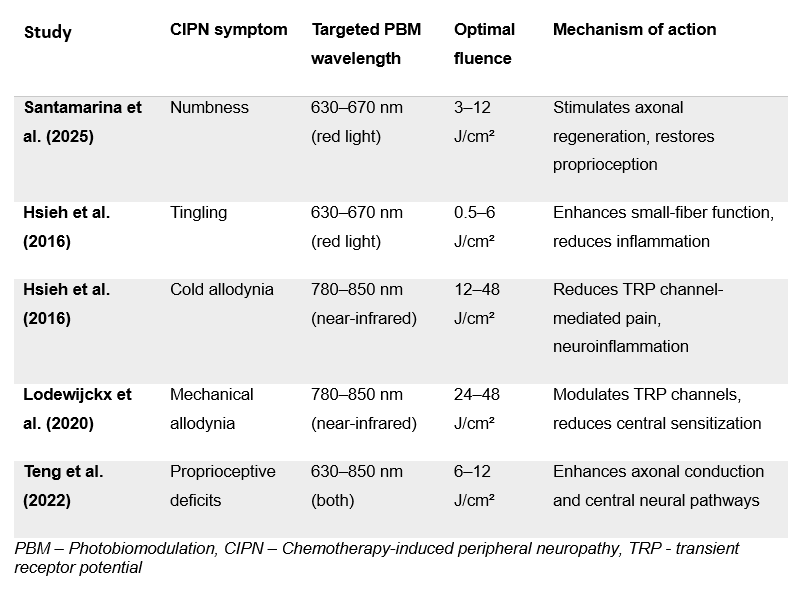
Table 2. Comparison of photobiomodulation treatment protocols in chemotherapy-induced peripheral neuropathy clinical trials