


Author(s) :
Fatima Zohra Zaanoun1, Loubna Lazaar1, Samia Khalfi1, Kaouatr Soussy1, Wissal Hassani1, Fatima Zahra Farhane1, Zineb Alami1, Touria Bouhafa1
1 Department of Radiotherapy, Hassan II University Hospital, Fez, Morocco
Corresponding author: Fatima Zohra Zaanoun, Email: fatimazohra.zaanoun@usmba.ac.ma
Publication History: Received - 25 November 2025, Revised - 30 December 2025, Accepted - 31 December 2025, Published Online - 31 December 2025.
Copyright: © 2025 The author(s). Published by Casa Cărții de Știință.
User License: Creative Commons Attribution – NonCommercial (CC BY-NC)

 PDF
PDF
 Share
Share
Highlights
- Definitive radiotherapy (45 Gy) achieved complete local control for pediatric abdominal wall EES, proving to be a viable curative alternative to radical surgery.
- The decision to omit surgery was based on the patient’s excellent clinical and radiological response to intensive neoadjuvant chemotherapy (VIDE protocol).
- This conservative approach preserved anatomical integrity and muscle function, avoiding the long-term morbidity, hernias, and growth deformities associated with extensive abdominal wall resection.
Abstract
Extraosseous Ewing sarcoma (EES) is an aggressive malignant tumor. Its standard treatment combines extensive surgery, chemotherapy, and radiotherapy. We report a pediatric case in which radiotherapy alone, following an excellent response to chemotherapy, enabled local control and avoided surgical morbidity. A 10-year-old girl presented with a painful mass in her left flank. Imaging (CT scan) and histology (CD99+, EWSR1 rearrangement) confirmed the diagnosis of EES of the abdominal wall. After six courses of neoadjuvant chemotherapy (VIDE protocol, Euro-Ewing 99), inducing a major response, the multidisciplinary decision was to opt for radiotherapy alone on the initial tumor bed (45 Gy in 25 fractions), omitting surgery. Tolerance was excellent, with only grade 1 radiodermatitis. Clinical and radiological follow-up confirmed a durable complete response without recurrence. Pediatric EES is a rare entity. Its prognosis is improved by a multidisciplinary approach. For selected tumors, radiotherapy alone is a valid and curative treatment option. This conservative approach preserves function and anatomical integrity, thereby optimizing long-term quality of life without compromising locoregional control.
1. Introduction
Ewing sarcoma (ES) is a rare and aggressive malignant tumor belonging to the family of small round cell tumors. It mainly affects children and young adults, with an estimated annual incidence of 1.5 cases per million (1). The extraosseous location (EES) of this tumor is rare, accounting for only 15% to 20% of all Ewing’s sarcomas and less than 1% of all soft tissue sarcomas (2, 3). With a generally poor prognosis due to early metastatic potential, standard management requires immediate systemic treatment based on intensive chemotherapy (4).
The treatment of localized EES is based on a multimodal approach combining neoadjuvant or adjuvant chemotherapy with aggressive local therapy. Traditionally, wide surgical excision with healthy margins is considered the standard local treatment when it can be performed without major functional sequelae (5). Radiotherapy is typically indicated in cases of inoperable tumors, incomplete surgical resection, or positive margins (6). However, organ preservation strategies and non-surgical approaches are gaining importance in contemporary protocols, aiming to reduce long-term morbidity while maintaining optimal oncological control (7).
We report here a rare case of primary pediatric abdominal wall EES. The originality of this treatment lay in the use of radiotherapy as the sole local modality, after obtaining a complete clinical and radiological response to neoadjuvant chemotherapy. We detail this therapeutic strategy and discuss its relevance in an updated literature review.
2. Clinical case
A 10-year-old girl with no significant medical history presented with a five-month history of a progressively enlarging, painful left flank mass. Physical examination confirmed a firm, tender mass fixed to the deep layers. An initial abdominal-pelvic computed tomography (CT) scan revealed a heterogeneously enhancing soft-tissue mass (60 x 56 x 42 mm) within the left posterolateral abdominal wall, in close proximity to the 11th rib, ipsilateral kidney, and sigmoid colon (Figure 1).
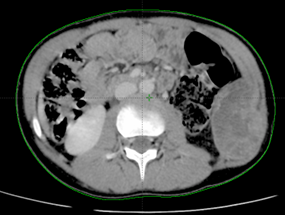
Figure 1. Initial axial CT scan revealing a left posterolateral abdominal wall mass.
An ultrasound-guided biopsy was performed. Histological analysis revealed malignant tumor proliferation with small round cells. Immunohistochemistry was strongly positive for CD99. The diagnosis of Ewing Sarcoma was confirmed by the detection of a rearrangement of the *EWSR1* gene in molecular biology (FISH).
In view of the worsening pain, a staging assessment was performed using chest CT and bone scintigraphy, confirming the localized nature of the disease.
A multidisciplinary therapeutic decision recommended neoadjuvant chemotherapy. The patient received six courses of chemotherapy according to the VIDE (Vincristine, Ifosfamide, Doxorubicin, Etoposide) protocol of the Euro-Ewing 99 protocol. The re-evaluation CT showed major tumor regression (Figure 2).
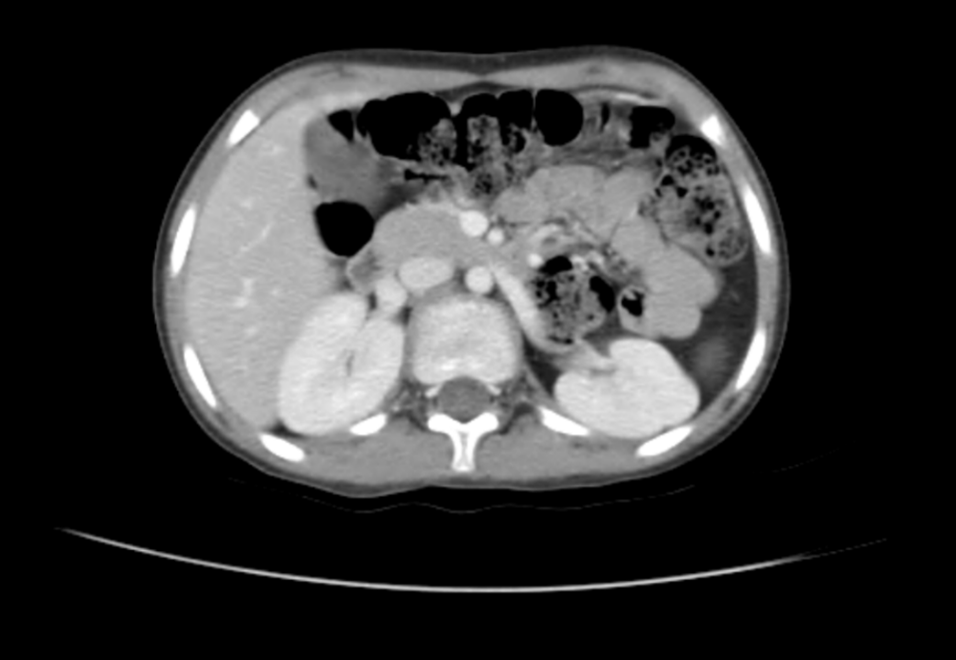
Figure 2. Axial CT scan image post-chemotherapy showing a major tumor regression
Given the excellent chemosensitivity and the potential morbidity of extensive abdominal wall resection (including risk of muscular deficit, cosmetic deformity, and hernia), the tumor board decided against surgery. Instead, definitive radiotherapy to the initial tumor bed was elected as the sole local control modality, with a plan to continue adjuvant chemotherapy (VAI protocol for 8 cycles). Before initiating treatment, an endocrine consultation was performed to evaluate ovarian function and growth potential, establishing a baseline. The patient also underwent fertility preservation measures appropriate for her prepubescent age.
For treatment simulation, the patient was immobilized in a supine position using a vacuum mattress. A planning CT scan was acquired. The clinical target volume (CTV) encompassed the pre-chemotherapy tumor bed. A 5 mm margin was added to create the planning target volume (PTV). A 3D-conformal radiotherapy plan was generated to deliver a total dose of 45 Gy in 25 fractions of 1.8 Gy each, with optimization to spare the left kidney and small bowel (Figure 3).

Figure 3. Radiotherapy plan verification. (A) Axial dose distribution. (B) Dose-volume histogram analysis.
Treatment was well-tolerated, with only transient Grade 1 radiodermatitis. The patient continued adjuvant chemotherapy without interruption. Clinical and radiological follow-up confirmed a durable complete response. A positron emission tomography (PET) scan at 12 months post-RT showed no evidence of local recurrence or distant metastasis.
3. Discussion
This case exemplifies a successful, conservative paradigm in pediatric sarcoma management. The decision to utilize definitive RT was based on the convergence of tumor biology, modern treatment protocols, and a patient-centered focus on long-term quality of life.
The cornerstone of this strategy is the well-documented radiosensitivity and chemosensitivity of the Ewing sarcoma family (4, 8). An excellent response to induction chemotherapy is a powerful prognostic indicator and a strong predictor for successful local control with RT alone (9). Several studies support this. A retrospective analysis by Ahmed et al. suggested that local control rates with definitive RT can be comparable to those with surgery for selected tumors, particularly those that respond well to chemotherapy (6). Similarly, data from the CESS and EICESS trials indicated that local control with RT was equivalent to that with surgery in patients with a good histologic response (10).
The functional advantages of avoiding radical resection are substantial in a growing child. Extensive abdominal wall surgery can lead to musculoskeletal dysfunction, cosmetic deformities, parietal hernias, and impaired growth of the abdominal wall (11). A radiotherapy-based approach preserves anatomical integrity. This philosophy is now embedded in modern protocols like Euro-Ewing 2012, which explicitly recognizes RT as a primary local treatment option when surgery would result in major functional deficits (4).
Advancements in radiotherapy technique are crucial to this approach. Techniques like 3D-CRT, VMAT, and proton therapy enable highly conformal dose delivery, maximizing tumor coverage while sparing surrounding healthy tissues (7). This precision directly translates to a reduced risk of both acute and late toxicities, making definitive RT a safer and more viable curative option.
The limitations of this approach include the potential for late effects, such as subcutaneous fibrosis, growth asymmetry, and a lifelong, small increased risk of secondary malignancy. Therefore, long-term, diligent follow-up is essential. The success of this strategy also depends on careful patient selection by an experienced multidisciplinary team, with emphasis on tumors with excellent chemosensitivity.
4. Conclusion
EES of the abdominal wall in children poses a significant therapeutic challenge. For a carefully selected subset of patients who demonstrate an excellent response to initial chemotherapy, definitive radiotherapy represents a viable, curative, and organ-preserving local treatment option. This case, supported by a growing body of literature, demonstrates that a conservative strategy, guided by multidisciplinary decision-making, can optimize long-term quality of life without sacrificing oncological control, challenging the historical primacy of surgery in all cases.
Abbreviations
3D-CRT – three-dimensional conformal radiation therapy
CT – Computed Tomography
CTV – Clinical Target Volume
EES – Extraosseous Ewing sarcoma
ES – Ewing Sarcoma
FISH – Fluorescence In Situ Hybridization
Gy – Gray
PET – Positron Emission Tomography
PTV – Planning Target Volume
RT – Radiotherapy
VAI – Vincristine, Actinomycin D, Ifosfamide
VIDE – Vincristine, Ifosfamide, Doxorubicin, Etoposide
VMAT – Volumetric Modulated Arc Therapy
Statements
Authors’ contributions: FZ and LL conceived and planned the analysis. SK, KS and WH contributed to the interpretation of the results. FZ took the lead in writing the manuscript. FF, ZA and TB made the final approval. All authors provided critical feedback and helped shape the research, analysis, and manuscript.
Consent for publication: As the corresponding author (FZ), I confirm that the manuscript has been read and approved for submission by all named authors.
Conflict of interests: The authors declare no conflict of interest.
Funding Sources: None
Informed consent: Written informed consent was obtained from the child’s legal guardian for the publication of this case report and any accompanying images.
References
- Grünewald TGP, Cidre-Aranaz F, Surdez D, et al. Ewing sarcoma. Nat Rev Dis Primers. 2018;4(1):5.
- WHO Classification of Tumours Editorial Board. Soft Tissue and Bone Tumours. 5th ed. International Agency for Research on Cancer; 2020. p. 131-2.
- Applebaum MA, Worch J, Matthay KK, et al. Clinical features and outcomes in patients with extraskeletal Ewing sarcoma. Cancer. 2011;117(13):3027-32.
- Gaspar N, Hawkins DS, Dirksen U, et al. Ewing sarcoma: current management and future approaches through collaboration. J Clin Oncol. 2015;33(27):3036-46.
- National Comprehensive Cancer Network. NCCN Clinical Practice Guidelines in Oncology:Bone Cancer. Version 2.2023 [Internet]. 2023 [cited 2023 Nov 15]. Available from: https://www.nccn.org/professionals/physician_gls/pdf/bone.pdf
- Ahmed SK, Robinson SI, Okuno SH, et al. Management of Extraskeletal Ewing Sarcoma: A Retrospective Analysis of the University of Minnesota Experience. Am J Clin Oncol. 2022;45(4):143-9.
- Casey DL, Lin TA, Alektiar KM. The Role of Radiotherapy in the Management of Ewing Sarcoma. Cancer J. 2021;27(6):455-60.
- Schuck A, Ahrens S, Paulussen M, et al. Local therapy in localized Ewing tumors: results of 1058 patients treated in the CESS 81, CESS 86, and EICESS 92 trials. Int J Radiat Oncol Biol Phys. 2003;55(1):168-77.
- Womer RB, West DC, Krailo MD, et al. Randomized controlled trial of interval-compressed chemotherapy for the treatment of localized Ewing sarcoma: a report from the Children's Oncology Group. J Clin Oncol. 2012;30(33):4148-54.
- Hayes-Jordan A, Andrassy RJ. Surgical management of sarcomas in children and young adults. Surg Oncol Clin N Am. 2012;21(2):345-56.
- Juergens C, Weston C, Lewis I, et al. Safety and efficacy of intensive chemotherapy with interval-compressed vincristine, doxorubicin, and cyclophosphamide compared with standard interval chemotherapy for Ewing sarcoma: Results of the Euro-E.W.I.N.G.99 trial. J Clin Oncol. 2016;34(15 Suppl):11000.