


Author(s) :
Monica-Emilia Chirilă1 , Maria Antonietta Gambacorta2
1 Clinical Development Department, MVision AI, Helsinki, Finland
2 Università Cattolica del Sacro Cuore, Radiation Oncology Department, Rome, Italy
Corresponding author: Monica-Emilia Chirilă , Email: monica.emilia.chirila@gmail.com
Publication History: Received - , Revised - , Accepted - , Published Online - 1 October 2023.
Copyright: © The author(s). Published by Casa Cărții de Știință.
User License: Creative Commons Attribution – NonCommercial (CC BY-NC)

 PDF
PDF
 Share
Share
Highlights
-
Art and medicine are complementary healing forces: The Art for ART (Advanced Radiation Therapy) initiative integrates artistic experiences into radiotherapy, recognizing that treating cancer requires addressing both body and soul.
-
Art integration may influence clinical outcomes: The digital platform links patient engagement with treatment continuity and clinical data, aiming to demonstrate measurable correlations between resilience, spirituality, and survival outcomes.
-
Wellbeing extends to healthcare professionals: Beyond patient benefits, the initiative improves workflow atmosphere and staff morale, creating a sustainable, donation-supported model where art, technology, and oncology care reinforce each other.
Abstract
Professor Maria Antonietta Gambacorta is a specialist in Radiation Oncology with a PhD in Brachytherapy. She is responsible for the Radiotherapy Oncology hospitalizations and the Interventional Oncology Center and the coordinator of the Multidisciplinary Group for the treatment of rectal tumors within the Comprehensive Cancer Centre of the Fondazione Policlinico Agostino Gemelli, Rome. Due to her level of expertise, she was elected member of the Board of Directors of the Italian Association of Radiation Oncology (AIRO); and member of the board for the drafting of the Guidelines on rectal cancer of the Italian Association of Medical Oncology.
Professor Gambacorta is a member of European Society of Radiation Oncology (ESTRO) where she carries out teaching activities in international courses of the ESTRO school. She has published more than 170 scientific publications in peer-reviewed journals, including the International consensus guidelines for Clinical Target Volume delineation in rectal cancer. In this interview, Professor Gambacorta shares some insights about the Art for ART project, implemented in the Radiotherapy department of Policinico Agostino Gemelli, Rome.
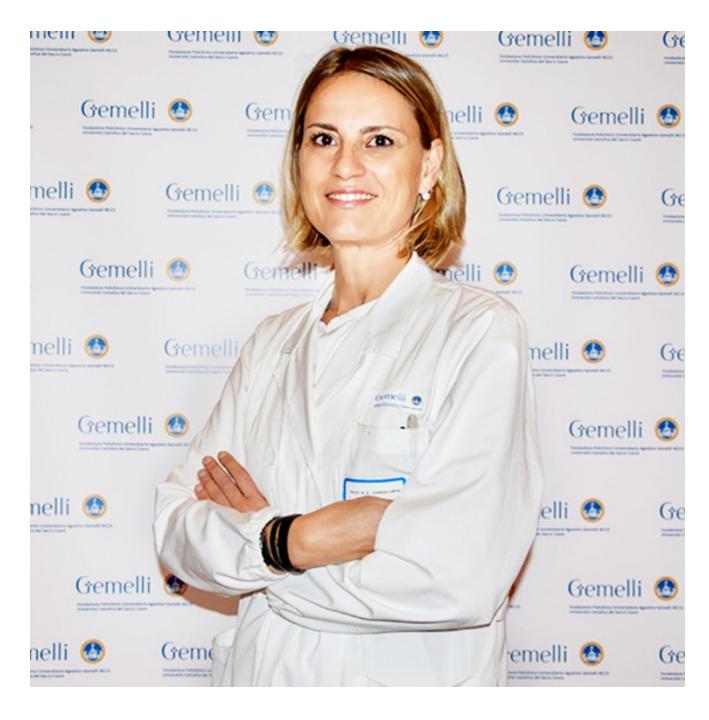
MC: What is, in your perspective, the connection between Medicine and Art?
MAG: Body and soul are inescapably united in the human being. We cannot just treat the body, we must also treat and support the soul. Medicine heals the body; art heals the soul. Both are means, the most powerful means we know, to heal the whole person; God (or fate) does the rest. Art is beauty, art is both objective and subjective, because it allows us to interpret it and to see what we want and need. Similar to medicine, don’t you think?
MC: Indeed, if we look in the past, at the dawn of medicine, we can find that the ancient Greeks had the same God for both healing and art – Apollo. But coming back in the present days, we would like to know when, why and how did you and your team start to include art in patient care?
MAG: This project was born in 2012 from the idea of Professor Valentini, who is not only a talented radiation oncologist but also an art lover, and who wanted to combine his two passions. That was when we renovated our radiotherapy department. In our minds, it was just a way of improving the radiotherapy bunkers. But even then, we and I understood that the project he had in mind was more than that: ‘healing with art’. What a utopian thought…
MC: What were the projects that followed?
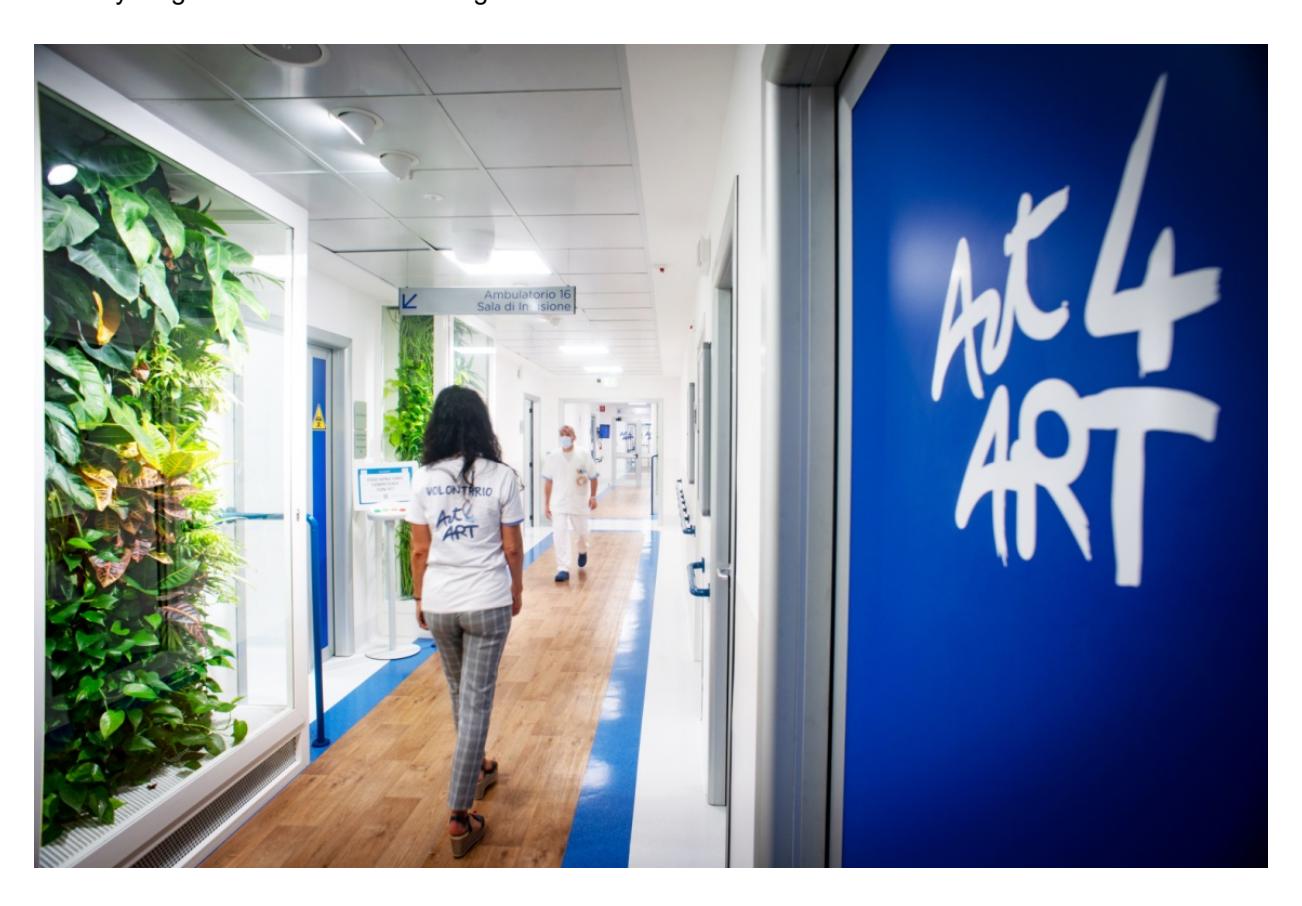
MAG: The project that followed was bigger than expected. We now have several projects under the umbrella of ‘art for ART’ (the capital ART stands for Advanced Radiation Therapy).
We have a jukebox for radiotherapy sessions, where patients can use an app to choose the music they want to listen to during their treatment. We have a project for children who become the protagonists of stories during treatment and can also produce videos of their ‘radiotherapy experience’ to share with other young children and their families. We have a platform rich in artistic content (poems, books, paintings, museums, music…) covering different emotions (joy, love, compassion, nature…) (1).
MC: What were the patients’ perception and feedback? What about the medical staff, too?
MAG: The patient needs to be involved and supported in the project.
There may be barriers to overcome, especially at the beginning. People have cancer, they want to be cured, they don’t have the time or the desire to get involved in these “useless things”. However, once they are in, after a few days, as they become familiar with the environment, the organisation and their new “tasks”, they begin to open up to being involved in the project, and once they are in, they feel relieved and appreciate the system.
The medical staff and all the staff, although never relieved (I smile), receive back from the patients their gratitude. It is increasingly common to hear “I felt at home”. This is the most rewarding feedback for us. These messages from patients are also shared among us and through our social networks in a column called “Seeds of Gratitude”. “Seeds” because gratitude breeds wellbeing and wellbeing also eases the burden on healthcare workers (2).
MC: How did you measure the impact of these interventions?
MAG: That was the question I was expecting! The platform has an artificial intelligence system underneath that profiles the patient, suggests art content for sharing and links patients’ choices with data on therapy continuity, lab tests, tumour responses.
We would like to show the impact of art therapy on cancer patients with numbers.
We already have a small publication on brain tumour patients showing that those who are more resilient and spiritual live longer. Is this a coincidence? I don’t think so.
MC: What was the impact of those projects on the department’ workflow and expenses?
MAG: The workflow is definitely improved, patients have time to devote to all stages of treatment: during chemotherapy they can devote to music videos, documentaries, during radiotherapy they can listen to their favourite music, the platform’s content can also be used in waiting rooms. All of this content fills the time patients spend in their “new home”, reducing the negative perceptions associated with their new condition in a broader sense.
The increased resilience of patients and the beauty of the workplace also bring relief to the souls of healthcare workers. The costs of maintaining the system are all covered by donations. If I were to use a metaphor, I would describe it as a wheel that turns endlessly: donors donate, people continue their efforts to keep the project alive, patients and health workers benefit, and so on.
MC: How did you manage the inherent challenges that come with such changes?
MAG: How did I deal with the challenges? I can’t say, at the moment I’m mostly benefiting from the changes!
MC: For those interested to learn more from your experience in this field, what would you recommend them to read?
MAG: First of all, the scientific literature that deals with these aspects, videos and internet content, our website gemelliart.it, the feedback from patients in the “seeds of gratitude” section on the @gemelliart facebook and instagram accounts. And then… just come and see!
MC: What about those who would like to implement a similar project? What should they start with, as first steps?
MAG: In Italy there is already experience in art and in general patient support, not only in radiotherapy but in medicine in general. We have a “rete.ART” with 4 hospitals following the same strand, but there are many Italian Radiotherapy Oncology that have independently sensitized themselves to this theme. European radiotherapy has started a process of humanizing treatment environments. In short, there is a lot going on.
The first step? Feel it inside!
MC: Are there future plans for continuing this project at Gemelli, or starting another one involving art, in any form?
MAG: Art is one of the expressions of beauty, and we have had the strength and opportunity to build a platform to link these difficult-to-measure aspects to clinical outcomes.
The results that we will get will certainly enable future developments. The platform can be expanded and anything that enhances well-being can be taken on board.
References:
- Tagliaferri L, Dinapoli L, Casà C, et al. Art and digital technologies to support resilience during the oncological journey: The Art4ART project. Tech Innov Patient Support Radiat Oncol. 2022;24:101-106, doi:10.1016/ j.tipsro.2022.10.004
- Casà C, Dinapoli L, Marconi E, et al. Integration of art and technology in personalized radiation oncology care: Experiences, evidence, and perspectives. Front Public Health. 2023;11:1056307. Published 2023 Jan 23. doi:10.3389/fpubh.2023.1056307
- “Resilience, Spirituality and Survival Outcome in Glioblastoma.” ESTRO European Society for Radiotherapy & Oncology. https://www.estro.org/Congresses/ESTRO-2022/616/06-cns/10386/resilience-spiritualityandsurvival outcomeingliobla. Accessed September 25, 2023.