


Author(s) :
Diana Ionescu1
1Department of Pathology and Laboratory Medicine, University of British Columbia, Vancouver, Canada
Corresponding author: Diana Ionescu, Email: dionescu@bccancer.bc.ca
Publication History: Received - , Revised - , Accepted - , Published Online - 2021.
Copyright: © The author(s). Published by Casa Cărții de Știință.
User License: Creative Commons Attribution – NonCommercial (CC BY-NC)

 PDF
PDF
 Share
Share
Professor’s Diana Ionescu Perspective
Highlights
- International training and dual board certification (USA/Canada), long-standing consultant role at BC Cancer, academic leadership at UBC, and program director experience—paired with a strong track record in publications, lectures, and clinical trials oversight.
- A series of true, case-based vignettes illustrates how cancer collapses professional distance—clinicians become patients/caregivers, and “expertise” can be overshadowed by fear, uncertainty, and family realities.
- Multidisciplinary intensity & resilience through purpose: Highlights the daily dynamics of oncology teams (urgent consults, late-night decisions, complex cases) and frames survival in oncology as a disciplined mindset: staying accurate and compassionate for patients while cultivating self-compassion, collegial support, and meaning through education/research and shared mission.
Abstract
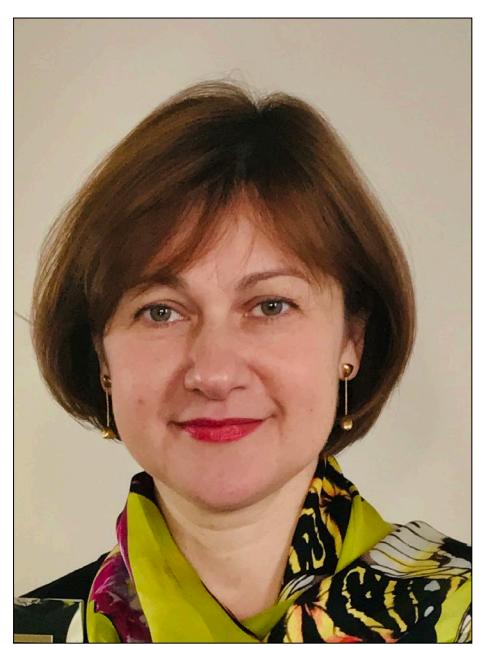
Dr. Ionescu is a graduate of University of Medicine and Pharmacy “Iuliu Hațieganu” in Cluj Napoca, Romania (1995). She completed her postgraduate training in Anatomical and Clinical Pathology at the University of Pittsburgh Medical Center (2005) and a Fellowship in Gynecological Pathology at Vancouver General Hospital (2006). Dr. Ionescu is board certified in Anatomical Pathology in USA (American Board of Pathology, 2006) and Canada (Royal College of Physicians and Surgeons, 2006). She has practiced as a Consultant Pathologist at BC Cancer Agency in Vancouver since 2006 and is the Medical Director for Clinical Trials at BCC Laboratory. She is currently a Clinical Professor of Pathology at UBC (since 2014), and served as the residency program director for the Anatomic Pathology Residency Program between 2009 and 2017.
Her specific areas of diagnostic expertise are lung, gynecologic and breast pathology. She is an author of over 70 scientific publications and book chapters. She is the author and invited speaker at numerous regional, national and international lectures. Her investigation interests include oncologic pathology and molecular biomarkers, lung cancer and adult health education. She is the Canadian Anatomic and Molecular Pathology (CAMP, since 2016) and CAMP pathology Oncology Digital Series (CAMP-PODS, since 2020) founder and course director.
Dr. Ionescu is an enthusiastic advocate of pathologists participating in numerous patient education forums, TV shows, advocacy and fundraising campaigns, being Spokesperson for College of American Pathologists, Medical Advisor for Lung Cancer Canada, moderator, presenter and community excellence awardee at ROMPOST TV on Omni TV, and in 2015 supporting biomarker testing before the House of Commons Committee on Health.
*
It will soon be fifteen years since I started practicing as an Oncologic Pathologist at the BC Cancer Agency in Vancouver, Canada. I am currently sharing my office with the memories of my husband, a breast and gynecological pathologist, who passed away from cancer five
years ago. It was here, in the institution where we both worked, where he was diagnosed and cared for by our colleagues and friends. Cancer doesn’t choose, as we all know too well.
I keep on the wall his Medical School Diploma from Cornell University and his highest distinction written by our son when he was five years old, “The vey Bsst Father in theWorld”. At the corner of this office-formerly his, currently mine – is his graduating chair, given to all trainee doctors that trained in New York Hospital (NYH). Is it this chair that has told the stories below, stories of vulnerable human beings, working as doctors in Oncology? Let’s talk about some of the challenges for the person hidden behind the title of ‘doctor’.
Several times a day, every single day, in my office, I get visits from Medical Oncologists, Pulmonary Doctors, Surgeons, Radiologists, and Radiation Oncologists, coming to discuss an interesting or a difficult patient. Multidisciplinary team work is the greatest joy of my clinical practice as a consultant pathologist. Our cases are complex, often with rare pathologies, unusual presentations, and unexpected and urgent turns in care. Therefore, stepping unannounced into each other offices, or sending each other text messages late at night are no rare events among physicians working in Oncology at my institution.
**
“And what should I do now?” the Oncologist asked me, the Pathologist, while deep seated into the NYH chair, suddenly showing me his helplessness. “Our children are 7 and 4” he continues “and I am not sure how to tell her or how to tell the children that their mother may die soon”.
He stopped and looked at me, although it seemed more like he looked through me: “What is the prognosis by the way? I don’t do breast”.
It was as if he had forgotten all the skills acquired in the long hours of study and innumerable patients he has had to tell the same grim diagnosis. He was lost. Just minutes ago, he walked into my office tall and hopeful in his white coat, with a proud doctor demeanor, and his entire life changed when I finished looking at the slides and gave him his wife’s diagnosis: metastatic breast cancer to the spine. Who would have known that he would be my husband’s physician only 3 years later when it will be my turn to feel lost and to ask him: “what is the prognosis by the way? I don’t do urological cancers”.
***
“Are you certain? Do we need a second opinion”?
Her eyes looked scared and she seemed small in the big wooden chair.
“Really, she continued talking faster and faster trying to convince herself that all the odds were against my diagnosis: he is a man. Do you know how rare breast cancer in males is?”
Yes, I knew, and so did she, as we are both experts in breast cancers, medical oncology and pathology. But when the slides had her husband’s name and medical record number on them, statistics were suddenly meaningless. He became one of those rare cases we discuss at tumor boards.
****
He was already in the chair when I stepped into my office joyfully biting into an apple. He was too weak to stand while waiting for me. He smiled and said:
“I came to thank you and to say good bye”.
He had a bouquet of freesias and a card, which he handed to me with a shaking hand. I couldn’t help myself and hugged him crying. I remembered him during my job interview 15 years prior: an impeccable surgeon-gentleman with a Regent Fit, non-iron, pinpoint button down collar, sky blue Brooks Brother shirt, khaki flat front pants, and a geodesic dome pattern tie. He welcomed me at the time with a strong handshake, whispering in my ear: “we all love you here – you are here to stay”. I got hired then. Last month I diagnosed him with lung cancer, stage IV.
“I am going on the island tomorrow with my family- I will die on Sunday morning, I chose MAID*”.
*****
Eight years of being a residency program director gave me about 30 graduating residents, 30 lives I influenced with the most vivacious passion I am able to feel. But this semiannual interview was unique. She sat in the NYH chair, all comfortable and smiling, chatting away about her fellowship plans, the new house she just bought with her husband, and continued with a big inhale that made me look straight up at her:
“By the way…I also have to tell you not so good news: I was diagnosed with colon cancer, stage 2. Yes, yes, I know, I am only 22, it is not hereditary, it is MMR intact. It is going to be all fine; I am having surgery next week and chemo right after that.”
She was correct-this woman-a rock of positivity-she is fine. She is stronger and wiser, after 2 years off residency training due to post chemo peripheral neuropathy, which took a while to improve, until she could hold a forceps again, or go jogging with her classmates, all graduates already.
******
The above are only some of the slightly changed, but totally true stories of colleagues or members of my colleagues’ families that I diagnosed during the time I have worked at BC Cancer. There are many more stories. There are in fact a dozen more colleagues and friends that sat in the NYH chair facing one of their life’s biggest challenges. These stories make me feel weak, small, helpless, and angry, as I was facing our human condition together with my colleagues broken by their own suffering. A few times I was on the cancer patient and caregiver sides as well, and I felt as weak, small and helpless as I did as a doctor. It is, however, through these experiences that I grew as a person, and as a doctor, I learned lessons that made me became hopeful and strong, and ultimately made me fall in love with Oncology. I know now that working in Oncology requires you to have a different state of mind as a doctor, one that keeps you passionate, strong, accurate, sometimes diabolically brilliant, available and compassionate for your patients, and, at the same time, calm, reserved, faithful, forgiving, and loving, for yourself, your colleagues, and your family. How can I practically be all that, when at the end of the day, me, and all the other doctors, are nothing but vulnerable human beings, with our own problems and diagnoses, with our own fears and questions about life? We have nothing magical in our hands to separate the two lives: that of the doctor from that of the husband, father, brother, mother, wife or sister, or friend. The only way I learned to survive in Oncology, with its brutal truth, is by focusing on helping others, by working together with others, by concentrating on something that is bigger than me, on something that helps patients, first and foremost, which sometimes is my research or the education endeavors I actively pursue.
This story doesn’t have an actual end, as I will continue to diagnose friends and colleagues with cancer in the years to come. That is life’s reality. But there is a moral to my story, and that is that today I am the doctor, but tomorrow I may be the patient; that today I may the teacher but tomorrow I may be the student; that today I am compassionate towards other human beings but tomorrow I may need compassion myself from my fellow human beings; that today I feel strong but tomorrow I may feel weak; that today I dedicate myself, brain, heart and soul to medicine, but tomorrow I expect the same from my doctors. Keep it focused!
Abbreviations:
MAID – Medical Assistance in Dying