


Author(s) :
Monica-Emilia Chirilă1
1 Amethyst Radiotherapy Centre, Cluj-Napoca, Romania
Corresponding author: Monica-Emilia Chirilă, Email: monica.chirila@amethyst-radiotherapy.com
Publication History: Received - , Revised - , Accepted - , Published Online - 2021.
Copyright: © The author(s). Published by Casa Cărții de Știință.
User License: Creative Commons Attribution – NonCommercial (CC BY-NC)

 PDF
PDF
 Share
Share
Highlights
Abstract
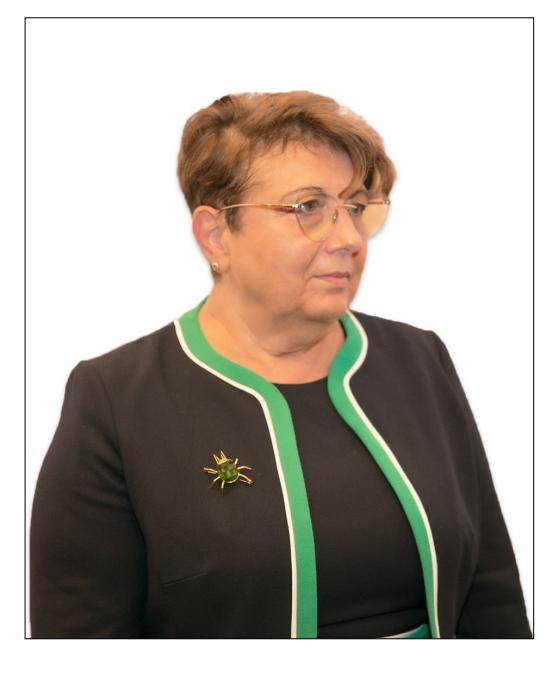
Associate Professor Dana Stănculeanu, Medical Oncology senior doctor and also Radiation Oncologist, is the Head of the Medical Oncology department within the Oncology Institute “Prof. Dr. AL. Trestioreanu “Bucharest, President of the National Society of Medical Oncology in Romania and President of the Oncology Commission of the National Health Insurance House. She was principal investigator in 49 international and 10 national studies, the author of 146 specialized articles and 14 books or book chapters and has participated as the invited speaker at over 200 national and international conferences. It is also worth mentioning the fact that she graduated with a Master’s degree in Public Administration at the National School of Political and Administrative Studies. As a result of her work, she has been awarded distinctions and awards from the American Cancer Society, the Romanian Academy of Scientists, the Federation of Cancer Patient Associations and the National Association for Patient Protection.
You are a very active person, involved in many activities, including organizational. Where do you find the resources and how do you manage to divide your time?
You asked me the hardest question. The answer is in the routine of over 30 years of activity in which medical and educational activity and over 20 years of organizational activity coexisted. My activity starts in the morning at 8 am, when I arrive at the Institute and ends around 4 or 5 pm when the activity at the Institute ends. I dedicate at least two hours of study every day. I would say that my strength and energy come from the causes I believe in. Fear and weakness do not block me, even if I sometimes feel them. I have the power to attract and lead. When I am dedicated to a cause I believe in, I do what needs to be done, whether others like it or not. I inspire and help people grow, and in this way, I secure my resources and use my time wisely.
What do you think are the things a leader who coordinates a team needs to consider? What is the secret to succeed in bringing people together and motivating them to mobilize for a common goal?
The most important thing is to be able to have a target, which you want to reach and then be able to maintain it. That target must be a target not only for you but also for the rest of the team. The target is equivalent to the vision you have, to inspire people and a flexibility that allows you to adapt and deal with all problems.
I think it is very important to know how to listen carefully to your teammates and to be able to prioritize the objectives in such a way that the target is reached.
Revealing the truth is an important element and the truth has power and penetrates deep into the souls of the people I work with.
How did the knowledge gained in administrative studies help you? Do you think it would be useful to have a health management course in the Medical Universities program?
I think it is essential for a doctor to have in his training curriculum some minimum notions of health management.
Of course, the administrative studies I followed in addition to the health management ones helped me during my administrative activities.
Many doctors find it difficult to constantly adapt to legislative and bureaucratic changes. What do you think would be the best solution? Simplifying procedures or hiring more people to deal with these issues so that doctors can focus on interacting with patients?
That’s a very good question. In recent years, legislative changes have been frequent, and the effects are sometimes bureaucratic. Often, the bureaucracy occupies more than half of a doctor’s normal activity, regardless of whether that doctor works in an office or in a hospital. And because I work in a hospital unit, I think we would need more staff to take over some of the bureaucracy we are obliged to do. I think we do need trained staff to do secretarial work, reception duties but also legal, to help us to be constantly aware of legislative changes related to medicine, education or related to the relationship with the National Health Insurance System.
Recently, the profession of “patient navigator” was listed in the nomenclature of occupations in Romania, which is absolutely welcome, considering the usefulness of the existence of such a person. Its role is usually filled by either medical staff or Patient Associations. Do you think it would be advisable to create at least one such job in every hospital? Is there a qualification course to obtain this specialization?
In civilized countries the notion of “patient navigator” exists. These people usually come from the members of patient associations, most acting as VOLUNTEERS in the true sense of the word. They are former patients, retirees or relatives of the patients. This profession, listed in the occupational nomenclature, should have a special status in a hospital unit. The patient navigator must have a certain minimum sanitary training on the one hand and on the other hand a degree of integrity that will allow him/her to refrain from medical assessments but that will help the patient to navigate. Their duties are to navigate the patient and not to influence him. A single navigator in a hospital is insufficient and even unfair in the sense that some patients benefit from such services and others do not. For this reason, I consider this to be volunteer work. I believe that the activity of the navigator must be carried out through patient associations in the form of volunteering.
What are the problems that your oncology colleagues in the country share with you? What are the main challenges they face?
This is a very complicated question. If I were to group them, they are all connected
- Medical problems, medical practice, therapeutic conduct;
- Educational problems related to the didactic activity;
- Administrative problems;
- Problems related to the Society’s activity.
What is your opinion regarding the establishment of working groups, at a national level, specialized in various pathologies?
I think you are referring to the establishment of comprehensive treatment centers targeting a certain form of the disease. The creation of working groups to address a certain pathology is a very good concept because overspecialization is essential for a good knowledge and a competent, multimodal approach to cancer.
Do you consider that ESMO guidelines are sufficient to guide the practice of oncologists or would it be useful to develop national guidelines?
We live in Europe so I think ESMO guides can be considered sufficient. The existence of some national guidelines could be welcome for Romania on the condition that they would not be transformed into laws.
Medical guidelines, but especially oncology ones, can be considered living organisms in continuous transformation. Changes in medical practice can occur very often, even monthly, so it would be to the detriment of the patient and the medical oath to wait for a government decision to change medical practice. It is certain, however, that they should be validated by medical societies and their working groups.
On the other hand, the reimbursement of some drug molecules or procedures implies the existence of some protocols. From the economic point of view and from the point of view of the political will, it clearly involves a validation by an ordinance or government decision.
What are your plans for 2021?
First of all, I wish to be able to continue my educational and doctoral activity, and also by publishing the results of my Ph.D. activity.
I also wish to promote young medical oncologists within the National Society of Medical Oncology, and I mean both young specialists and, also, resident doctors. The National Scientific Forum of Young Oncologists took place between 18 and 20 February, an event with free registration and credited by the College of Physicians with 18 EMC points.
Another plan is organizing a series of medical events with EMC points, endorsed by the Society. These micro-courses will address all fellow oncologists, enhancing the importance of the multidisciplinary team, and discussing the recent practice-changing clinical trials.
Promoting the Society but also increasing the collaboration with other Societies and Medical Associations is a priority for me. I support the idea of UNITY and organizing the second National Oncology Congress together with our colleagues.