


Author(s) :
Monica-Emilia Chirilă1
1 Amethyst Radiotherapy Centre, Cluj-Napoca, Romania
Corresponding author: Monica Emilia Chirilă, Email: monica.chirila@amethyst-radiotherapy.com
Publication History: Received - , Revised - , Accepted - , Published Online - 2021.
Copyright: © The author(s). Published by Casa Cărții de Știință.
User License: Creative Commons Attribution – NonCommercial (CC BY-NC)

 PDF
PDF
 Share
Share
Highlights
-
Prof. Dr. Nicolae Ghilezan is a leading Romanian oncologist-radiotherapist who shapes the development of radiotherapy in Romania through clinical leadership, academic work, and training of generations of specialists.
-
He describes oncology as inherently multidisciplinary and explains how radiotherapy integrates alongside surgery and systemic therapies as technology evolves (radium/kV X-rays → Co-60 → linear accelerators).
-
Links are made between modern radiotherapy to organ-preserving strategies and reduced surgical mutilation in multiple tumor sites, while maintaining local control through better targeting and larger treatable volumes.
Abstract
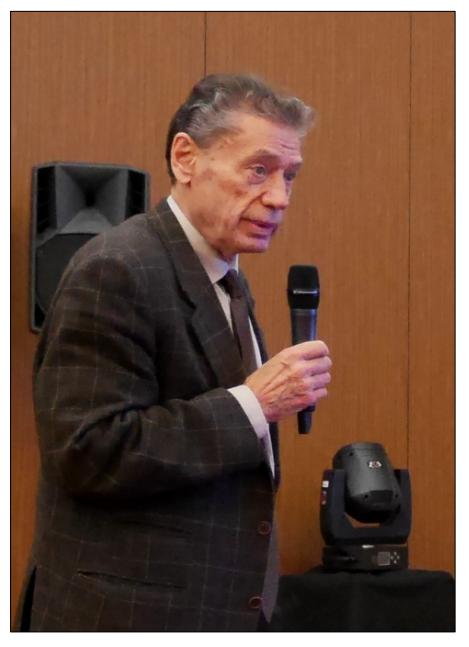
Professor Nicolae Ghilezan is one of the most wellknown and appreciated Romanian doctors and researchers in the field of oncology, and especially radiotherapy. He played a decisive role for the appearance and development of this medical specialty in Romania. His competence and dedication is reflected both in specialized books and scientific articles, as well as in the work of the professionals he has trained over time.
After graduating from the Faculty of General Medicine of Cluj, he continued his specialization in radiology and oncology in Bucharest and in radiotherapy at the Institute “G. Roussy” from Paris. He was also a visiting Professor in the USA in 1974. His Ph.D. thesis was on the treatment of laryngeal cancer. He had multiple academic and leadership positions at the Oncology Institute of Cluj (director 1997–2001) and at the University of Medicine and Pharmacy of Cluj-Napoca (scientific vice-rector 1990 – 1992).
He is currently a Professor Emeritus Consultant at the University of Medicine and Pharmacy. His research focused on clinical oncology, multidisciplinary approach of cancer, radiation dosimetry, radiobiology, medical informatics and evaluation of the quality of the medical act in the oncology services and radiotherapy. The results of his research can be found in numerous scientific papers, published nationally and abroad. He is a member of the Romanian Academy of Medical Sciences, of the Romanian Society of Oncological Radiotherapy, of the Romanian Society of Oncology, of the French Society of Oncological Radiotherapy, of U.S. Clinical Oncology Society, of the Society of Radiotherapy U.S. Oncology.
Professor, what influenced you to follow on an “unbeaten” path and to consider that radiotherapy should be integrated into the multidisciplinary treatment of cancer patients?
I would not say that there was an “unbeaten” path in oncology: in every period of time, since antiquity, cancer has been treated with what was available: the first means were herbs and incantations, then scalpel and fire, then surgery, and radiation therapy, later we added chemotherapy and hormone therapy, now gene therapy and immunotherapy, and more are likely to follow. The essence is that a disease of cancer complexity has multiple forms of manifestation and the treatments were those existing at that time. Surgery, effective as a local treatment, dominated medical thinking for a long time, but could not influence the evolution at distance and it was normal to resort to other methods to avoid local recurrences or metastases. This is how irradiation was introduced – first in the form of local applications of radium in cervical cancer, then externally (initially for skin tumors, and then depending on the development of technology). Irradiation was initially made with low energy (kV) X-rays, with good results, but only for superficial locations. When the skin barrier was overcome by Co60 sources, the efficacy of irradiation increased, making it possible to increase the irradiated volume, including both the primary tumor and the lymphatic drainage regions. The advent of linear accelerators has further increased the effectiveness of irradiation, both on the primary tumor and on the lymphatic extension, thus making it possible to reduce surgery without compromising local control. After radiotherapy, it was the turn of chemotherapy to bring its contribution, oncology being a multidisciplinary specialty. It is the reason for a Tumor Board being formed by the surgeon, medical oncologist and radiotherapist, in order to individualize the treatments. I remember with pleasure the first form of this commission for breast cancer, organized at the Cluj Oncology Institute by Professor Chiricuță, at the beginning of the ’60s.
During the same period, a cobalt device of the 2nd generation was installed at the Institute, which allowed the diversification of irradiation for several locations, especially for the Head & Neck and pelvis, with clearly superior results that led to changes in treatment strategies for many tumor sites. For breast cancer, replacing the classic, but mutilating, Halstead intervention, in favor of limited resections with additional irradiation, was discussed. Gradually, the same approach was extended to other locations, to avoid mutilating interventions in rectal or bladder cancers.
Tumor Boards began to function for all locations, their role being not only to specify the indications, but also to monitor the results over time. Identification of failures led to changes in the clinical practice.
I can say, therefore, that radiotherapy has been naturally integrated into the therapeutic ensemble of cancer as being necessary in certain stages of the disease and in accordance with the particularities of the patient.
What were the obstacles you encountered in the beginning (but also later), and how did you manage to overcome them?
The initial obstacles were related to the lack of confidence in the possibilities of radiotherapy and the obstinacy of those who did not understand that the complexity of cancer requires a proper strategy, adapted to the natural history of each location. Through the analysis of the results, I managed to demonstrate the advantages of working in a team and looking for solutions together to avoid failures.
What principles guided you throughout your professional activity?
I have always sought to answer the patient’s present questions and needs, making the most of all known and available means according to a quotation by Karl Jasper, which says: “Do not fall prey to the past or the future. It is important to be fully present.” I always tried to offer what was most useful at that time.
How do you see the addition of academic and clinical activity? What are the advantages and disadvantages of combining them?
They complete each other: the clinic always raises problems for you and looking for the answers, you think of possible solutions. You remember failures, mistakes or successes, which by discussing with collaborators help you clarify your own thoughts and formulate future strategies.
What are the qualities that you think a university teacher should have?
The academic must be aware that it is not enough to transmit only knowledge: they must help future professionals to be able to answer the questions and challenges they will face, keeping what is valid and looking for solutions to the present challenges. A true professional will never limit himself to the knowledge he received during his college years and if he focuses critically on his own experience, he will learn from failures in the past what needs to be done in the future.
What about a doctor involved in the management of a clinic or radiotherapy department?
Management is a matter of administration, of allocating resources to fulfill tasks or objectives that ensure the quality of the medical act but do not imply a conceptual role in terms of professional development of the service. Of course, it is important to have a permanent dialogue between the administration and specialists, for the optimal use of existing funds. A scientific council is needed to define the objectives and the clinical program. The administration provides the funding but also controls their implementation.
However, what I strongly recommend to the medical management is the obligation to introduce processes to control the quality of care provided, thus understanding the periodic analysis of results – successes and especially failures, both at institutional and national level.
How do you see the present and future of radiotherapy in Romania?
The present is already promising, unfortunately not so much for the universities or hospitals, but for the private centers, which now surpass them in many aspects – by technological endowment-, and last but not least, by professionalism. The leaders of the current generations must be aware that only together, by presenting and comparing the results, will they be able to improve the condition of the cancer patient.
What would you pass on to colleagues at the beginning of their professional path?
Oncology is also at the beginning, as it has been every time a step forward was made in elucidating this complex phenomenon which is cancer. Our young colleagues have a long and difficult road ahead, but the satisfactions – measured in years of life-, are great.