

Author(s) :
Dan Corneliu Jinga1, Ioana Lazar1, Maria-Ruxandra Jinga2, Andrea Craciunescu1
1Department of Oncology, Neolife Bucharest Medical Center, Romania
2Medical School, Newcastle University, UK
Corresponding author: Dan Corneliu Jinga, Email: danjinga2002@yahoo.com
Publication History: Received - , Revised - , Accepted - , Published Online - July 2022.
Copyright: © The author(s). Published by Casa Cărții de Știință.
User License: Creative Commons Attribution – NonCommercial (CC BY-NC)

 PDF
PDF
 Share
Share
Highlights
-
-
This single-center real-world study analyzes 151 Romanian patients with stage 0–III cutaneous melanoma diagnosed between 2003 and 2019, describing epidemiology, treatment patterns, and long-term outcomes.
-
Romanian patients present at a younger median age (50 years) and with a higher proportion of advanced stages (56%) and BRAF-mutated tumors (70% of tested cases) compared with other European cohorts.
-
BRAF-mutated melanoma associates with significantly worse disease-free and overall survival, independently of clinical stage, influencing real-world use of targeted and immune therapies at recurrence.
-
Abstract
Introduction. Cutaneous melanoma is one of the deadliest cancers, and its incidence has dramatically increased over the last 20 years. Its mortality has decreased slightly worldwide over the past 10 years, largely due to new approaches such as sentinel node biopsy and new systemic treatments.
Materials and method. This retrospective study comprises 151 cases of cutaneous melanoma (stages 0, I, II, and III) diagnosed between 2003 and 2019 in Romanian patients at a single center. It provides epidemiological information (stage at diagnosis, histological aspects, status of BRAF mutation, pattern of recurrence) and shows survival parameters associated with systemic adjuvant treatments and first and second-line therapies for recurrence.
Results. Compared to other European countries, Romanian patients with cutaneous melanomas have different characteristics: younger age (50 years median age at diagnosis), more advanced stages (70% for male and 44% for female patients), and BRAF mutation in 70% of cases. More than 50% of the patients with stages IIB, IIC, and III received adjuvant IFN-α2b after complete resection. However, there were similar outcomes in terms of median disease-free survival (DFS) (33.46 months for the entire cohort) independently of adjuvant systemic treatments administered in the interferon alpha-2b era. The 3-year DFS and OS rates for stages IIB and IIC were similar to those of stage III. The prognosis was worse for BRAF mutated melanoma in terms of DFS and OS, independently of clinical stages.
Conclusion. Our study demonstrates that stages IIB and IIC have the same pattern of recurrence and similar outcomes to those of stage III and could benefit from adjuvant systemic treatment as shown in KEYNOTE-716 clinical study.
1. Introduction:
Cutaneous melanoma is a deadly cancer whose incidence has increased dramatically over the last 20 years (1). In 2020, more than 320.000 melanomas were diagnosed worldwide, half of which were in Europe. The global prevalence was greater than 1 million cases (2).
Melanoma management has changed significantly since the introduction of sentinel lymph node biopsy and systemic innovative therapies like targeted therapy (TT) with BRAF inhibitors (BRAFi) and MEK inhibitors (MEKi), as well as immune therapy (IT) based on immune checkpoint inhibitors (ICI). These changes are correlated with decreased mortality rates over the past 10 years (3), with only 57,000 worldwide deaths in 2020 (2). Nevertheless, half of the diagnosed cases were in Europe (2). Romania had a low incidence rate compared to other European countries (only 1,500 new cases diagnosed in 2020), but a large number of deaths (500 deaths in 2020) (2).
For over 15 years, adjuvant therapy was limited to interferon-alpha-2b (IFN-α2b), which has good disease-free survival rates but clinically significant adverse events, especially for high-dose therapy (HD- IFN-α2b), and questionable overall survival improvements (4). In accordance with Romanian national guidelines, we administered low dose interferon (LD-IFN-α2b) for 1 to 3 years, or HD- IFN-α2b with a one-month induction phase and 11 month maintenance phase.
This 15-year retrospective study reflects our experience with the diagnosis and treatment of cutaneous melanomas and is the first Romanian study that publishes real-world data from a long follow-up period of this solid tumor.
2. Material and Methods:
A database of 450 melanomas diagnosed over more than 20 years was used. Researchers excluded patients without complete records, with mucosal melanomas or metastatic disease, and cases diagnosed after 2019. Our study comprises 151 stage 0, I, II and III cutaneous melanomas diagnosed between 2003 and 2019. All cases were restaged using the 8th edition of AJCC melanoma staging (5) to homogenize cases diagnosed before and after 2017, when the staging was changed.
All patients were treated according to national and European guidelines. Breslow Index (BI) from a previous biopsy guided surgical excision of the primary tumor. Sentinel lymph node biopsy was performed for all cases with BI between 1-3.99 mm and was followed by dissection of regional lymph nodes for positive sentinel lymph nodes. For clinically positive stage III lymph nodes, complete lymph node dissection was performed simultaneously with the excision of the primary tumor. Patients with stage IIB, IIC and III received adjuvant systemic therapy according to national guidelines and depending on co-morbidities and patient preference.
Disease recurrence was treated with surgery (for local and regional recurrences or for oligometastatic visceral disease) and systemic treatments i.e. chemotherapy and/or innovative treatments such as targeted and immune therapy.
The first goal of this study was to determine median disease-free survival (DFS), median overall survival (OS) and 1-year, 2-year, and 3 year DFS and OS rates. The second goal was to establish the pattern of recurrence. DFS was defined as the interval from diagnosis to first recurrence (local, regional, distant metastasis or second primary cancer) and OS as the interval from diagnosis until patient death from or independently of melanoma.
3. Results:
Of the 151 patients with cutaneous melanoma, 67 (44%) were early-stage (0 to IIA) and 84 (56%) were advanced-stage (IIB, IIC and III) (see Table 1). Median age at diagnosis was approximatively 50 years. Median age was 46 years for early stages and 53 years for advanced melanomas.
70% of patients were women and approximately 30% were men. Early stages were diagnosed predominantly in women (56%) and advanced stages were diagnosed predominantly in men (70%) (see Table 1).
More than half of the cases (54%) were observed on the arms, 34% on the trunk, and 12% on the scalp, face, and neck.
Table 1: Base-line characteristics of the study population with cutaneous melanoma
| Stage | Stage 0-IIA | Stage IIB, IIC | Stage III | Total | |
|---|---|---|---|---|---|
| Number (%) | 67 (44.37%) | 52 (34.43%) | 32 (21.20%) | 151 (100%) | |
| Median age at diagnosis (years) | 46.44 (15-79) | 52.59 (18-80) | 54.75 (29-69) | 50.23 (15-80) | |
| Sex | Female | 47 (55.95%) | 25 (48.07%) | 12 (37.5%) | 84 (70.15%) |
| Male | 20 (29.85%) | 27 (51.93%) | 20 (62.5%) | 67 (29.85%) | |
| Region | scalp, head, neck and face | 5 | 11 | 2 | 18 (11.92%) |
| trunck | 25 | 16 | 10 | 51 (33.77%) | |
| arm | 37 | 24 | 20 | 81 (53.64%) | |
| uknown | 0 | 1 (1.93%) | 0 | 1 (0.67%) | |
| BRAF | mutated | 13 | 17 | 17 | 47 (69.11%) |
| wilde-type | 8 | 10 | 3 | 21 (30.89%) | |
| uknown | 46 | 25 | 12 | 83 | |
| median BI (mm) | 1.06 (0.1-4) | 4.47 (0.1-11.25) | 4.03 (0.1-23.30) | 2.81 (0.1-23.30) | |
| BI (mm) | 0.1-0.79 | 29 | 0 | 2 | 31 (20.53%) |
| 0.8-0.99 | 4 | 0 | 1 | 5 (3.32%) | |
| 1-1.99 | 28 | 0 | 5 | 33 (21.85%) | |
| 2-3.99 | 4 | 33 | 9 | 36 (23.84%) | |
| ≥ 4 | 1 | 27 | 10 | 38 (25.16%) | |
| Ulceration | uknown absent | 1 49 | 2 3 | 5 7 | 8 (5.30%) 59 (40.97%) |
| present | 17 | 48 | 20 | 85 (59.02%) | |
| uknown | 1 | 1 | 5 | 7 | |
| Regional Lymph Nodes | Sentinel biopsy | 13 | 11 | 15 | 39 |
| complete excision | 3 | 5 | 16 | 24 | |
| Adjuvant treatment | Yes | 10 | 27 | 17 | 54 |
| No | 53 | 25 | 15 | 93 | |
| uknown | 4 | 0 | 0 | 4 | |
| Recurrence of disease | Yes | 21 | 33 | 21 | 75 |
| No | 46 | 19 | 11 | 76 (50.33%) | |
| Median DFS (months) | 52.5 (10-127) | 28.84 (1-172) | 20.76 (0-93) | 33.46 (0-172) | |
| Outcome | Death | 13 | 20 | 14 | 47 (31.13%) |
| A life | 54 | 32 | 18 | 104 (68.87%) |
45% of specimens were tested for BRAF mutations; 70% of them had a mutation on V600 and 30% were wild type. Testing was generally performed at time of recurrence. From 2018 onward, all stage III cases were tested from diagnosis.
The median BI was 2.81 mm. 25% of cases were under 1 mm, 45% were between 1 and 3.99 mm, and over 25% of cases had a BI above 4 mm (see Table 1). 60% of biopsy specimens had histological ulceration.
75% of cases (63 out of 84 patients) with stages IIB, IIC and III had a surgical staging of the disease by sentinel lymph node biopsy (39 patients) and lymph node dissection (24 patients).
54 patients received systemic adjuvant therapy, which varied by clinical stage (see Table 1).
Most treated patients received IFN-α2b (see Table 2). Doses (high versus low) and duration of treatment (1 year for HD-IFN-α2b and between 1 to 3 years for LD-IFN-α2b) varied according to the changes in national guidelines between 2003 and 2019. Administration of IFN-α2b stopped in 2017 and was replaced with innovative treatments after 2019, but only for stage III melanoma. We did not include the number of definitive stops of treatment in our database, but more than 50% patients did not tolerate systemic adjuvant therapy, especially the 1-month induction phase of the high-dose IFN-α2b. Temporary and definitive stops of treatment occurred due to medullar toxicities (severe thrombocytopenia, febrile neutropenia episodes) or severe pyrexia and flu-like symptoms that impaired daily life.
Table 2: Adjuvant systemic treatment for different melanoma stages
| Stage | Stages 0-IIA | Stages IIB, IIC | Stage III | Stages 0, I, II, III | |
|---|---|---|---|---|---|
| Number / % | 67 | 52 | 32 | 151 | |
| Adjuvant treatment | IFN alpha-2b | 9 | 22 | 12 | 43 |
| chemo | 0 | 0 | 1 | 1 | |
| BRAFi + MEKi | 0 | 1 | 1 | 2 | |
| PD-1 | 0 | 1 | 2 | 3 | |
| uknown | 5 | 3 | 1 | 9 | |
| No adjuvant treament | 53 | 25 | 15 | 93 |
Table 3: 1-year, 2-year and 3-year DFS and OS rates for different melanoma stages
| PFS (months) | Stages 0-IIA (%) | Stages IIB, IIC (%) | Stages III (%) | Stages 0, I, II, III (%) |
|---|---|---|---|---|
| 1-year | 98.5 | 84.61 | 68.75 | 87.41 |
| 2-year | 91.04 | 69.23 | 53.12 | 75.49 |
| 3-year | 89.55 | 57.69 | 46.87 | 69.53 |
| OS (months) | Stages 0-IIA (%) | Stages IIB, IIC (%) | Stages III (%) | Stages 0, I, II, III (%) |
| 1-year | 98.5 | 96.15 | 84.37 | 95.36 |
| 2-year | 97 | 82.69 | 71.87 | 86.75 |
Approximatively 50% of patients experienced recurrence; the rates for stages IIB, IIC and III (63-65%) were double that of early stages 0 to IIA (31%). The median DFS was 33.46 months for the entire study population and varied by clinical stage: 52.5 months for stages 0 to IIA, 28.84 months for stages IIB and IIC, and 20.76 months for stage III (see Table 1).
31% patients from our cohort died, the majority of which were initially diagnosed with advanced melanomas.
The 1-year, 2-year, and 3-year DFS and OS rates for the study population were calculated. After a minimum 3-year follow up period, the OS and DFS rates for stages IIB and IIC were similar to those of stage III, with small differences in PFS (see Table 3).
We identified 4 separate major patterns of recurrence: local, regional, and bone recurrence (41% of patients experienced a recurrence); visceral metastasis (43%); brain metastasis (12%); and second cancer (3 cases: 1 melanoma, 1 colon cancer and 1 breast cancer) (see Table 4).
Table 4: Pattern of recurrence
| Pattern of recurrence | Number (%) |
|---|---|
| local, regional | 31 (41.33) |
| visceral metastasis | 32 (42.66) |
| brain metastasis | 9 (12) |
| second cancer | 3 (4.01) |
| Total | 75 (100) |
4. Discussion:
Median age at diagnosis in this study (50 years) was slightly lower compared to other studies, which report median ages of 54 (6) and 59 (7). The number of advanced melanomas was significantly higher compared to other studies (more than 50% versus under 25%) (6). It is notable that in our population, young women were diagnosed predominantly with early stages, and older men were diagnosed predominantly with advanced stages of cancer.
The median BI was 2.81 mm (see Table 1). Compared to an Italian study, fewer patients had a BI under 1mm (24% versus 60%), and more ulceration (60% versus under 20%) was observed (6).
We also identified a high number of patients with mutated BRAF melanoma (70% of 68 patients tested). The specimens were tested at the moment recurrence was diagnosed. This result is slightly different from other studies that show a 50% probability of having BRAF mutation in melanomas (8).
Approximatively 50% of patients with stages IIB, IIC and III received adjuvant systemic therapy after complete excision of the primary tumor and lymph node staging due to poor compliance with old treatments like HD-
IFN-α2b and chemotherapy. The lack of information about doses, duration of treatment, and temporary and definitive stops of treatment in our database did not allow us to draw conclusions about the impact of these parameters on patient outcomes.
For over 15 years, interferon alpha-2b was the only treatment approved for adjuvant therapy of stages IIB, IIC and III in Romania. After 2018, modern therapies were implemented: 2 patients from our cohort received adjuvant BRAFi combined with MEKi, and 3 patients received anti-PD-1 immune checkpoints inhibitors.
50% of patients from the cohort experienced recurrence; the median DFS was 33.46 months. Prognosis for stages IIB, IIC (median DFS 28.84 months), and III (median DFS 20.76 months) was worse than that of early stages 0 to IIA (median DFS 52.5 months). A slight difference in recurrence was observed for stages IIB, IIC and III at 3 years from diagnosis (9,1%). The Kaplan Meier disease-free survival curves by adjuvant treatment indicate the same pattern of recurrence for both clinical groups regardless of whether adjuvant treatment was administered (see Figure 1).
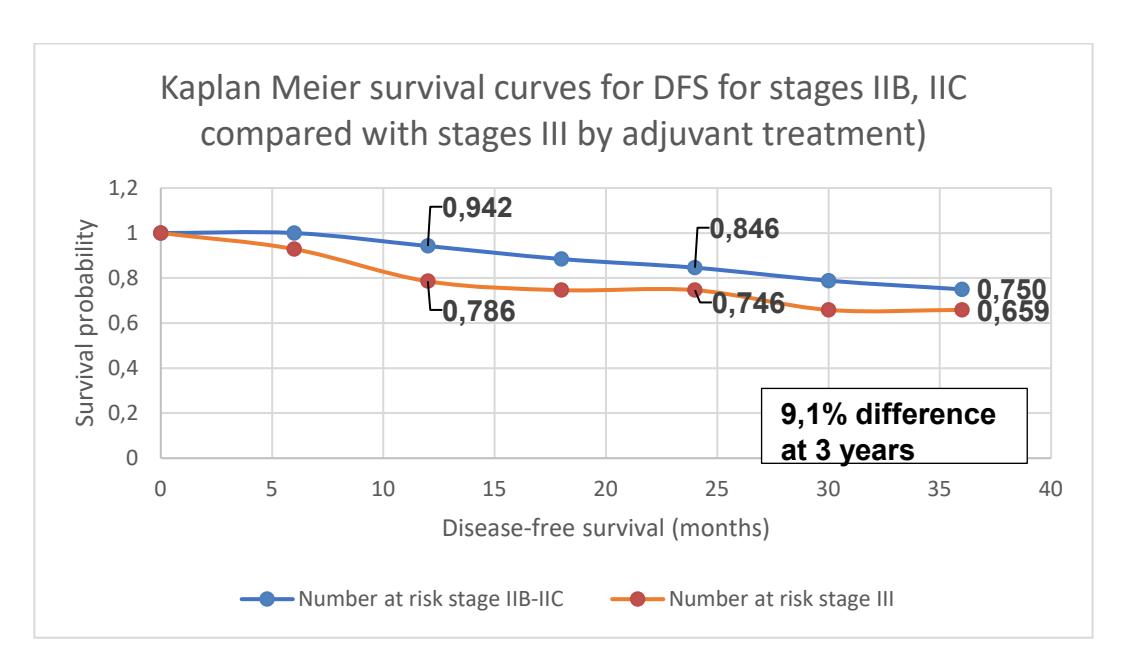
Figure 1: Kaplan Meier disease-free survival curves for stages IIB, IIC compared with stages III, by adjuvant treatment (9,1% difference at 3 years between stages IIB, IIC compared with stages III – not statistically significant)
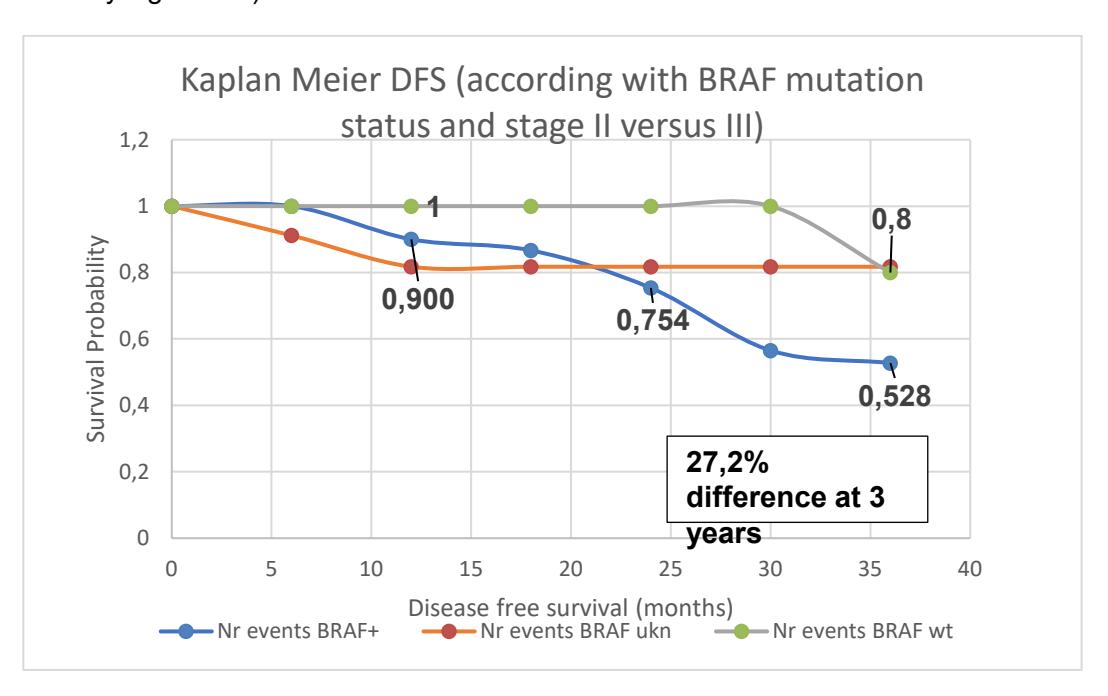
Figure 2: Kaplan Meier disease-free survival curves for BRAF mutated melanoma and unknown compared with BRAF wild-type melanomas, by stages IIB, IIC and III (27,2% difference at 3 years between BRAF mutated and unknown BRAF status melanoma and BRAF wild-type melanomas).
A 2018 meta-analysis of 13 trials showed a median relapse-free survival of 2.2 years (1,2 – 3.3 years) for patients that received different IFN-α2b regimens and 1.9 months for patients that did not receive treatment for stages II and III, very similar with our results (9).
A large difference, statistically significant, at 3 years from diagnosis (27.2%) was observed in Kaplan Meier disease-free survival curves for BRAF mutated and unknown BRAF status melanomas versus wild-type melanomas by stages IIB, IIC, and III (Figure 2).
Outcomes for stages IIB, IIC, and III were similar, and worse than those of early stages, with approximately 40% deceased patients for both subgroups (see Table 1). The Kaplan Meier overall survival curves demonstrate a 7.3% difference (not statistically significant) between stages IIB and IIC vs. stage III, by adjuvant treatment (Figure 3) and a 19.2% difference between BRAF mutated and unknown BRAF status melanomas compared with BRAF wild-type melanomas, by stages IIB, IIC and III (Figure 4).
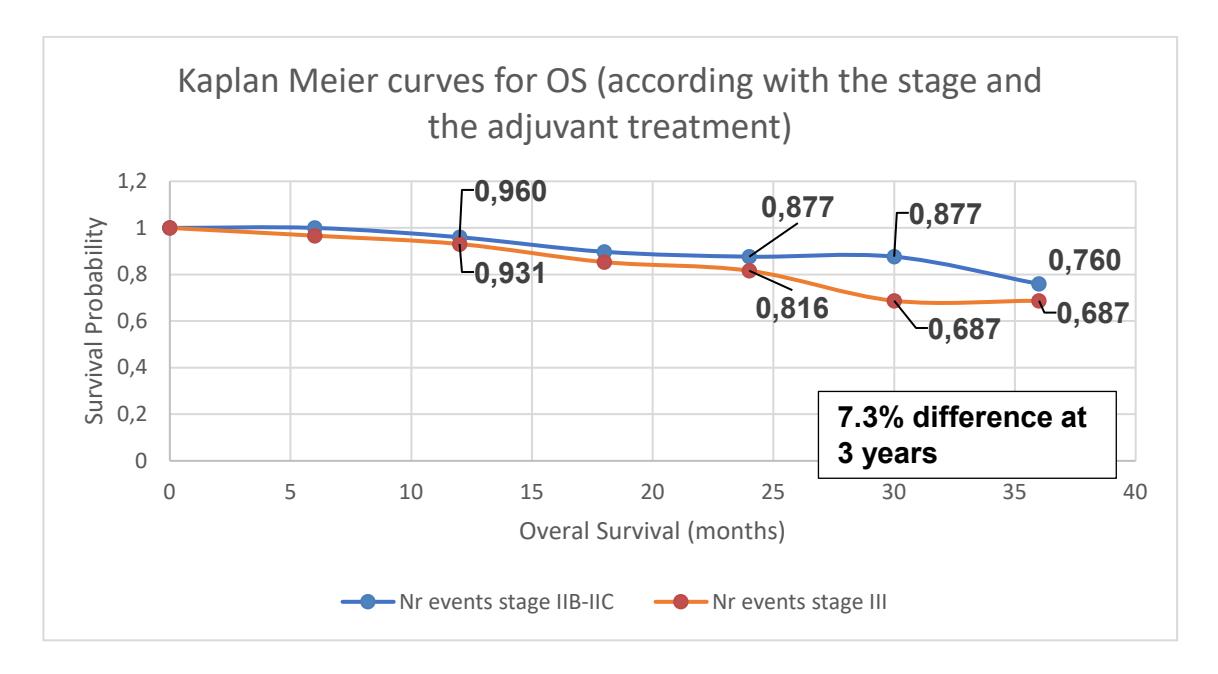
Figure 3: Kaplan Meier overal survival curves for stages IIB, IIC compared with stages III, by adjuvant treatment (7.3% difference at 3 years between stages IIB, IIC compared with stages III – not statistically sugnificant)
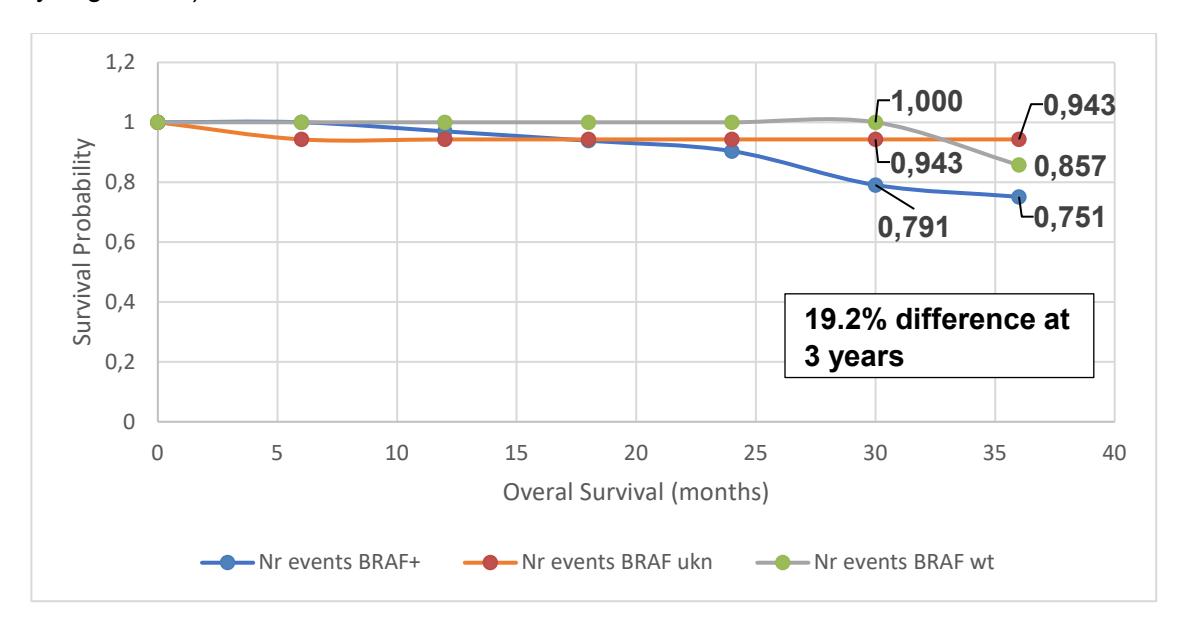
Figure 4: Kaplan Meier overal survival curves for BRAF mutated melanoma and unknown compared with BRAF wild-type melanomas, by stages IIB, IIC and III (19,1% difference at 3 years between BRAF mutated and unknown BRAF status melanoma and BRAF wild-type melanomas).
Our study demonstrates a statistically significant difference between the prognosis of BRAF mutated and BRAF wild-type melanomas, where BRAF mutated is associated with worse prognosis. These results are in accordance with a large meta-analysis using data from 52 studies, representing more than 7500 melanoma patients (10). At the moment of recurrence, targeted therapy or immune therapy was given to 42 of 66 patients (68%) as first-line treatment, and to 23 of 35 (65%) as second-line treatment (Table 4). 27% of patients are alive at time of writing (18 of 66), 14 are on first-line therapy (9 on PD-1 inhibitors, 4 on dual immune blockade and 1 on BRAFi combined with MEKi), and 4 are on second-line therapy through sequence targeted-immune therapy (TT-IT).
The Romanian guidelines for adjuvant melanoma treatment were last changed in 2019; stage III cutaneous melanoma patients now receive adjuvant immune therapy with PD-1 inhibitors, pembrolizumab or nivolumab for BRAF mutated or wild-type melanomas, and targeted therapy with BRAFi, dabrafenib, and MEKi trametinib is reserved for BRAF mutated melanomas, in accordance with National Comprehensive cancer Network (NCCN) (11) and European Society Medical Oncology (ESMO) guidelines (12).
Our findings demonstrate that both subgroups (stages IIB and IIC, stage III) experience a strikingly similar pattern of recurrence and risk of death. This similarity underlines the importance of expanding adjuvant treatment options for stage III to also treat stages IIB and IIC. Recently, NCCN guidelines introduced adjuvant treatment with pembrolizumab for stages IIB and IIC, with a similar 12-month regimen already used for adjuvant treatment of stages III and IV resected melanoma (11), based on KEYNOTE-716 clinical study results (13).
We hope that these innovative treatments will soon be available for our patients with stage IIB and IIC cutaneous melanomas.
5. Conclusions:
Our retrospective clinical study is the first Romanian study to publish data that reflects the experience of one center over 15 years. It offers epidemiological information about Romanian patients (stage at diagnosis, histological aspects, status of BRAF mutation, pattern of recurrence) and important survival information associated with systemic adjuvant treatments and first and second-line therapies for recurrence.
Abbreviations:
BI – Breslow Index
BRAFi – BRAF inhibitors
DFS – disease-free survival
HD – high-dose
IFN-α2b – interferon-alpha-2b
LD – low dose
MEKi – MEK inhibitors
NCCN – National Comprehensive cancer Network
OS – overall survival
TT-IT – targeted-immune therapy
Statements:
Authors’ contributions: All co-authors equally contributed to the manuscript.
Consent for publication: As the corresponding author, I confirm that the manuscript has been read and approved for submission by all co-authors.
Conflict of interest: All authors declare having no competing interests associated with this publication.
Funding Sources: This research did not receive any specific grant from funding agencies in the public, commercial, or not-for-profit sector.
Informed Consent: The informed consent was obtained from the patients treated after 2017 according to the GDPR laws. No materials which could lead to patient identification were published.
Ethical Approval: The treatment strategy was approved by a local tumor board.
References:
- Jemal A, Saraiya M, Patel P, Cherala SS, Barnholtz-Sloan J et al Recent trends in cutaneous melanoma incidence and death rates in the United States, 1992-2006. J Am Acad Dermatol. 2011 Nov;65(5 Suppl 1):S17-25.
- International Agency for Research on Cancer and WHO Global Cancer Observatoryhttps://gco.iarc.fr/
- Henley SJ, Ward EM, Scott S, Ma J, Anderson RN, et al. Annual report to the nation on the status of cancer, part I: National cancer statistics. Cancer. 2020 May 15;126(10):2225-2249.
- Kirkwood JM, Ibrahim JG, Sondak VK, Richards J, Flaherty LE, et al. High- and low-dose interferon alfa-2b in highrisk melanoma: first analysis of intergroup trial E1690/S9111/C9190. J Clin Oncol. 2000 Jun;18(12):2444-58.
- Brierley JD, Gospodarowicz MK, Wittekind C (eds) (2017) TNM classification of malignant tumours, 8th edn. Chichester, JohnWiley and Sons.
- Morgese F, Sampaolesi C, Torniai M, Conti A, Ranallo N, et al. Gender Differences and Outcomes in Melanoma Patients. Oncol Ther. 2020 Jun;8(1):103-114.
- Siegel RL, Miller KD, Jemal A. Cancer statistics, 2016. CA Cancer J Clin. 2016 Jan-Feb;66(1):7-30.
- Dankner M, Rose AAN, Rajkumar S, Siegel PM, Watson IR. Classifying BRAF alterations in cancer: new rational therapeutic strategies for actionable mutations. Oncogene. 2018 Jun;37(24):3183-3199.
- Suciu S, Eggermont AMM, Lorigan P, Kirkwood JM, Markovic SN, Garbe C, Cameron D, Kotapati S, Chen TT, Wheatley K, Ives N, de Schaetzen G, Efendi A, Buyse M. Relapse-Free Survival as a Surrogate for Overall Survival in the Evaluation of Stage II-III Melanoma Adjuvant Therapy. J Natl Cancer Inst. 2018 Jan 1;110(1).
- L. Ny, M. Hernberg, M. Nyakas, J. Koivunen, L. Oddershede, M. Yoon, X. Wang, P. Guyot & J. Geisler (2020) BRAF mutational status as a prognostic marker for survival in malignant melanoma: a systematic review and meta-analysis, Acta Oncologica, 59:7, 833-844,
- NCCN: Melanoma: cutaneous; version 3.2022; April 11, 2022; https://www.nccn.org/
- O. Michielin, A. C. J. van Akkooi, P. A. Ascierto, R. Dummer & U. Keilholz, on behalf of the ESMO Guidelines Committee Cutaneous melanoma: ESMO Clinical Practice Guidelines for diagnosis, treatment and follow-up Annals of Oncology 30: 1884–1901, 2019.
- Luke JJ, Ascierto PA, Carlino MS, Gershenwald JE, Grob JJ, Hauschild A, Kirkwood JM, Long GV, Mohr P, Robert C, Ross M, Scolyer RA, Yoon CH, Poklepovic A, Rutkowski P, Anderson JR, Ahsan S, Ibrahim N, M Eggermont AM. KEYNOTE-716: Phase III study of adjuvant pembrolizumab versus placebo in resected high-risk stage II melanoma. Future Oncol. 2020 Jan;16(3):4429-4438.