


Author(s) :
Norbert Banyi1,2, Curtis Hughesman4, Kelly McNeil BSc4, Barbara Melosky1,5, Deepu Alex2,3, Diana N Ionescu2,3
1Faculty of Medicine, University of British Columbia;
2 Department of Pathology, BC Cancer;
3Department of Pathology and Laboratory Medicine, UBC;
4Cancer Genetics and Genomics, BC Cancer;
5Medical Oncology, BC Cancer;
6Vancouver Coastal Health Research Institute.
Corresponding author: Diana N Ionescu, Email: dionescu@bccancer.bc.ca
Publication History: Received - , Revised - , Accepted - , Published Online - December 2021.
Copyright: © The author(s). Published by Casa Cărții de Știință.
User License: Creative Commons Attribution – NonCommercial (CC BY-NC)

 PDF
PDF
 Share
Share
Highlights
-
Ultra-rapid EGFR testing using the Idylla platform significantly reduces laboratory turnaround time (TAT) compared to NGS, with a mean TAT of 3.4 days versus 15.8 days for OncoPanel (mean difference 12.4 days; p<0.01).
-
In advanced-stage NSCLC, rapid EGFR identification may substantially shorten time-to-treatment (TTT), particularly given the mutual exclusivity of major driver mutations and the immediate therapeutic implications of EGFR positivity.
-
Reflex EGFR testing with Idylla may reduce the need for comprehensive NGS in EGFR-positive cases, potentially decreasing costs and preserving tissue in a subset of patients.
-
The Idylla platform requires minimal infrastructure and expertise, making it suitable for broader clinical implementation, although it does not replace the comprehensive genomic profiling provided by NGS in EGFR-negative cases.
Abstract
Background: Patients with advanced-stage non-small cell lung cancer (NSCLC) benefit from a short time-to-treatment (TTT) due to disease severity. Patients at BC Cancer with NSCLC undergo OncoPanel testing, a next-generation sequencing assay, for potential oncogenic drivers prior to treatment as outlined by CAP-AMP-IASLC guidelines. Genetic testing via OncoPanel takes more than two weeks and commonly contributes to an increased TTT. The novel ultra-rapid Idylla EGFR testing platform may decrease TTT in patients who are EGFR mutation positive (M+) due to the mutual exclusivity of actionable mutations. This study evaluates the lab turnaround time (TAT) of the Idylla EGFR testing platform and compares it to that of the OncoPanel.
Methods: A group of patients (N = 235) with stage IIIB or stage IV lung adenocarcinoma diagnosed between November 1, 2020 and May 1, 2021 had both OncoPanel and Idylla EGFR testing. The time at which the sample was received in the lab, the time of Idylla EGFR test reporting, and the time of OncoPanel reporting were recorded for each patient. Differences in the lab TAT between the OncoPanel and Idylla EGFR test were compared using a paired t-test within the cohort.
Results: The mean lab TAT for the Idylla and OncoPanel tests were 3.4 days (Range: 0-8 days) and 15.8 days (Range: 12-31 days), respectively. It was observed that the lab TAT of the Idylla EGFR test was faster by an average of 12.4 days (Range: 6-29 days, p<0.01, 95% CI: [11.9, 12.8] days) than the OncoPanel TAT (N=235).
Conclusions: The lab TAT of the Idylla EGFR test is significantly shorter than of OncoPanel testing. In patients who are EGFR M+, molecular testing could be completed considerably faster using the Idylla EGFR testing platform since further genetic testing is unlikely to yield additional actionable information. Using the Idylla EGFR test as part of a reflexive molecular testing repertoire in advanced-stage NSCLC patients could thus reduce patient TTT.
1. Introduction:
Patients with advanced-stage non-small cell lung cancer (NSCLC) benefit from a short time-to-treatment (TTT) due to disease severity and often advanced stage at presentation. In more recent years, treatments for NSCLC have been advanced with the introduction of molecular testing in the treatment algorithm. For patients with advanced-stage NSCLC, genetic testing should be performed before delivering treatment as outlined in the guidelines set by the College of American Pathologists (CAP), Association for Molecular Pathology (AMP), and the International Association for the Study of Lung Cancer (IASLC) (1).
EGFR mutations are particularly common in patients with advanced NSCLC, especially in those with adenocarcinoma histology (2, 3). The incidence of EGFR mutations in lung cancer differs between Caucasian (range: 7%–36%) and Asian patients (range: 20%–76%) (2). As EGFR remains the most prevalent targetable oncogenic mutation in NSCLC, its rapid identification in advanced-staged NSCLC would significantly shorten time to treatment for these patients. Since most targetable molecular drivers are mutually exclusive, a positive EGFR result will inform the clinician of the best course of action at an earlier time point, and avoid further, more comprehensive and expensive testing.
The Idylla (Biocartis, Mechelen, Belgium)™ platform is a fully-automated, realtime PCR-based molecular testing system with applications to a wide range of clinical settings, where all the reagents required for sample preparation and PCR detection are provided in a single cartridge that can then be easily and rapidly loaded into the system. The system requires as little as 25 nanograms of tumor DNA, which is evaluated for single gene molecular changes, such as EGFR mutations, in less than three hours. This assay is validated in the BC Cancer Genetics and Genomics Laboratory (CGL) for clinical reporting. This study’s objective is to evaluate the TAT of the Idylla EGFR testing platform and compare it to that of the OncoPanel.
2. Methods:
This prospective study was performed on patients diagnosed with NSCLC and referred to BC Cancer to undergo OncoPanel clinical testing, a next-generation sequencing (NGS) assay, which screens 41 of the most common potential oncogenic genes, including EGFR. Genetic testing via Onco-Panel takes more than two weeks to complete from the time the tumor sample is received in the laboratory to the time at which the genetic report is released to the ordering physician (lab TAT). OncoPanel testing commonly contributes to an increased TTT due to its lengthy TAT. The aim of the study is to compare TAT for patients with lung adenocarcinomas having EGFR testing performed by Idylla and compared to Onco-Panel, the existing clinical mutational testing at BC Cancer, at the time of this study.
Case Selection:
The samples were obtained from a group of patients (N = 235) with stage IIIB or stage IV lung adenocarcinoma diagnosed between November 1, 2020 and May 1, 2021 that had both OncoPanel and Idylla EGFR testing. Among these samples, specimens submitted for the identification of EGFR T790M resistant mutations, and samples with less than 500 nanograms of total extracted DNA were excluded, in order to ensure sufficient DNA for both Idylla and OncoPanel testing, and to focus this study on identification of de novo EGFR mutations. Prospective, real life clinical testing was performed on 235 advanced stage NSCLC patients, identified using the above criteria, and were concomitantly tested using the Idylla platform, and the clinically requested next generation sequencing (NGS) OncoPanel. The time at which the sample was received in the lab, the time of Idylla EGFR test reporting, and the time of OncoPanel reporting were recorded for each patient.
Statistical Analysis:
Differences in the TAT between the OncoPanel and Idylla EGFR test were compared using a paired t-test over each patient. The analysis was performed using base R (version 4.0.2).
3. Results:
The mean lab TAT for the Idylla and OncoPanel tests were 3.4 days (Range: 0-8 days) and 15.8 days (range: 12-31 days), respectively. It was observed that the lab TAT of the Idylla EGFR test was faster by an average of 12.4 days (range: 6-29 days, p<0.01, 95% CI: [11.9, 12.8] days) than OncoPanel TAT (Figure 1).
This TAT included specimen accessioning at referral laboratory, microtome cutting and H&E slide preparation, tumor content assessment and DNA extraction and preparation, qPCR, and automated analysis.
For a select few cases, in view of clinical urgency, tumor tissue was loaded directly to the Idylla cartridge without extraction. This allowed for same day resulting and explains the Idylla TAT range of 0-8 days. However, for the vast majority of cases, in order to accurately compare results between Idylla and OncoPanel, extracted DNA was used for both tests.
After the tests were performed, results were released on the patient’s medical record on the same day or the subsequent day to allow for appropriate treatment planning.
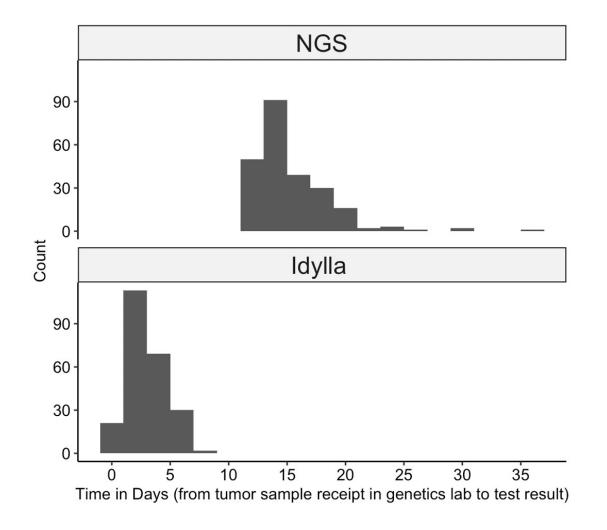
Fig. 1: Comparison of Idylla and NGS TATs (N=235). Distributions do not overlap, demonstrating a unanimously lower TAT in favor of the Idylla EGFR test.
4. Discussion:
This study demonstrates that the Idylla EGFR test TAT is significantly shorter than NGS testing TAT. As the average Idylla TAT is 3.4 days, compliance with the CAP-IASLC-AMP molecular testing guidelines to have EGFR results within 10 working days from receipt of specimens in the laboratory can be easily achieved. Due to the mutual exclusivity of major oncogenic drivers in NSCLC, a positive Idylla EGFR test would lead to the completion of pretreatment tumor testing and could thereby improve TTT by 12 days on average in this patient population. Additionally, in a reflex but stepwise testing scenario, cases positive for EGFR by this ultra-rapid panel would not require further, more comprehensive and more expansive testing (due to lack of incremental information), thereby saving NGS testing costs on up to 30.3% of lung adenocarcinoma patients, depending on the EGFR mutation incidence of the tested population (2, 3). The Idylla testing platform can be easier implemented and validated than other sequencing platforms in a variety of clinical settings, as it only requires limited infrastructure and training. Further research into the cost of implementing Idylla EGFR testing is required as patients who are EGFR mutation negative will undergo both Idylla and NGS testing. While the Idylla platform displays improved time and tumor material requirements as compared to NGS, there is a reduction in its comprehensiveness concerning the genes it can test as well as the mutations it can detect (Table 1-EGFR testing by Idylla and OncoPanel).
Other factors contribute to the lengthening of TTT in NSCLC, which are often independent of the testing laboratory, and independent of the technology used for testing. These factors include time for receiving the tumor block from originating hospital to the reference laboratory, interpretation and reporting time, etc. While several steps including evaluation of tissue cellularity and tumor content, DNA extraction and time to releasing the report to the ordering physician may overlap in length, others show greater variability, and therefore explain the overall decrease in TTT and Idylla TAT; the main contributing factors are shorter sequencing time using Idylla, as compared to any of the commercially available platforms (2.5 hours versus a few days) and shorter reporting time due to the analysis of one gene by Idylla versus multiple genes using NGS.
The number of mutations that can be detected by Idylla is predetermined by specific exonic regions that include hotspot variants (BRAF, 7; EGFR, 51; KRAS, 21) (4). Idylla requires minimal expertise for test performance and its turnaround time and handson time are the main advantages various other characteristics of these technologies, including required upfront extraction, minimal FFPE (formalin fixed paraffin embedded) tissue input, and type of output of results are summarized in Table 1.
Table 1. Practical characteristics of EGFR Mutation Assay and OncoPanel Assay
| Idylla EGFR | OncoPanel | |
|---|---|---|
| Sequencing Time | 150 min | Few Days |
| Hands-on Time | 10 min | Hours |
| EGFR Mutations | 51 SNV/del/ins | Full exon coverage |
| Upfront DNA Extraction | Yes | Yes |
| Minimal Input: FFPE | 1×5 µm FFPE section and ≥10% tumor cells | 6×5 µm FFPE section and ≥20% tumor cells |
| Data Processing | Proprietary algorithm | Lab Developed Algorithm |
| Expertise | Low | High |
| Output | Somatic hotspot mutations in EGFR | Any EGFR alterations requiring curation |
| Bioinformatics Assessment Needed | No | Yes |
The analysis of the mutation detected is automatically performed by the Idylla platform and a report including the presence and type of EGFR mutation is generated. The NGS platform requires extensive bioinformatics analysis, highly trained personnel performing data analysis and interpretation of the results generated by the machine. Such characteristics suggest that the Idylla platform could be implemented in nonexpert centers where no sequencing machines or expert technicians are currently available (5). Therefore, even pathology laboratories without molecular expertise could successfully use this method as long as a pathologist confirms the presence of a tumor on the slide, prior to testing (6-8). This high success rate depends on appropriate triaging and tissue handling, as tissue input is a pivotal determinant of the assay sensitivity and performance (9).
If reflex-testing using this technology may not be feasible, Idylla’s shorter TAT over NGS testing could be beneficial in various clinical scenarios. For example, in patients with poor performance status, identification of EGFR mutation 12 days earlier may represent a lifesaving clinical step and should be considered on a caseby-case basis. Due to the difference in response to immunotherapy reported in NSCLC adenocarcinomas harboring driver mutations, timely identification of EGFR negative patients, in the right clinical scenario, may contribute to decreased immunotherapy TTT.
5. Conclusions:
Molecular EGFR testing is completed considerably faster using the Idylla EGFR testing platform and this allows faster time to treatment for EGFR positive patients allowing rapid access to targeted therapy, and for EGFR negative patients allowing rapid access to immunotherapy.
Abbreviations:
EGFR – epidermal growth factor receptor
NSCLC – non-small cell lung cancer
TTT – time-to-treatment
CAP – College of American Pathologists
AMP – Association for Molecular Pathology
IASLC – International Association for the Study of Lung Cancer
CGL – Cancer Genetics and Genomics Laboratory
NGS – next-generation sequencing
TAT – turnaround time
Statements:
Previous publication: We declare that this paper was not published nor was submitted to be reviewed for publication in another journal.
Conflict of Interest: Authors report no conflict of interest.
Funding Sources: This work was supported by AstraZeneca and Merck
References:
- Lindeman, N. I., Cagle, P. T., Aisner, D. L., Arcila, M. E., Beasley, M. B., Bernicker, E. H., Yatabe, Y. (2018). Updated Molecular Testing Guideline for the Selection of Lung Cancer Patients for Treatment With Targeted Tyrosine Kinase Inhibitors: Guideline From the College of American Pathologists, the International Association for the Study of Lung Cancer, and the Association for Molecular Pathology. Archives of Pathology & Laboratory Medicine, 142(3), 321-346.
- Midha A, Dearden S, McCormack R. EGFR mutation incidence in non-small-cell lung cancer of adenocarcinoma histology: a systematic review and global map by ethnicity (mutMapII). Am J Cancer Res. 2015;5(9):2892-911.
- Skoulidis, F., & Heymach, J. V. (2019). Co-occurring genomic alterations in non-small-cell lung cancer biology and therapy. Nature Reviews Cancer, 19(9), 495–509.
- Van Haele M, Vander Borght S, Ceulemans A, et al Rapid clinical mutational testing of KRAS, BRAF and EGFR: a prospective comparative analysis of the Idylla technique with high-throughput next-generation sequencing. Journal of Clinical Pathology 2020;73:35-41.
- Edward S Kim , Barbara Melosky , Keunchil Park , Nobuyuki Yamamoto & James C-H Yang, EGFR tyrosine kinase inhibitors for EGFR mutation-positive non-small-cell lung cancer: outcomes in Asian populations , Future Oncol. (2021) 17(18), 2395–2408
- Ilie M , Butori C , Lassalle S , et al Optimization of EGFR mutation detection by the fully-automated qPCRbased Idylla system on tumor tissue from patients with non-small cell lung cancer. Oncotarget 2017;8:103055–62.
- Thomas De Montpréville V , Ghigna M-R , Lacroix L , et al EGFR and KRAS molecular genotyping for pulmonary carcinomas: feasibility of a simple and rapid technique implementable in any department of pathology. Pathol Res Pract 2017;213:793–8.
- Idylla™ EGFR Mutation Assay: https://media.biocartis.com/biocartis/documents/TECH_FICHE-EGFR-RUO-01122016.pdf
- Amir Momeni-Boroujeni, Paulo Salazar, Tao Zheng, Nana Mensah, Ivelise Rijo, Snjezana Dogan, JinYuan Yao, Christine Moung, Chad Vanderbilt, Jamal Benhamida, Jason Chang, William Travis, Natasha Rekhtman, Marc Ladanyi, Khedoudja Nafa, Maria E. Arcila,, Rapid EGFR Mutation Detection Using the Idylla Platform: Single-Institution Experience of 1200 Cases Analyzed by an In-House Developed Pipeline and Comparison with Concurrent Next-Generation Sequencing Results,The Journal of Molecular Diagnostics,Volume 23, Issue 3, 2021, Pages 310-322.
