


Author(s) :
Monica-Emilia Chirilă1
1MVision AI Oy, Helsinki, Finland
Corresponding author: Monica-Emilia Chirilă, Email: monica.emilia.chirila@gmail.com
Publication History: Received - , Revised - , Accepted - , Published Online - July 2022.
Copyright: © The author(s). Published by Casa Cărții de Știință.
User License: Creative Commons Attribution – NonCommercial (CC BY-NC)

 PDF
PDF
 Share
Share
Highlights
-
International mobility and exposure to different healthcare systems (Italy, France, Switzerland) are presented as formative experiences that shape clinical judgment, adaptability, and critical thinking.
-
Educational engagement through ESTRO, IAEA, and ESO reflects a commitment to continuous knowledge exchange, global collaboration, and perspective-shifting encounters with diverse clinical realities.
-
The dialogue highlights the integration of science and art in cancer care, illustrating how music, visual arts, and creativity enhance patient communication, humanize the therapeutic environment, and contribute to the emotional dimension of healing.
Abstract
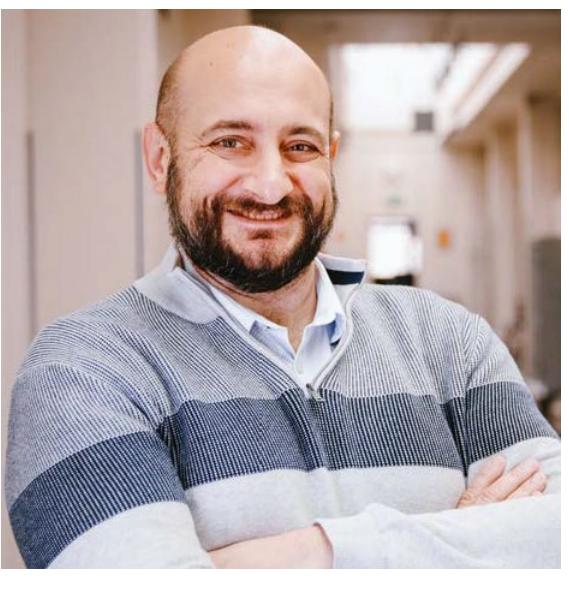
Dr. Berardino De Bari is an Italian Radiation Oncologist based in Switzerland, recognized as one of the European experts on prostate cancer. Apart from his clinical activity, he is also involved in educational activities of ESTRO, IAEA and ESO. He is also a musician – composer and singer.
Monica-Emilia Chirilă: How would you describe yourself in a few words to somebody who does not know you?
…You mean professionally?
Monica-Emilia Chirilă: Mainly yes, but not exclusively – if you think you can share personal thoughts, too, they are well received.
It’s a difficult question… It has never been easy for me to speak about myself…
Monica-Emilia Chirilă: Then maybe you could tell us what your friends and colleagues say about you, so we get a mirrored image.
They say that I’m sincere and that the discussions with me could be hard. They often say that quite often my opinions are correct but diplomacy is not my strong point. Sometimes I do not find the best way to express my opinion, but I am working on it, especially since I became Chief of department. They also say that I know many people but I also like to have time to be alone, to have time for myself, for my passions, to take time to recover from the emotions associated to work. At the same time, they say that they could spent great time with me, as I have a lot of interests, and I like see people smiling and spending good moments with me. They say to appreciate this “social side” of me.
I believe that honestly mentioning the things you are trying to improve can be important for other colleagues who are working on establishing themselves as respected professionals. The “myth” of having to be close to perfection (or at least creating this image) in order to be successful, can be discouraging.
In general, we can say that a day in which we do not learn something new is a lost day. I graduated in 2004 at the Catholic University of Rome, and completed my Radiation Oncology residency in 2008. I learned a lot there from Professor Cellini, Professor Trodella, and Professor Valentini. Then I worked in Lyon, Brescia, Lausanne and Besançon. I changed a lot and this was not an advantage from an academic point of view, because it takes time to develop projects which are necessary for evolving scientifically. Nevertheless, I am senior lecturer of the University of Lausanne, , but I did not complete, at least not for now, my path to professorship. At the same time, the good part of changing place is that I could see different places, habits, meet different people, and become aware of good and bad aspects of our profession. Education never stops. We learn every day. We also make mistakes, but we learn from them and try to avoid those errors that might have an impact on patients. Error is a part of our personal and professional life, so who thinks to be or to became perfect is far from the truth and reality.
I am glad that you mentioned the importance of the education; because I know you are actively involved in the educational activities of the European Society for Radiation Oncology (ESTRO), International Atomic Energy Agency (IAEA) and European School of Oncology (ESO). I was wondering when did you start to get involved and what is your personal motivation to invest your time and energy in these activities, in addition to your clinical work? Teaching others and helping them grow represents an effort that cannot be neglected.
My first involvement in ESTRO activities was in 2009, when I started working on the FALCON project, an educational project aiming at improving contouring skills of participants to onsite and online workshops. Professor Valentini invited me to join this project, together with many other colleagues. First workshop took place in 2010 in London. Soon, I became an ESTRO Fellow and I participated in ESTRO Agora meeting and then I started to teaching in ESTRO courses – The Multidisciplinary Course on Prostate Cancer and the Evidence-Based Radiation Oncology Course. Then I started my collaboration with IAEA, which allowed me to meet people from many parts of the world, including Central Africa, Middle and Eastern Asia, and these meetings changed my perspective. We are sometimes unsatisfied about the 2-3 weeks waiting time for obtaining an MRI for our patients, but while interacting with colleagues from other countries I found out that some people have to deal with a waiting list of 6 months for starting radiotherapy! So, I realized I am part of the category which is very lucky, from the professional point of view, and the things that did not work perfectly in our departments became less important when compared to such a kind of very complicated situation in other parts of the world. It was a great opportunity to work with those people and I tried to share with these colleagues… not all that I know – but all the doubts that I have. I tried to make them understand that we must reinvent our job every day, because we have to treat patients with characteristics that were not included in the clinical trials. Also, I took this teaching activity as an opportunity to update my knowledge, because while preparing each lecture I am searching for information, new trials, new guidelines etc…. And so my colleagues and my patients benefit from this continuous personal upgrading, too.
More recently, I started a very fruitful collaboration with the European School of Oncology, and we created together some interesting pathways that are available for free in the ESO website and that are regularly updated. It’s a much more web-based educational approach, and I learnt a lot also from this experience. We are working on a new exciting project for Radiation Oncologists…but I could not say more for the instance…
Monica-Emilia Chirilă: You also mentioned working in different clinics from different countries. I was wondering what differences you saw between the health systems of Italy, France and Switzerland. What are the best parts of each of them?
I consider myself lucky for having worked in big centers. In Lyon I started my activity as a specialist and I had a lot of responsibilities since the beginning of my activity, which was something that was challenging, but also helped me grow. Then in Brescia I faced other mentalities, other ways of doing things – not better, not worse, but simply different when compared to Rome and to Lyon. When you are young you have strong opinions, and so was I, it has been important to discuss with people who had motivated professional doubts, and made me aware that what I knew was not an “absolute” truth. In Lausanne I realized how important it is to have the financial and logistic support for the professional projects. Of course, we have to take in account that Switzerland is a small country – it is not the same to have 3000 patients or 900 patients per year – you have more time for them. And that it is a rich country. However, I discovered some constraints related to the health insurances – the reimbursement for the treatments that do not meet a certain level of evidence could be refused. From the social point of view, it is understandable, because the resources of the Health System have to be used efficiently. A serious external control is necessary. We just have to make sure that those who decide if the treatment has enough benefit to get reimbursed are neutral and do not have any conflict of interest, and I’m not sure that Insurances are really independent… At the same time, from a professional and human point of view, it is very difficult to have conversations with some patients who hope for a second line or third line expensive treatment which is denied by the insurance companies. In France and Italy this situation is very rare.
In Italy there are differences between regions – in the North the technology is more available. In 2013, when the Tomotherapy was considered the ultimate technological solution, there were 23 machines in the North, from Aosta to Rimini, and only 4 in the rest on the country, so the patients were coming from the South to be treated in the Northern centers. Tomotherapy is for sure a good machine, but technology is not the only thing that matters, it is a useful tool, but not “the solution”. In France and Switzerland there are no such differences in the regions. However, I do not know if it would be possible to apply Swiss rules to Italian people. We are a quite creative, artistic population, usually reluctant in easily accepting some strict rules; and we find solutions where they do not seem to exist. An example can be seen when comparing the reactions on social media of Italian and Swiss people to Covid-19 restrictions – they were totally different.
Monica-Emilia Chirilă: You are considered a European expert on prostate cancer. What is your opinion on current controversies and further directions of research for this type of malignancy?
Personally, I have three points of interest. First – the combination of the new molecules with radiotherapy. The androgen deprivation therapy is used in high-risk patients and in metastatic cases, but it would be interesting to see what would be the outcomes if Enzalutamide, Apalutamide, Abiraterone or Cabazitaxel would be used earlier in the evolution of a case and integrated with radiotherapy. Of course, like in breast cancer, seeing the results of an intervention takes time, because of the natural history of the disease.
Second – I think it would be important to understand the role of newer imaging methods, like PSMA, in deciding on the treatment volumes and, finally their impact on the clinical results of the patients. The current recommendations are usually based on clinical trials in which the patients were evaluated with investigations which were not so accurate (CT scan, bone scintigraphy), so we do not know for sure which was the real extent of the disease that was treated. And, finally, if the results of these trials could be applied to the modern populations of patients, staged with modern imaging techniques.
And the third thing would be the further investigation of the role of immunotherapy in prostate cancer. I could not forget that one of the first randomized trials on immunotherapy with radiotherapy was on prostate cancer, and it was considered negative because of a p value of 0.052, if I’m not wrong… I think that there is something to explore better in this field…
Monica-Emilia Chirilă: Finally, I would want to touch a topic which you briefly mentioned before, when saying that Italians have an artistic, creative side. What is your opinion on mixing science and art? Do you have any art-related activities?
I must say that I am biased, because I was trained in Professor’s Valentini center in Rome, where the concept of ART is developed, in both ways: Advanced Radiation Therapy and also integration of different forms of Art in patients’ therapeutic journey. The bunkers where the linear accelerators are installed are decorated with images reproducing ancient Roman buildings, so the patients can find themselves surrounded by familiar, esthetic images. Recently, in Copenhagen, at ESTRO, a new project of this team was presented, allowing the patients to listen to favorite songs or watch video clips during their treatments using some portable devices. It has been shown that art could have has a positive impact on the clinical outcomes of the patients. However, when you want to implement the same thing in another environment you must face challenges – either the opposition of “non-believer” colleagues, either official requirement for approval of hospital use, where there are clear specifications, like, for example, all the walls should be white, all the doors should be green and all the floors should be blue.
We are replacing the machines here, where I work, and I already discussed with our colleagues that we should not leave the walls plain white – maybe contacting the art schools which are close to our center and organize some display of their works of art within our department – the waiting area the bunker… My colleagues start to understand, too, that it can make a difference for the people that spend a lot of time within those walls during the radiation treatment.
I also noticed that the colleagues who have some artistic side or simply appreciating a form of art, it does not matter which one, have a different approach when communicating with patients, and the patients are noticing this. If you like to sing, for example, it does not mean that you are not serious and professional. For example, I like to write songs, to compose music. I have displayed in my office two posters of renowned French singers. Sometimes, when patients are coming, the dialogue starts around this topic and people suddenly become more open and comfortable. Of course we get to the medical reason of their visit, and we have a professional conversation, but they appreciate that we can have a discussion on another topic than their disease. I see no special reason for separating these two worlds.
Indeed, while facing the challenge of the disease, the fight might become a little easier if we focus on the beautiful sides of the life, pictured by the artists. Fortunately, it seems to have a positive, “healing”, effect on both patients and caregivers, which share a part of the same burden.
Thank you for kindly accepting to share your thoughts with us.