


Author(s) :
Daniel Dulf1,2, Paul Kubelak1,2, Dana Iancu1, Tudor Eliade Ciuleanu1,2
1 “Ion Chiricuță” Institute of Oncology, Cluj-Napoca, Romania
2 UMF “Iuliu Hațieganu” Cluj-Napoca, Romania
Corresponding author: Tudor-Eliade Ciuleanu, Email: tudor_ciuleanu@hotmail.com
Publication History: Received - , Revised - , Accepted - , Published Online - 2021.
Copyright: © 2021 The author(s). Published by Casa Cărții de Știință.
User License: Creative Commons Attribution – NonCommercial (CC BY-NC)

 PDF
PDF
 Share
Share
Highlights
-
The report follows a 54-year-old, never-smoker male with stage IV lung adenocarcinoma (with BAC component) who remains on systemic therapy onlyfor >9 years (June 2010–March 2019), an uncommon outcome in metastatic NSCLC.
-
After first-line carboplatin–pemetrexed achieves stable disease, tumor testing identifies an EGFR exon 19 in-frame deletion (c.2237_2254del18), and treatment shifts to erlotinib (Dec 2010–Aug 2015) with a partial response and prolonged control.
-
At progression, biopsy confirms metastatic adenocarcinoma and detects T790M resistance mutation; therapy transitions briefly through docetaxel while awaiting results, then to osimertinib (Nov 2015–Feb 2019), again achieving partial response and multi-year control.
-
Targeted therapies are reported as well tolerated (mainly low-grade rash/diarrhea), with no dose reductions or treatment delays and ECOG PS ~1 through most of the disease course, until late deterioration with pleural effusion and respiratory failure near end of life.
Abstract
Metastatic non-small cell lung cancer has historically been associated with a poor prognosis. The introduction of targeted agents against certain molecules involved in cellular pathways has shown improved responses, but long-term survivors are still rare.
We present the case of a patient with lung adenocarcinoma harboring sensitizing EGFR mutations who showed an impressive survival of more than 9 years following a combination of systemic therapies consisting of cytotoxic drugs and EGFR TKIs that were very well tolerated.
1. Introduction:
Non-small cell lung cancer (NSCLC) is a deeply devastating disease that is the leading cause of cancer-related death worldwide. The prognosis of patients with advanced NSCLC is poor, and their 1-year survival rates after cytotoxic chemotherapy are situated around 29% [1]. Patients with metastatic NSCLC who survive more than 2 years are considered long-term survivors [2].
The epidermal growth factor was initially isolated in the early 1950’s by Stanley Cohen [3] who also described the epidermal factor receptor in the mid 1970’s [4]. Stanley Cohen shared the 1986 Nobel Prize in Medicine with Rita Levi-Montalcini for their discovery of growth factors. The importance of sensitive epidermal growth factor receptor (EGFR) mutations first emerged in 2004 [5], and epidermal growth factor receptor tyrosine kinase inhibitors (EGFR-TKIs) dramatically improve the prognosis of patients whose tumors are harboring these sensitizing mutations.
Patients with advanced NSCLC and sensitive EGFR mutations receiving EGFR-TKIs have a median overall survival (OS) more than twice as those not receiving EGFR-TKIs (24.3 vs 10.8 months). In Asian populations, the 5-year survival rate of patients with EGFR-mutant metastatic lung adenocarcinoma treated with EGFR-TKIs is 14.6% which is impressing [6]. However, long-term survivors are still rare and prognostic factors associated with such a good prognostic are largely unknown.
In this article, we discuss the case of a patient with advanced EGFR-mutant NSCLC who survived for more than 9 years following cytotoxic treatment and anti-EGFR TKIs and for whom disease progression was controlled using systemic therapy alone, without surgery or radiation therapy.
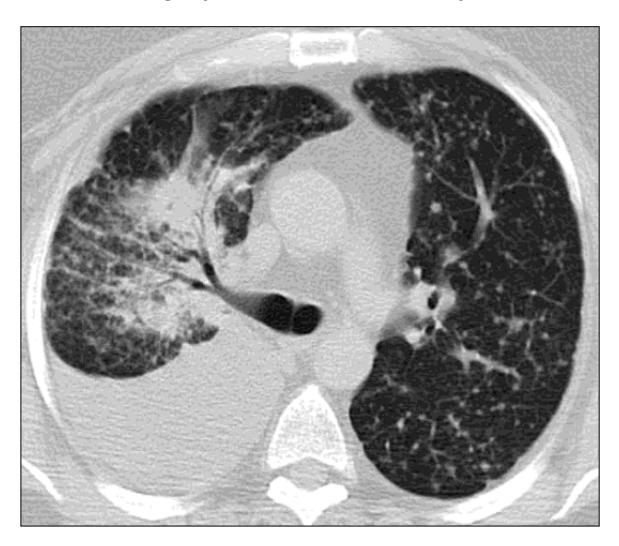
Fig. 1. CT scan (Baseline) – 3cm consolidation process in the right lung with multiple infiltrations, bilateral micronodules, moderate right pleural effusion
2. Case presentation:
A 54-year-old Caucasian male was referred to our clinic after 3 weeks of dry cough, grade 1 dyspnea, and chest pain, in June 2010. The patient was a non-smoker, had no prior medical history and was a corporate employee. The Eastern Cooperative Oncology Group performance status (ECOG-PS) at the time of admission was 1.
Enhanced chest and abdomen computed tomography revealed a 3 cm consolidation process in the right lung together with multiple infiltrations, bilateral micronodules, moderate right pleural effusion and an osteolytic lesion in D4 vertebral body (Fig. 1,2). A bronchoscopy was performed, which showed only indirect signs of neoplasia. The histology was negative. Subsequently, a right minithoracotomy was done which revealed multiple pleural nodules and a median lobe biopsy was performed.
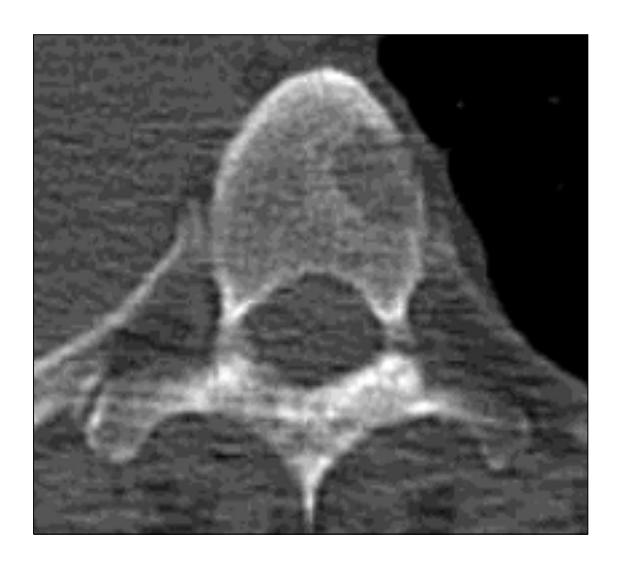
Fig. 2. CT SCAN (Baseline) – Osteolityc lesion – D4 vertebral body
The pathology report showed a welldifferentiated (G1) pulmonary adenocarcinoma with bronchioloalveolar carcinoma (BAC) component.
A Tc99-MDP bone scan showed increased fixation of the contrast in the D4 vertebral body, further suggesting the presence of a metastatic lesion at this level.
The tumor was staged as clinical T4N2M1b (vertebral body), stage IV, according to the AJCC/UICC 7th edition.
The carcinoembryonic antigen (CEA) level was within the normal range 0.48ng/mL (0–5 ng/ml).
Starting in July 2010, the patient underwent 6 cycles of Carboplatin AUC 5 and Pemetrexed 500mg/m2 q21d with stable disease according to RECIST criteria. Around that period, complementary EGFR testing for sensitizing mutations in NSCLC started in Romania; therefore, we decided to test for potential EGFR mutations. The result showed an in-frame 18 nucleotide deletion (c.2237_2254del18) in exon 19 that had not been described in the literature at that time. We read the literature available at that time and we found a similar case with a deletion (c.2240_2257del18) in exon 19 that had responded to anti-EGFR TKI.
Although not a standard choice of treatment at that moment, we decided to start Erlotinib. The patient underwent systemic treatment with Erlotinib 150mg daily from December 2010 to August 2015 (Fig 3). The treatment was well tolerated, toxicities were assessed using the Common Terminology Criteria for Adverse Events (CTCAE) v4.0. G1 diarrhea and G1 skin rash were reported, which did not require intervention. The best response on Erlotinib was partial response, according to the RECIST criteria, and the patient maintained an ECOG PS=1 throughout the course of the treatment.
In August 2015, the patient underwent a follow-up CT scan that revealed new lung lesions and a right osteolytic costal lesion (Fig. 4). As per RECIST criteria, it was interpreted as progressive disease and we decided to stop Erlotinib. Following the cessation of Erlotinib, the patient had a CT guided biopsy from the new costal lesion. The histology report noted the presence of malignant cells that represented a poorly differentiated pulmonary adenocarcinoma metastasis. Due to worsening clinical status and molecular tissue testing delays, we opted for standard chemotherapy while awaiting results. From September 2015 to October 2015, the patient received 2 cycles of Docetaxel 75mg/m2 q21d. The T790M tissue testing came back positive and we decided to stop Docetaxel and start a 3rd generation anti-EGFR TKI (Osimertinib) that had demonstrated promising results in targeting the T790M mutation. Starting from November 2015 to February 2019, the patient received Osimertinib 80mg daily. The treatment was relatively well tolerated. Again, toxicities were assessed using the CTCAE v4.0. A G2 skin rash was reported that reduced to G1 following topical treatment. No treatment delays or dose reductions were needed. The best response on medication with Osimertinib was partial response, according to the RECIST criteria. Up until progression, the patient was ECOG PS=1.

Fig. 3. Selected CT scans while the patient was receiving Erlotinib (November 2010 – August 2015)
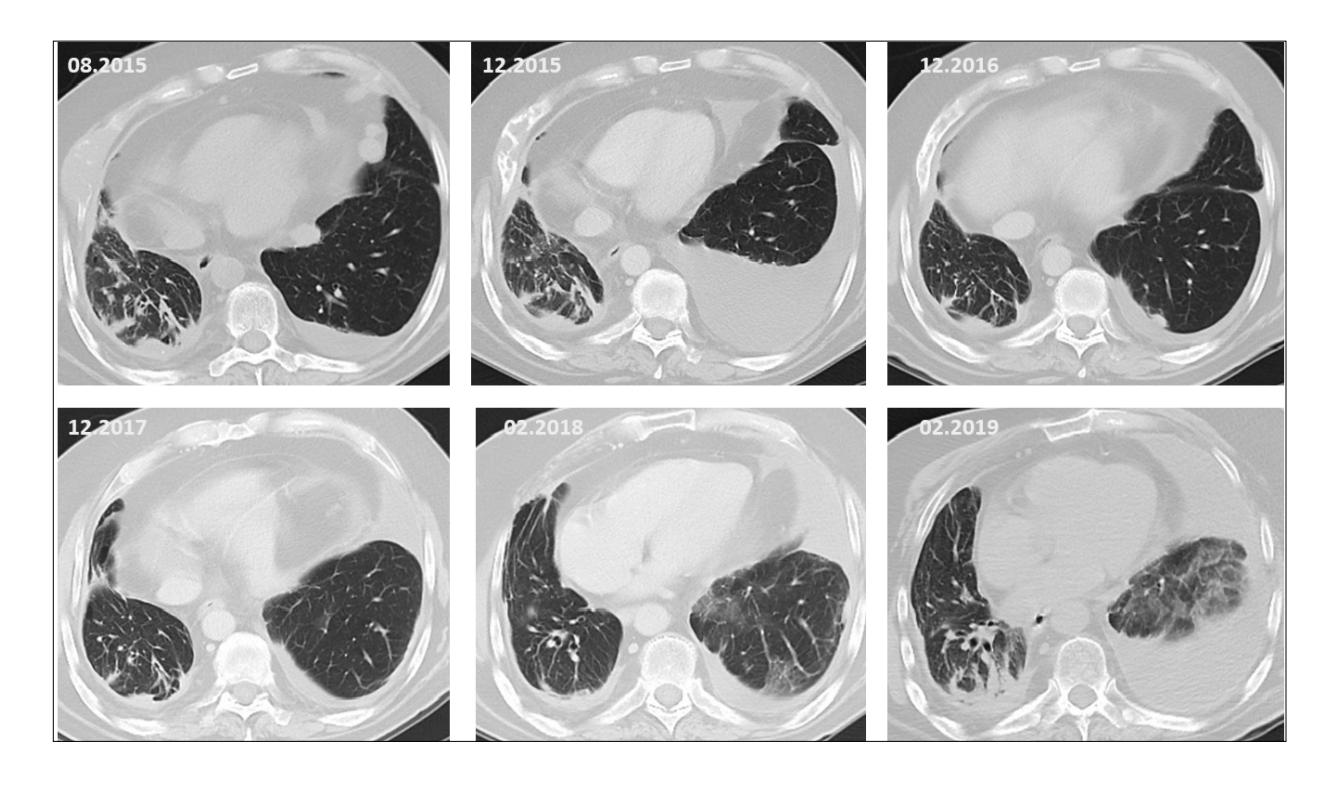
Fig. 4. Selected CT scans between August 2015 and February 2019 while the patient was receiving Osimertinib
In February 2019, the patient presented via the Emergency Ward with G3 dyspnea and chest pain. The CT scan revealed progressive disease with new lung lesions and massive left pleural effusion. Osimertinib was discontinued and due to worsening clinical status, the patient required mechanical ventilation. The patient was considered unfit for other systemic treatments due to ECOG PS=4 and best supportive care was recommended. The patient died in March 2019.
3. Discussion:
We did a retrospective review of our data and we identified 10 patients with advanced NSCLC who survived for more than 5 years, with a median survival time of 61.5 months. A good ECOG PS (0-1) at the time of diagnosis, adenocarcinoma histology and the administration of EGFR-TKIs were all factors that correlated with long-time survival. All patients received platinum-based chemotherapy and targeted therapy with Erlotinib or Gefitinib. On average, the patients received three treatment regimens and re-challenge with EGFR TKI was performed in 2 patients. Another retrospective analysis investigating EGFR-mutant NSCLC patients with lung adenocarcinoma who survived for more than 5 years demonstrated that exon 19 deletions, absence of extrathoracic metastases, absence of brain metastasis, and current non-smoking status were statistically correlated with a a good prognostic [7]. The case we presented confirmed the good prognostic factors reported in these studies. Furthermore, the BAC component in lung adenocarcinoma histology can play a role as a prognostic factor by itself, as BAC tumors are generally considered to have a better prognosis [8].
Several cases of patients with EGFRmutant NSCLC patients with lung adenocarcinoma surviving for more than 10 years have been reported in the literature. However, most of them required a combination of local therapies such as surgery and radiotherapy with a plethora of systemic treatments that resulted in several notable toxicities. To our knowledge, this is the first case report in English literature to describe a patient with metastatic NSCLC who had a long-term survival with systemic treatments alone that were very well tolerated and did not require dose reductions, treatment delays or medical interventions, maintaining an ECOG of 1 throughout the treatment. We strongly consider that the prolonged survival of our patient was due to the use of cytotoxic drugs and EGFR-TKIs, in sequence, as shown by recent randomized clinical trials [9]. In EGFR-mutant NSCLC harboring exon 19 deletion and exon 21 L858R point mutation, patients who receive sequential treatment with Erlotinib and cytotoxic drugs seem to have a longer OS than those receiving erlotinib or chemotherapy alone [10], thus indicating the importance of both EGFR-TKIs and cytotoxic drugs to be administered throughout the course of the treatment.
Furthermore, our patient presented with a mutation in exon 19 of the EGFR gene (c.2237_2254del18) that was not described at that time to be an indicator of response to available TKIs. Following comprehensive literature reviews, we considered that it was to our patient’s benefit to administer an anti-EGFR TKI, as a similar lung cancer patient reported in the literature with a lung tumor harboring the same deletion (c.2240_2257del18) responded to a TKI. Meantime, the status of this mutation has been updated, currently the literature showing it is associated with sensitivity to anti-EGFR TKIs. Despite our patient’s impressive 56 months PFS on Erlotinib, disease progression did occur, as with most patients treated with targeted therapies. Around 60% of patients progressing through first line of EGFR TKI develop a resistance mutation in exon 20, (i.e.the p.T790M mutation). Second-generation EGFR TKIs, such as afatinib and dacomitinib, failed to overcome acquired resistance to erlotinib and gefitinib [11]. Other resistance mechanisms can imply PI3KCA mutations, c-Met or HER2 amplifications, phenotypic transformations into small cell carcinoma or epithelial – mesenchymal transitions. Around 30% of resistance mechanisms to EGFR TKIs are still unknown [12].
Treatment with Osimertinib, a third generation EGFR TKI, is associated with improved PFS and OS compared to chemotherapy as a second-line treatment for the patients that received prior TKI treatment and, more recently, compared to first generation TKI in the first-line setting [13]. Even if resistance is acquired to traditional TKIs, it is important to recognize that it can be targeted with newer molecules such as Osimertinib that may be beneficial for the long-term survival of the patient. If possible, tissue re-biopsy is recommended at the time of progression following traditional TKIs, with plasma biopsy being another option [14].
4. Conclusion:

Fig. 5. Timeline of patient’s treatment and disease progression
This case presented here demonstrated that impressive PFS and OS can be achieved with a combination of cytotoxic drugs and EGFR-TKIs, despite the poor prognosis of metastatic NSCLC (Fig. 5). Although more research is required, this can constitute evidence that it may be important to administer both chemotherapy and EGFR-TKIs throughout the course of the treatment of EGFR-mutated NSCLC and biomarker analysis is quintessential in the correct choice of treatment for these patients.
Abbreviations:
AJCC – American Joint Committee on Cancer
BAC – bronchioloalveolar carcinoma
CEA – carcinoembryonic antigen,
ECOG-PS – Eastern Cooperative Oncology Group Performance Status,
EGFR – epidermal growth factor receptor,
EGFR-TKI – epidermal growth factor receptor tyrosine kinase inhibitor,
NSCLC – non-small cell lung cancer,
OS – overall survival,
PD – progressive disease,
PFS – progression-free survival,
UICC – Union of International Cancer Control.
Statements:
Authors’ contributions: DD carried out collecting and summarizing the clinical materials of the patient, DD and KP drafted the manuscript, ID and CT reviewed the manuscript.
Consent for publication: As the corresponding author, I confirm that the manuscript has been read and approved for submission by all co-authors.
Conflict of interest: All authors declare having no competing interests associated with this publication.
Funding Sources: This research did not receive any specific grant from funding agencies in the public, commercial, or not-for-profit sector.
Informed Consent: The informed consent was obtained from the patient for publication and any accompanying images.
Statement of Ethics: The accompanying manuscript does not contain any studies carried out by the authors on humans or animals.
Ethical Approval: The treatment strategy was approved by a local tumor board.
References:
- Non-Small Cell Lung Cancer Collaborative Group. Chemotherapy and supportive care versus supportive care alone for advanced non-small-cell lung cancer. Cochrane Database Syst Rev 2010;12:CD007309.
- B. Asselain, J.-R. Barrière, C. Clarot, J.-P. Vabre, B. Gentil Le Pecq, Y. Duval, P. Thomas, D. Herman, M. Grivaux, D. Debieuvre. Metastatic NSCLC: Clinical, molecular, and therapeutic factors associated with long-term survival, Respiratory Medicine and Research, Volume 76,2019,
- Levi-Montalcini, R., and Cohen, S. (1960) Effects of the extract of the mouse submaxillary salivary glands on the sympathetic system of mammals. Ann. NY Acad. Sci. 85, 324–341.
- Cohen, S. and Carpenter, G. (1975) Human epidermal growth factor: isolation and chemical and biological properties. Proc. Natl. Acad. Sci. USA 72, 1317–1321.
- Paez JG, Jänne PA, Lee JC, Tracy S, Greulich H, Gabriel S, Herman P, Kaye FJ, Lindeman N, Boggon TJ, Naoki K, Sasaki H, Fujii Y, Eck MJ, Sellers WR, Johnson BE, Meyerson M. EGFR mutations in lung cancer: correlation with clinical response to gefitinib therapy. Science. 2004 Jun 4;304(5676):1497-500
- Zhao D, Chen X, Qin N, et al. The prognostic role of EGFR-TKIs for patients with advanced non-small-cell lung cancer. Sci Rep 2017;12:40374.
- Lin JJ, Cardarella S, Lydon CA, et al. Five-year survival in EGFR-mutant metastatic lung adenocarcinoma treated with EGFR-TKIs. J Thorac Oncol 2016;11:556–65.
- Lin DM, Ma Y, Zheng S, Liu XY, Zou SM, Wei WQ. Prognostic value of bronchioloalveolar carcinoma component in lung adenocarcinoma. Histol Histopathol. 2006 Jun;21 6.:627-32. doi: 10.14670/HH-21.627. PMID: 16528673.
- Han, B., Jin, B., Chu, et al. Combination of chemotherapy and gefitinib as first‐line treatment for patients with advanced lung adenocarcinoma and sensitive EGFR mutations: A randomized controlled trial. Int. J. Cancer 2017, 141: 1249-1256.
- Zhou C, Wu YL, Chen G, et al. Final overall survival results from a randomized, phase III study of erlotinib versus chemotherapy as first-line treatment of EGFR mutation-positive advanced non-small-cell lung cancer OPTIMAL, CTONG-0802.. Ann Oncol 2015;26:1877–83.
- Reckamp KL, Giaccone G, Camidge DR, et al. A phase 2 trial of dacomitinib PF-00299804., an oral, irreversible pan-HER human epidermal growth factor receptor. inhibitor, in patients with advanced non-small cell lung cancer after failure of prior chemotherapy and erlotinib. Cancer 2014; 120: 1145–1154.
- Lin Y, Wang X, Jin H. EGFR-TKI resistance in NSCLC patients: mechanisms and strategies. Am J Cancer Res. 2014;4 5.:411-435. Published 2014 Sep 6.
- S.S. Ramalingam, J. Vansteenkiste, D. Planchard. Overall Survival with Osimertinib in Untreated, EGFR-Mutated Advanced NSCLC, N Engl J Med 2020; 382:41-50
- Mok TS, Wu Y-L, Ahn M-J, et al. Osimertinib or platinum-pemetrexed in EGFR T790M-positive lung cancer. N Engl J Med 2017;376:629–40.


